
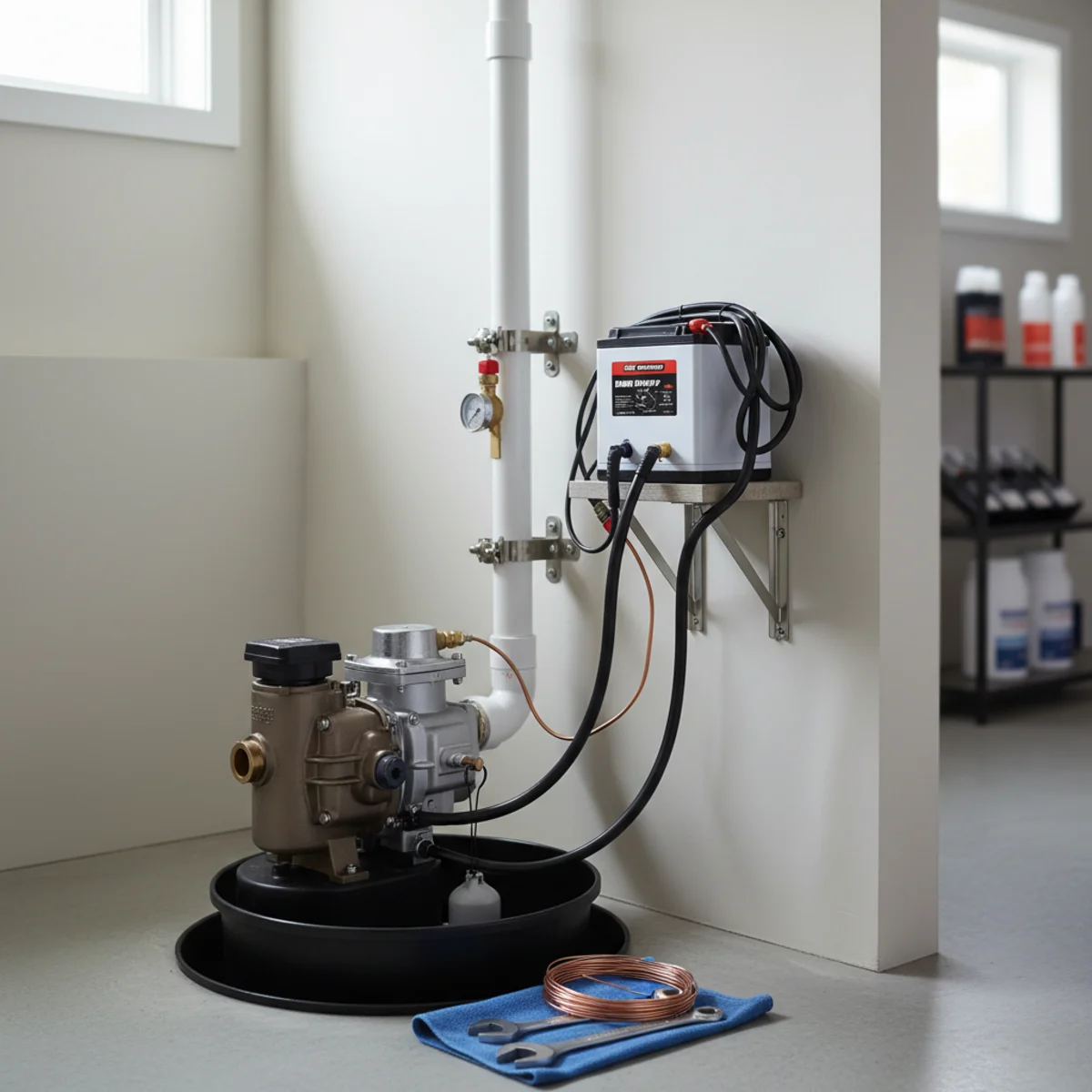
Cost Guide
Battery Backup Sump Pump Cost
What goes into the price — and why it pays for itself in one outage.
A battery backup sump pump cost reflects more than a battery — it's a second pump, a controller, a charger, an alarm, and the labor to integrate it with your primary system. For a finished basement, it's some of the best-value protection you can buy, because it covers the exact failure that floods most basements: a power outage during a storm.
Ranges here are general guidance. The pump, battery capacity, and whether you choose a combination system set the real number.
- Local Littleton Service
- Professional Installation
- Clear, Upfront Estimates
- Battery Backup Options
- Careful, Clean Workmanship
- Emergency Help Available
What Affects Battery Backup Cost
The price depends on how much runtime and protection you want. A basic add-on backup with a single battery is the simplest setup. A combination system replaces the primary pump too, so it costs more but gives you a matched pair. Extended-runtime setups with larger or multiple batteries cost more again.
Installation details matter as well. If the pit is too small for a second pump, it may need to be enlarged. The backup needs its own check valve and a connection into the discharge. The battery needs a safe spot off the floor and, for smart models, a reliable Wi-Fi signal.
What's Included
- Backup pump and dedicated deep-cycle battery
- Automatic controller and battery charger
- High-water alarm
- Integration with your existing primary pump and pit
- Optional smart monitoring for phone alerts
Paying for Runtime
Most of the price difference between backup systems comes down to how long they can run. Runtime depends on the battery's capacity and how often the pump has to cycle. In a pit that fills slowly, a single battery may last through a long outage. In a pit that cycles every few minutes during snowmelt, the same battery runs out much sooner.
That's why the right battery size depends on your pit, not a label. A longer-lasting setup costs more up front, but for a finished basement or a home with frequent storm outages, the extra hours are often worth it.
When comparing estimates, ask what runtime each setup is expected to give in your pit, not just the battery size. Two quotes with similar prices can protect for very different lengths of time.
Ongoing Costs to Plan For
- Battery replacement every three to five years, even if it still shows a charge
- Water top-ups for flooded batteries; sealed AGM batteries need none
- A twice-yearly test with the main pump unplugged
- Optional monitoring service on some smart models
- Eventual replacement of the backup pump itself as it ages
Battery vs Water-Powered Backup Costs
A water-powered backup has no battery to replace, but it needs city water, a backflow preventer, and enough water pressure to work well. It also uses water while it runs. A battery backup works on any home, including those on wells, but its batteries are an ongoing expense. Which costs less over time depends on your water supply, how often outages happen, and how long they last.
Why It's Worth It
The most common time a basement floods is when the power goes out mid-storm and the single primary pump has nothing to run on. A backup covers that exact scenario. Set against the cost of replacing drywall, flooring, and belongings, the math is straightforward.
Remember the ongoing cost too: backup batteries last 3–5 years and need replacement. We check battery health at maintenance visits.
When to Add a Backup
The best time to add a backup is when you're already doing work on the pit, such as replacing the main pump or installing a new system. The pit is open, the discharge is already being cut, and the labor overlaps. Adding a backup on its own is still simple, but it's most efficient alongside other work.
If you're finishing a basement, add the backup before the walls and flooring go in. That's when access is easiest and the cost of not having one is about to go up.
Adding one before the next storm season also means the system can be tested on a dry day, instead of finding out during the first outage whether it was set up right.
From the field
How We Size a Backup Estimate
When we price a backup, we look at how hard the pit works. A pit that cycles often in spring needs more battery capacity than one that runs a few times a day, and that's what moves the price most.
We also check the pit and the discharge. A tight basin or a single shared line without proper check valves can mean extra work. We'd rather include that in the estimate than discover it halfway through the job.
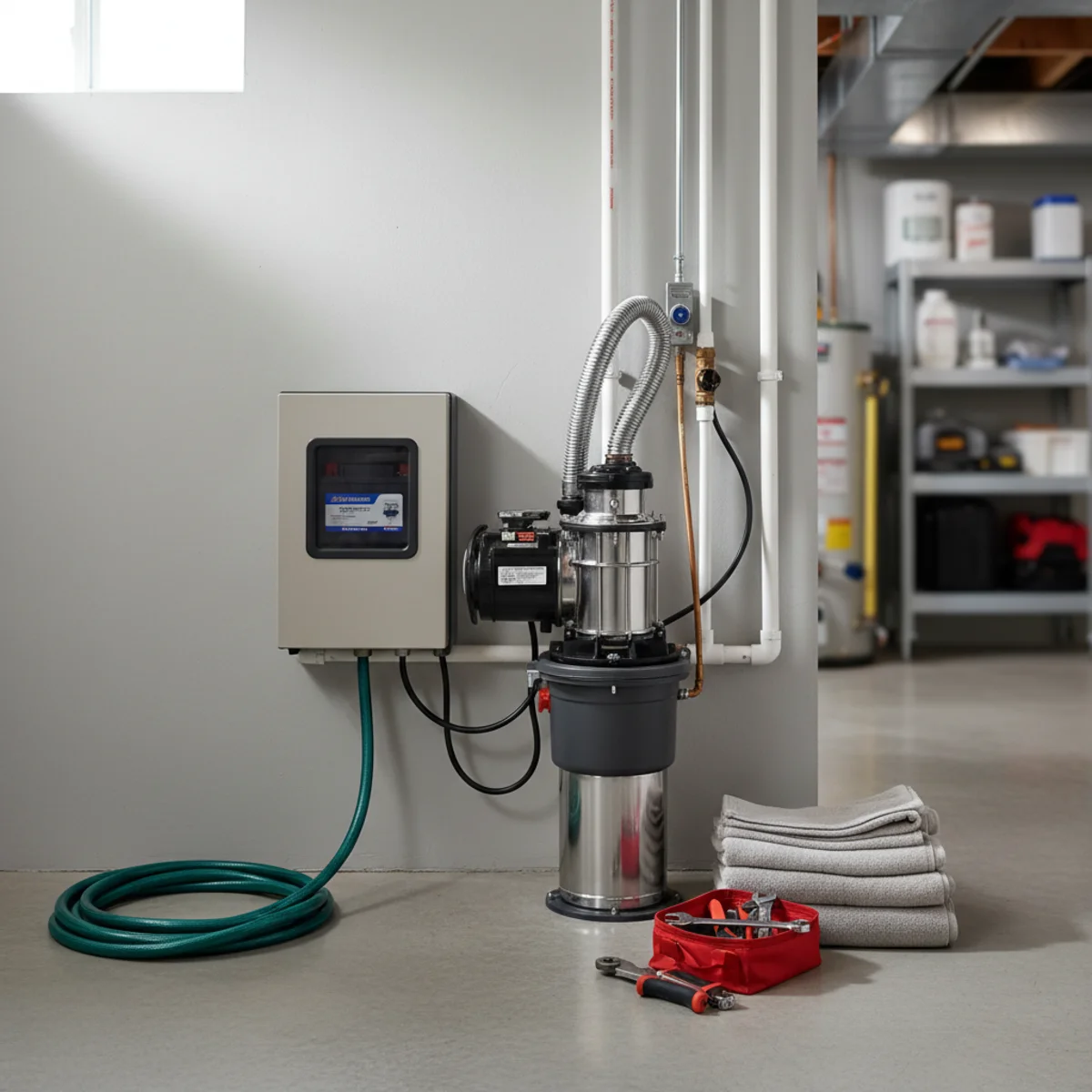
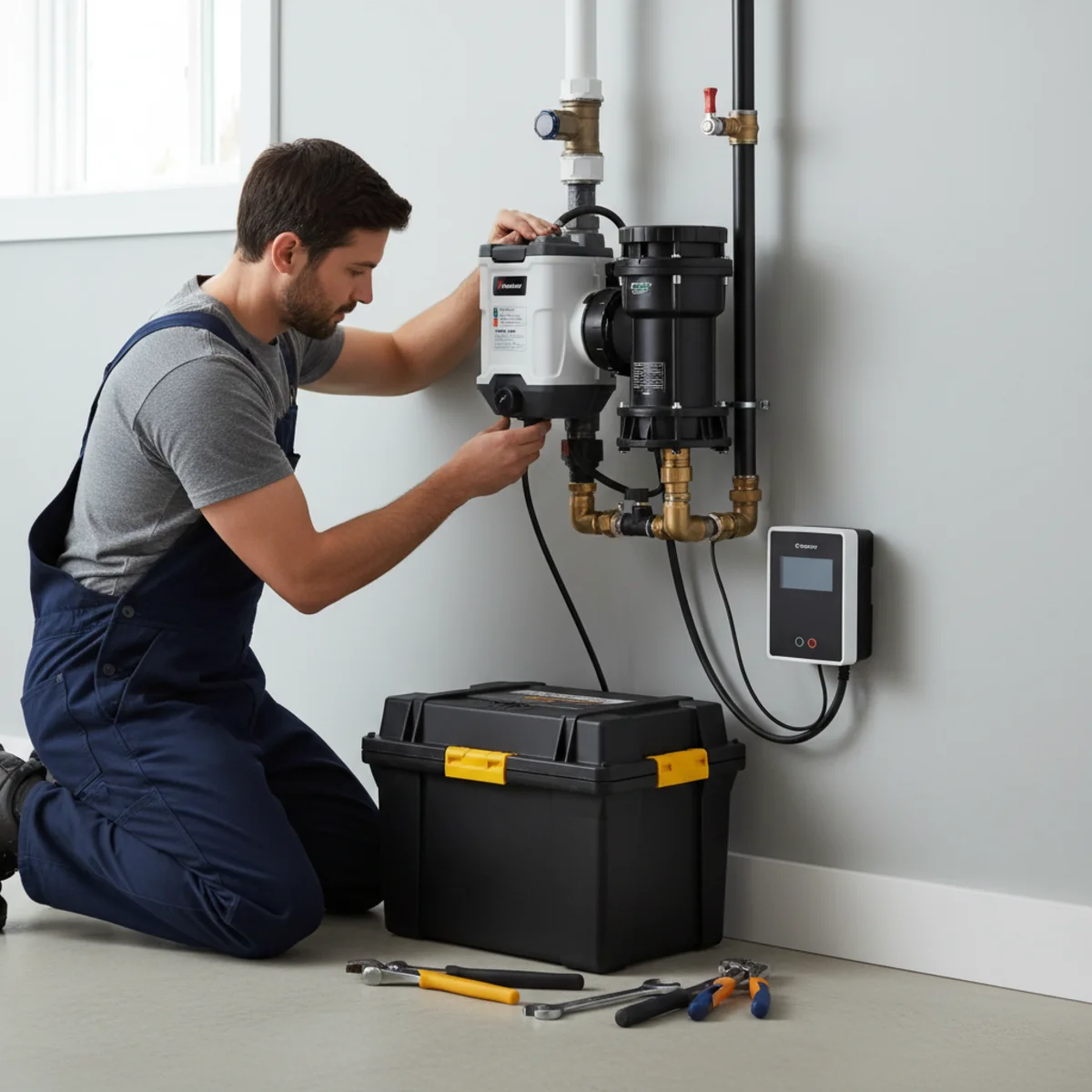
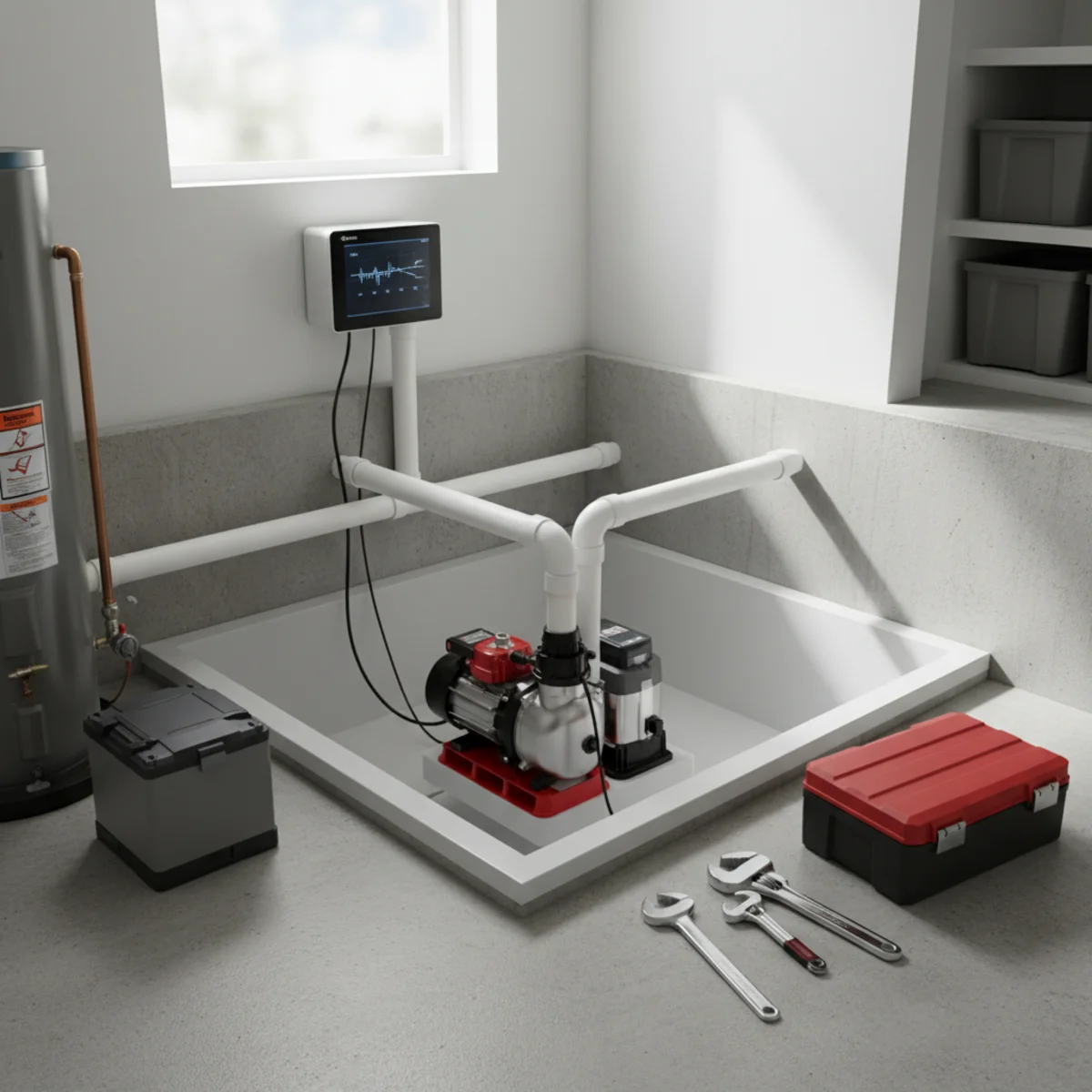
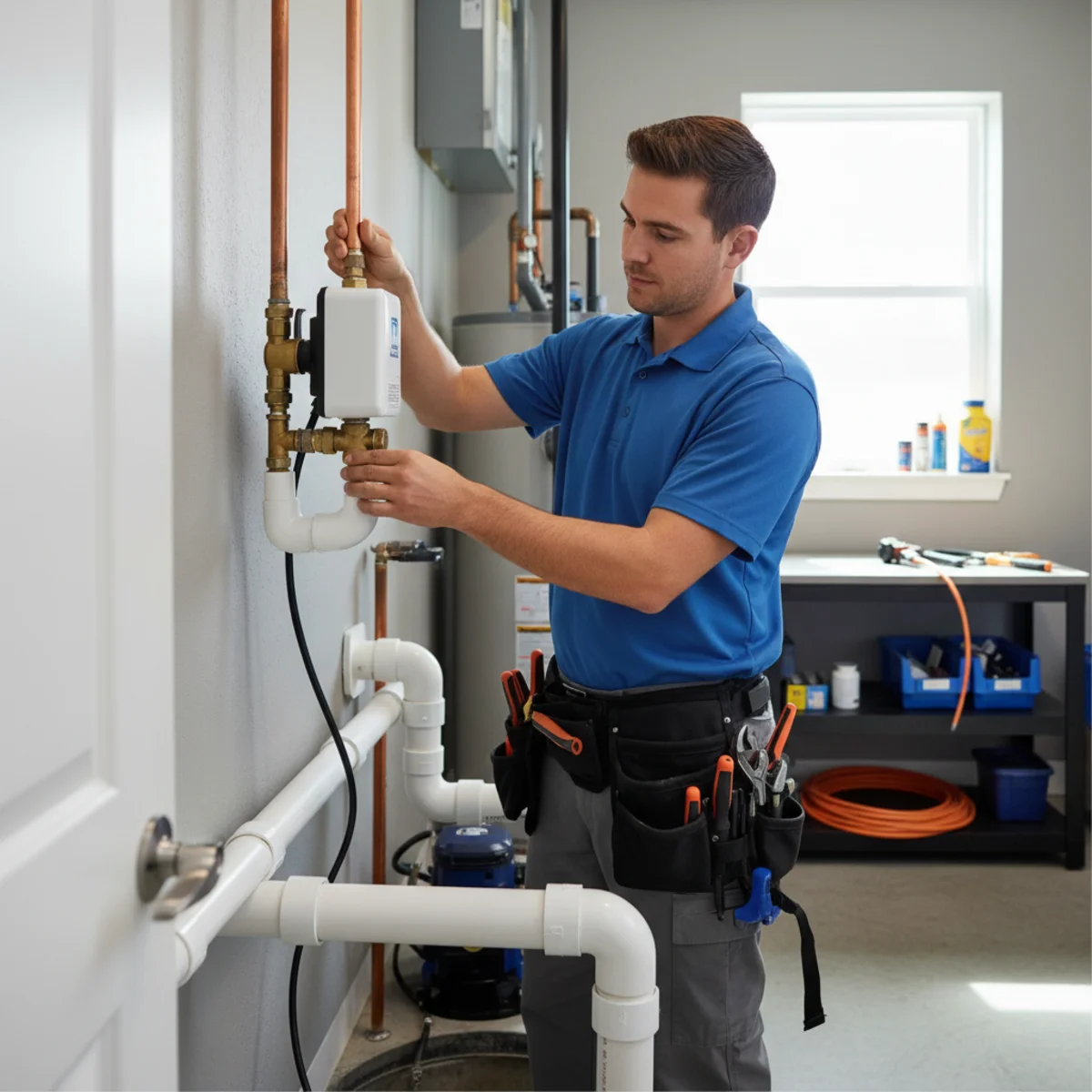
What Moves Battery Backup Pricing
Battery capacity
Larger or dual batteries extend runtime during long outages and cost more.
Backup pump quality
Higher-capacity backup pumps move more water per minute.
Standalone vs. combination
An integrated primary+backup combination differs in price from adding a backup to an existing pump.
Smart monitoring
Adding Wi-Fi alerts to your phone is a modest add-on.
Battery Backup: Where Your Project Likely Falls
Add a backup to an existing pump
Lower–midBackup pump, battery, controller, and alarm into your current pit.
Combination primary + backup system
Mid rangeAn integrated unit engineered to work as one.
Extended-runtime / dual-battery setup
Higher endMore capacity for long outages and heavy water.
No fixed quotes sight-unseen. These ranges are general guidance that varies by home. For an accurate price, call (207) 419-2600 for a free on-site estimate.
More on Battery Backup Planning
Battery Backup Cost Questions
It depends on the backup pump, battery capacity, and whether you choose a standalone add-on or an integrated combination system. We provide clear, upfront estimates — call (207) 419-2600 to price it for your basement.
For most finished basements, yes. It protects against the single most common flood scenario — a power outage during a storm — for a fraction of the cost of cleanup and restoration.
The main recurring cost is the battery, which lasts 3–5 years. Budget for periodic replacement, and have the battery health checked at annual maintenance so it's ready when you need it.
Sometimes. The backup pump and its float need room beside or above the main pump. Many standard pits have enough space, but narrow builder pits may not. A combination system, or a larger basin, solves that.
Some homeowners do, but getting it right matters: a separate check valve, the backup float set above the main pump's, a vented battery box off the floor, and a full test with the main pump unplugged. A professional install includes all of that.
Get an On-Site Battery Backup Estimate
Get professional sump pump help from a local Littleton specialist. Clear, upfront estimates and careful, clean workmanship.
Available by appointment. Emergency sump pump help available.