

Resource
Signs You Need a Sump Pump
The warning signs worth acting on before the next storm.
Quick answer
The clearest signs you need a sump pump are water or dampness showing up in your basement or crawl space — especially after snowmelt or heavy rain. If you're seeing any of the warning signs below, it's worth acting before the next storm rather than after.
Catching this early is the difference between a planned installation and an emergency cleanup.
- Local Littleton Service
- Professional Installation
- Clear, Upfront Estimates
- Battery Backup Options
- Careful, Clean Workmanship
- Emergency Help Available
Warning Signs to Watch For
- Water pooling on the basement floor after rain or snowmelt
- Damp spots, staining, or white mineral residue (efflorescence) on walls
- A persistent musty or damp smell
- High humidity, condensation, or mold in the lower level
- Water seeping in where the wall meets the floor
- A finished basement with no water protection in place
- A low-lying lot, a high water table, or a history of neighborhood flooding
Signs Outside the House
Some of the best clues are in the yard. Soggy ground that stays wet for days beside the foundation, downspouts that empty right at the wall, soil that has settled into a low strip along the house, and a patio or driveway sloping toward the basement all send water where you don't want it.
In spring, look for spots where snow melts first and the ground stays dark longest. Those areas usually line up with the part of the basement that gets damp. Fixing the outside can reduce how hard a sump pump has to work, but it rarely removes groundwater that rises from below.
Littleton-Specific Risk Factors
Clay-heavy soil, spring snowmelt, and sudden summer storms all raise the odds here. Homes near creeks and drainages, on sloped foothill lots, or with finished basements have the most to lose — and the most to gain from a sump system.
Older homes in established neighborhoods are another group to watch. Many were built with a small pit or none at all, and the drain tile around the footing may have silted up over decades. Water that the house handled fine twenty years ago can start showing up after a wet spring or a change in the yard's grading.
Homes on the edge of a floodplain or below a slope that drains toward them are worth watching closely in the first wet spring after you move in.
A 15-Minute Basement Check You Can Do Today
You don't need tools to look for most of these signs. Walk the basement with a flashlight and check:
- The joint where the walls meet the floor, especially in corners
- The bottom of the walls for white, chalky mineral lines
- The base of the furnace, water heater, and shelving for rust or stains
- Cardboard boxes on the floor for water lines or soft bottoms
- Carpet edges and tack strip for dampness or a musty smell
- Any existing pit: does it hold water after a dry week?
Signs That Point to a Different Problem
Not every wet basement needs a sump pump. Water that appears on the walls in humid summer weather, worst on cold pipes and concrete, is often condensation. A dehumidifier fixes that. A wet spot that grows when someone showers or does laundry is a plumbing leak. Water under one window after rain usually means the window well needs a drain or cover.
A simple way to tell condensation from seepage is to tape a square of foil to the damp wall for a day or two. Moisture on the outside of the foil is condensation from the room. Moisture under it is coming through the wall.
It's worth ruling these out first because they're often cheaper to fix. But they can also hide a groundwater problem, so if the dampness stays after the gutters, window wells, and humidity are dealt with, keep watching the floor joint.
When the Signs Appear Tells You Something
Timing is one of the best clues. Dampness that shows up a day or two after heavy rain points to surface water soaking down beside the foundation. Water that appears in March and April and lasts for weeks points to rising groundwater from snowmelt. That is the pattern a sump system is designed for.
Water that shows up within minutes of a storm, usually near one wall, is often a gutter or downspout problem. It's worth fixing that first, then watching whether the dampness stops.
Keep a simple note on your phone of when you see water and what the weather was doing. After one wet season, that record usually makes the cause clear, and it helps whoever looks at the basement give you a better answer.
Signs Your Existing Pump Isn't Enough
If you already have a sump pump, the warning signs look a little different. The pump runs almost nonstop in spring, the water in the pit rises close to the top during storms, or you still see dampness at the floor even though the pump is working. Any of these can mean the pump is undersized, the pit is too small, or the drainage isn't reaching the wet part of the basement.
A pump that is more than about ten years old, or that sits under a finished basement with no backup, also counts as a sign. The risk isn't today's water; it's the day the pump stops.
The fix isn't always a new pump. Sometimes it's a larger basin, a second pump, a backup for outages, or a drain line that brings water from the far side of the basement to the pit.
Getting a Littleton Basement Assessed
If you recognize two or more of these signs, have the basement assessed. We'll tell you honestly whether you need a full system, an upgrade, or just a fix. Call (207) 419-2600.
An assessment covers the walls, the floor, the yard drainage, and any existing pit or pump. If the problem turns out to be gutters or condensation, we'll tell you that. If it's groundwater, we'll explain where the pit should go, what size pump fits, and whether a backup makes sense for the space.
From the field
The Clues Homeowners Usually Miss
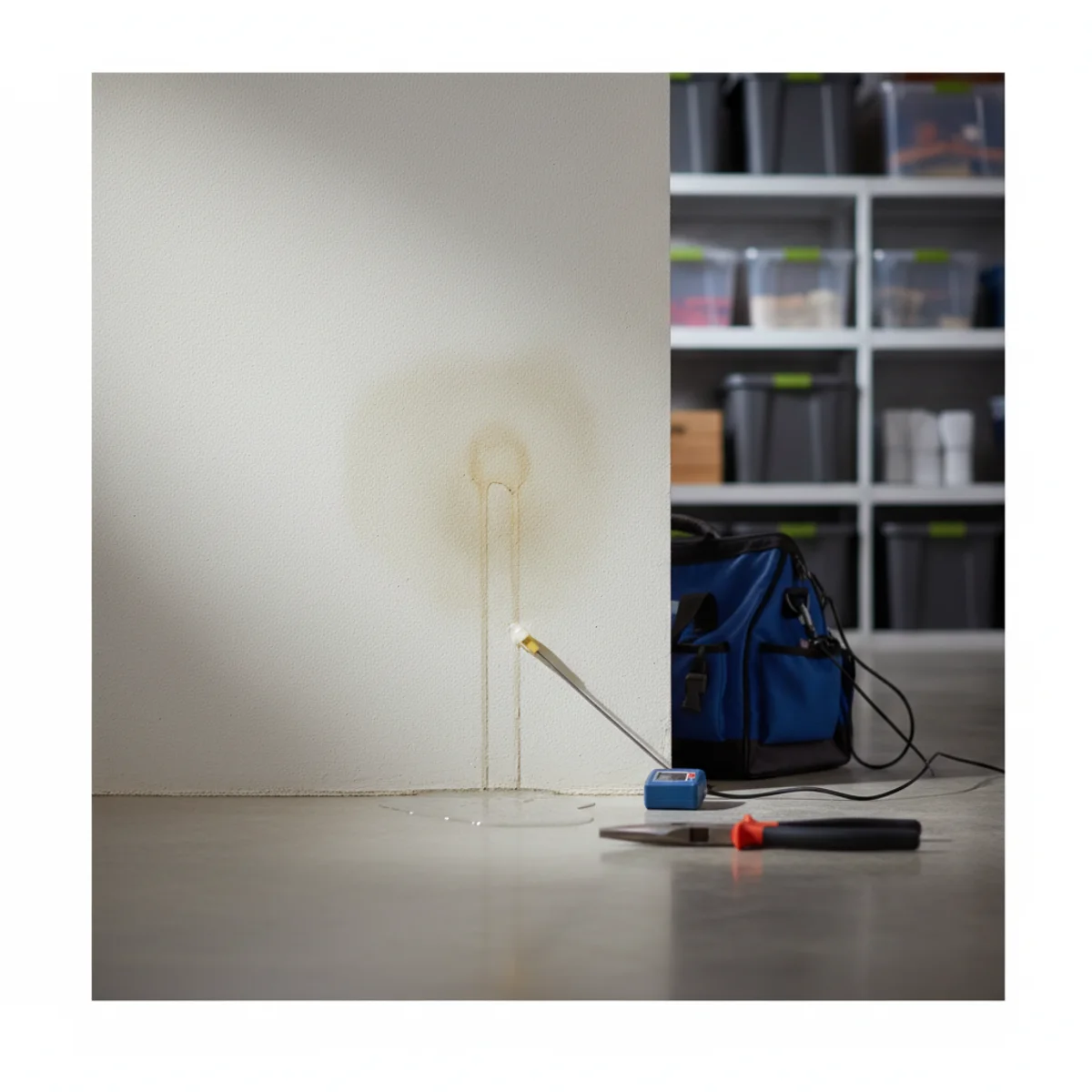
The signs people notice are puddles and wet carpet. The ones we look for are quieter: a rust ring at the base of the water heater, a water line on the bottom of a storage box, or a tack strip that crumbles when we lift the carpet edge. Those tell us water has reached the floor before, even if nobody saw it.
We also ask about the neighbors. When several houses on a street have added sump systems, it usually means the groundwater in that area runs high in wet years.


Read the Signs Before the Next Wet Spring
Most basements give plenty of warning before they flood. Mineral lines, dampness at the floor joint, musty smells, and water in an existing pit are all worth acting on. Do the quick check, rule out condensation and gutters, and if the signs point to groundwater, plan a sump system while the weather is dry.
Want a second opinion on your own system? Call (207) 419-2600 and talk it through with a local sump specialist.
Local service nearby
More guides related to signs you need a sump pump
Signs You Need a Sump Pump: Your Questions Answered
Look for water after storms, damp or stained walls, musty odors, high humidity, or seepage at the wall-floor seam. A finished basement, high water table, or low-lying lot also point toward needing one.
Yes, and it's often the smart move. Proactive installation is cheaper and less stressful than an emergency during a storm, especially if you're finishing the basement.
Often, yes. A musty smell usually means moisture is present — from seepage or high humidity — which a sump system, sometimes paired with a sealed lid, can resolve.
No. Installing before water reaches the floor is simpler, cheaper, and less disruptive than doing it during cleanup. If you see the early signs, such as mineral lines, dampness at the floor joint, or water standing in an existing pit, it's a good time to plan an installation.
Talk to a Local Pro About Signs You Need a Sump Pump
Get professional sump pump help from a local Littleton specialist. Clear, upfront estimates and careful, clean workmanship.
Available by appointment. Emergency sump pump help available.