
Sump Pump Service
Sump Pump Discharge Line Installation
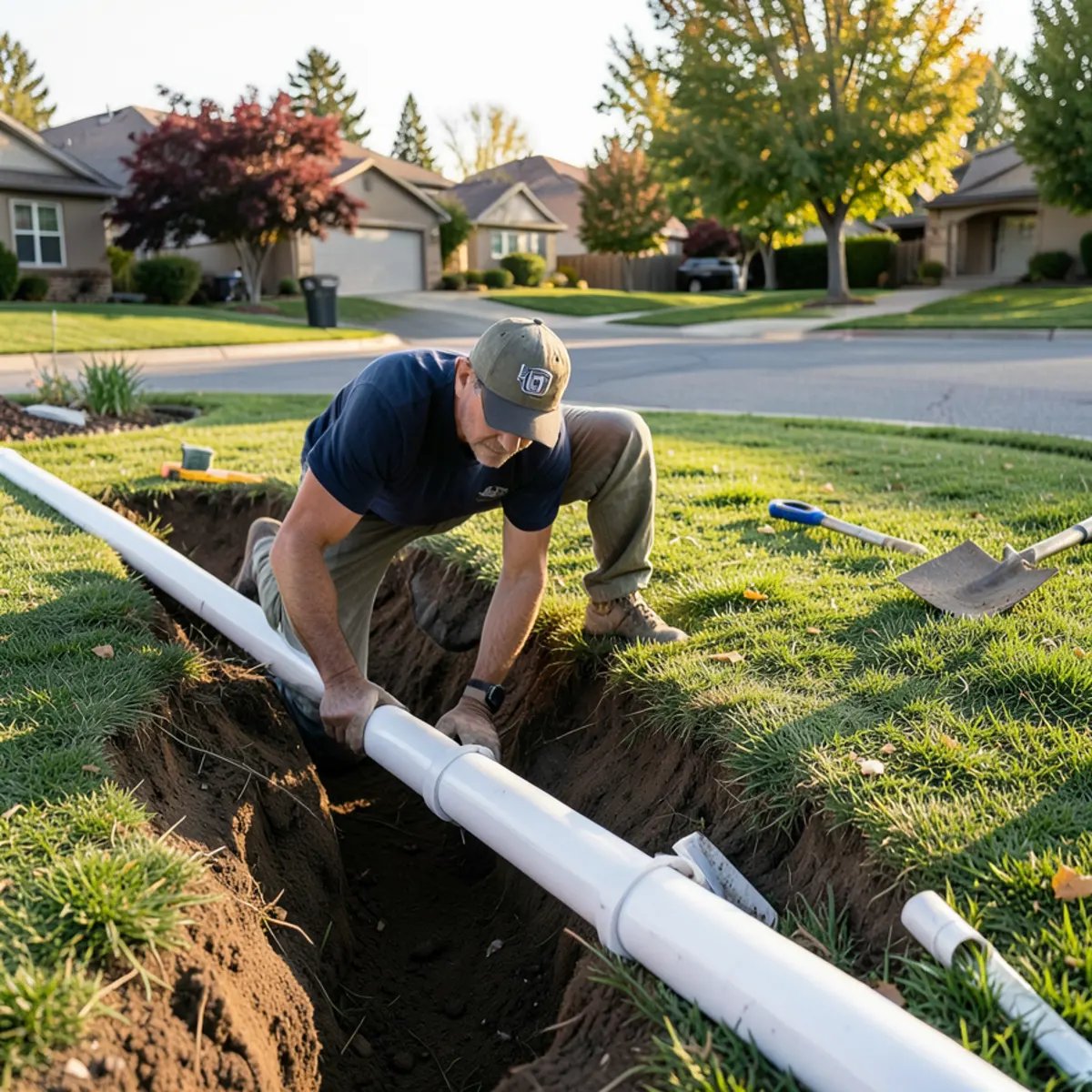
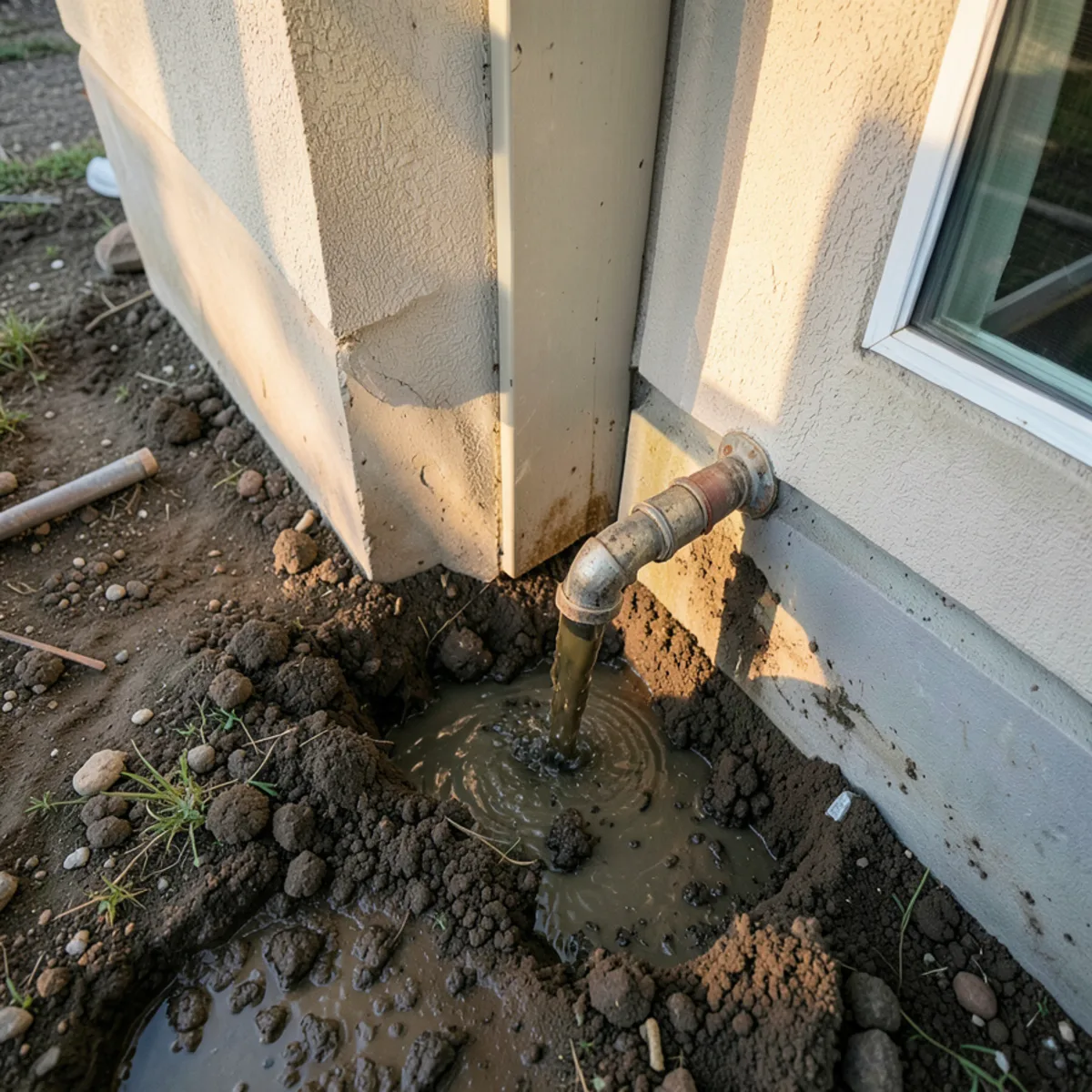
Routed below the frost line and terminating well away from the foundation.
Where the water goes matters as much as the pump that moves it. A sump pump discharge line that dumps water next to the foundation just recycles the problem — and one buried too shallow freezes back every winter. Littleton Sump Pump Pros installs discharge lines routed below the frost line and terminating well away from the house.
In Colorado, this is where a lot of installs go wrong. We get it right.
- Local Littleton Service
- Professional Installation
- Clear, Upfront Estimates
- Battery Backup Options
- Careful, Clean Workmanship
- Emergency Help Available
How a discharge line should be installed
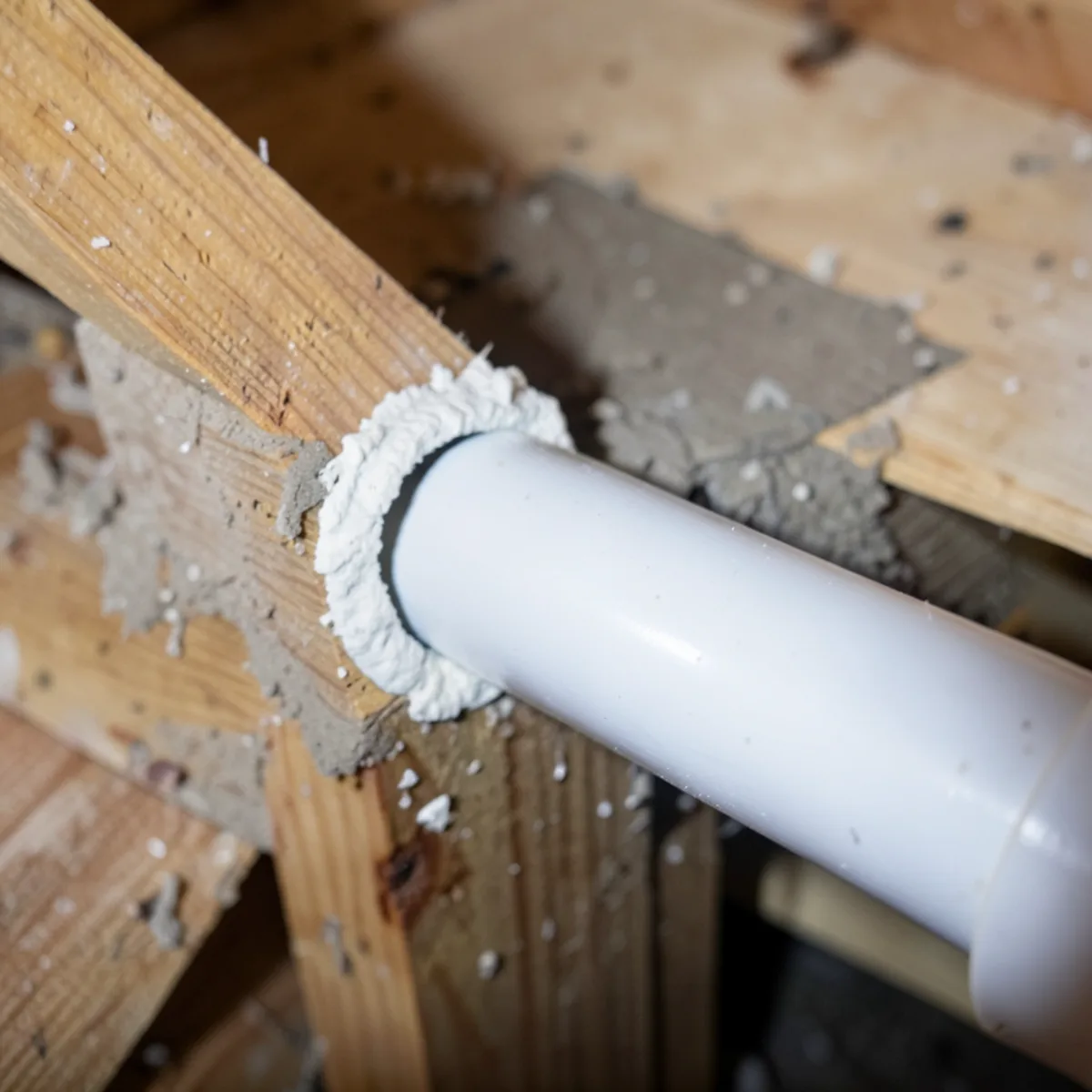
The line leaves the pump through a check valve and a union, climbs to the rim joist or through the foundation wall, and drops outside into a trench. From there it runs with a steady downhill pitch to an outlet where water can spread out and soak in or flow away, nowhere near the house. Every one of those pieces has to be right, or the pump ends up pushing against ice or recycling its own water.
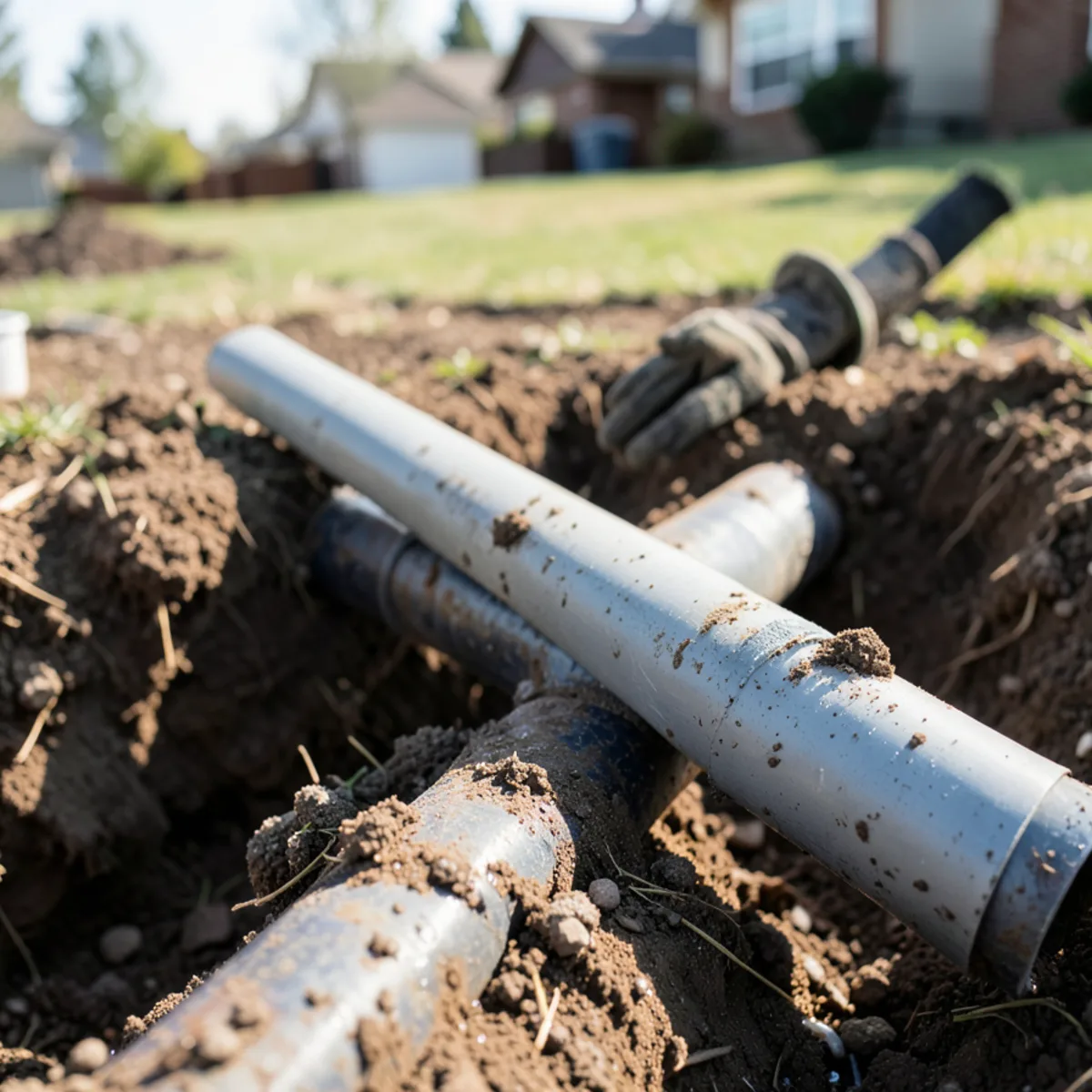
Pipe choice matters underground. We use rigid, solid-wall pipe for the buried run rather than corrugated flexible pipe, whose ridges hold water that freezes and whose thin walls crush under soil and lawn equipment. The pipe stays full-size from the pump to the outlet; necking it down outside chokes the flow and makes the pump work harder.
- Trenched below the frost line to prevent freeze-back
- Terminating at least 10 feet from the foundation
- Pitched so water drains fully and doesn't sit in the pipe
- Routed to daylight or an approved drainage point, away from neighbors and walkways
- A check valve at the pump so discharged water doesn't drain back
- Freeze-resistant termination to keep the outlet clear in winter
Why frost line and distance matter here
Front Range freeze-thaw cycles are brutal on shallow lines. Ice forms at the outlet, backs up the pipe, and the pump has nowhere to send water — right when snowmelt is loading the pit.
Distance matters too. Water released next to the foundation soaks back into the clay and presses against the wall again. Ten feet or more, pitched away, breaks that cycle.
Choosing where the water comes out
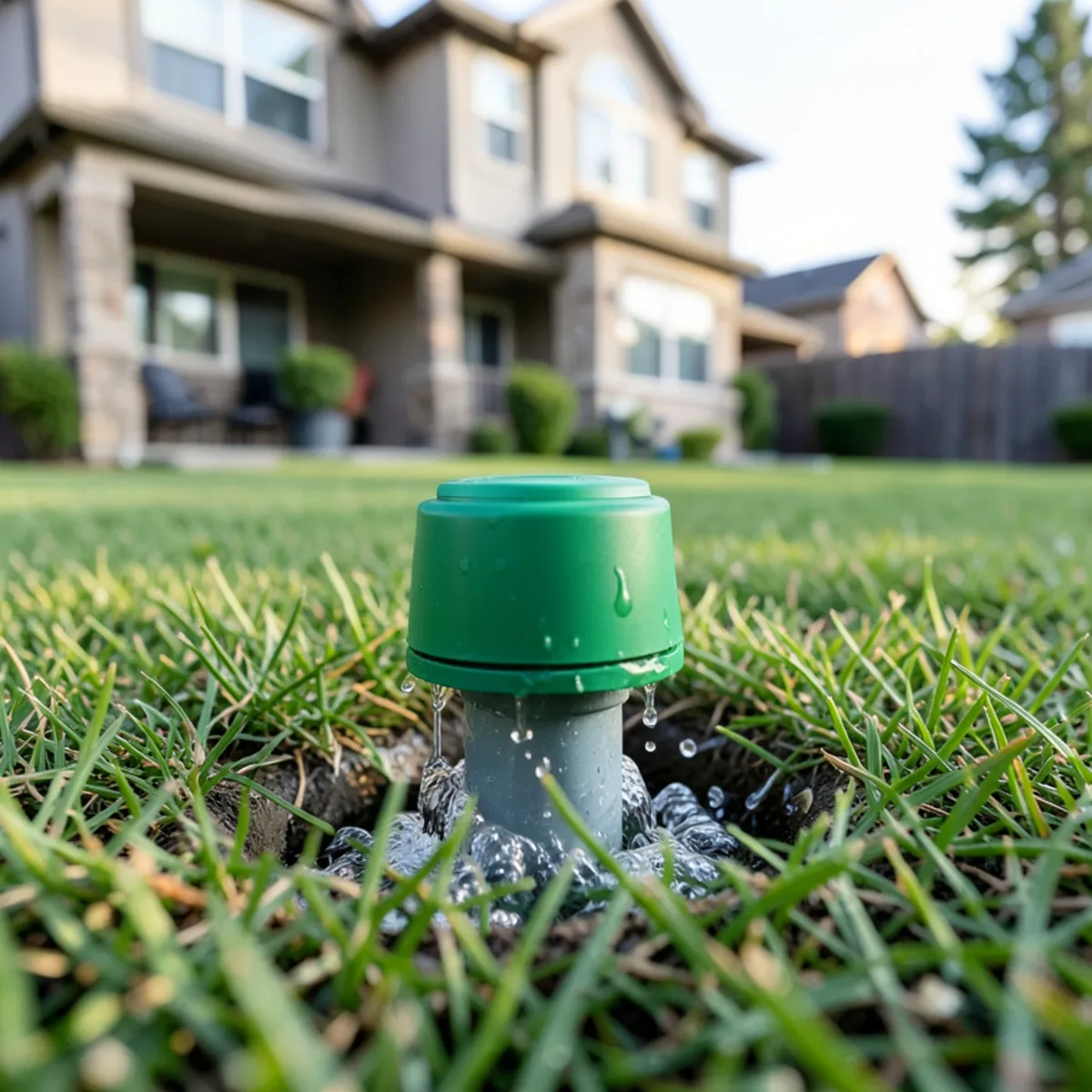
The outlet is where most discharge problems start. On a sloped lot, the simplest option is daylighting the line to a lower spot where water can run off naturally. On flatter lots, a buried line can end at a pop-up emitter in the lawn, which opens when water arrives and closes when it stops. A splash area lined with rock spreads water out and keeps it from scouring the soil.
Dry wells, buried pits meant to soak water into the ground, tend to struggle in Littleton's clay because the soil absorbs water slowly. Curb or street outlets are allowed in some jurisdictions and not others, and water should never be aimed across a sidewalk where it freezes. We choose the outlet with you during the estimate.
Freeze protection at the house
Even a well-buried line can freeze at the outlet during a long cold snap. A freeze-relief fitting where the pipe leaves the house gives water a place to spill out if the line downstream is blocked, so the pump isn't left pushing against ice and the basement stays dry. It's a small part that saves a lot of January emergency calls.
Signs your discharge line needs work
- The pump runs but water barely trickles from the outlet
- Ice forms at the outlet or the line freezes every winter
- Water pools against the foundation or soaks a flower bed next to the house
- The pump cycles constantly in wet weather because pumped water returns to the pit
- A flexible hose is lying on the lawn as the permanent outlet
- The discharge runs into a floor drain, laundry sink, or sewer cleanout
What a discharge line installation costs depends on
Length and depth drive most of the price. A short run that daylights onto a slope is a modest job; a long line trenched below the frost depth across a lawn takes more digging and more restoration. Crossing a driveway or walkway, working around mature trees and sprinkler lines, or boring under a sidewalk all add work. The outlet type matters too, from a simple rock splash area to a buried pop-up emitter. We price the route you choose and restore the lawn or beds we disturb.
Discharge rules and digging safely
Groundwater from a sump pump belongs outside, not in the sanitary sewer, and it shouldn't be directed onto a neighbor's property or across a public sidewalk. Some cities and counties also limit discharges to the street or storm system, so we check the rules for your address.
Colorado law requires a utility locate through Colorado 811 before excavation, so buried gas, electric, water, and communication lines are marked before we dig. That's part of every trenched discharge we install.
Reworking an existing line
Not every problem needs a new line. Sometimes the fix is extending a short outlet, replacing a sagging section that holds water and freezes, or upsizing a pipe that was necked down to a smaller diameter outside. We start by running water through the existing line and following it to the outlet to see where it fails.
How Our Discharge Line Installation Process Works
- 1
Trace the current line
Run water through it and follow it outside to see where it fails.
- 2
Plan the route
Choose a path and outlet away from the foundation, walks, and neighbors.
- 3
Call for locates
Request Colorado 811 marking of buried utilities before digging.
- 4
Trench and lay pipe
Dig below the frost depth and lay full-size pipe with a steady downhill pitch.
- 5
Finish the outlet
Install the emitter, daylight end, or rock splash area, plus freeze relief at the house.
- 6
Test and restore
Run the pump, confirm flow at the outlet, then backfill and restore the yard.
Discharge Line Installation: what the work looks like
Why Homeowners Choose Us for Discharge Line Installation
Discharge work is where general installs most often go wrong in Colorado, and it's the part of the system we spend the most time planning. We follow the water from the pump to the outlet and design the route for January, not just for the day we install it.
We're a Littleton sump specialist at 8 W Dry Creek Cir. You'll get a route and outlet plan with the estimate, a locate before we dig, and a restored yard when we're done.
- No more freeze-back during Colorado winters
- Water released well away from the foundation
- Proper slope so the line drains fully
- Check valve to stop backflow into the pit
- Clean yard restoration
Services That Pair With Discharge Line Installation
Guides on Sump Pump Discharge Line Installation
Helpful Guides & Costs
Where We Provide Discharge Line Installation
See every community on the service areas page.
Discharge Line Installation FAQs
At least 10 feet from the foundation, pitched away so the water can't soak back toward the basement wall. Releasing it close to the house just feeds the same clay soil that caused the problem.
In Colorado, yes — below the frost line. A shallow or above-ground line freezes back in winter and leaves the pump with nowhere to send water during snowmelt.
It should match the pump's discharge outlet (commonly 1.5 inches) and run full-size all the way out — narrowing it chokes flow. We size it to your pump during installation.
Yes. Colorado law requires a Colorado 811 locate before excavation so buried utilities are marked. We request it before any trenching, which also protects sprinkler and landscape lighting lines from surprises.
It's a fitting at the end of a buried discharge line that sits flush with the lawn. Water pressure pushes the cap up so water can spread out, and it drops closed afterward. It keeps the outlet tidy and mower-safe on flat lots.
It depends on your city or county. Some allow a curb outlet, some restrict it, and none want water crossing a sidewalk where it can freeze. We check the local rule for your address before recommending a route.
Water ending up back at the wall?
A short or poorly sloped discharge sends water straight back to the pit. We'll reroute it so it drains away and doesn't freeze.
- Route planned for slope and freeze
- Termination chosen for your yard
- Sealed exit through the wall