
Pump Options
Types of Sump Pumps
Submersible, pedestal, backup, and combination systems — what each type does, where it fits, and how to choose the right one for your basement.
Quick answer
There are two main types of primary sump pumps: submersible pumps, which sit underwater inside the pit, and pedestal pumps, which keep the motor on a column above it. Most homes pair the primary pump with a backup — battery or water-powered — or install both together as a combination system.
The main types of sump pumps
- Submersible sump pump
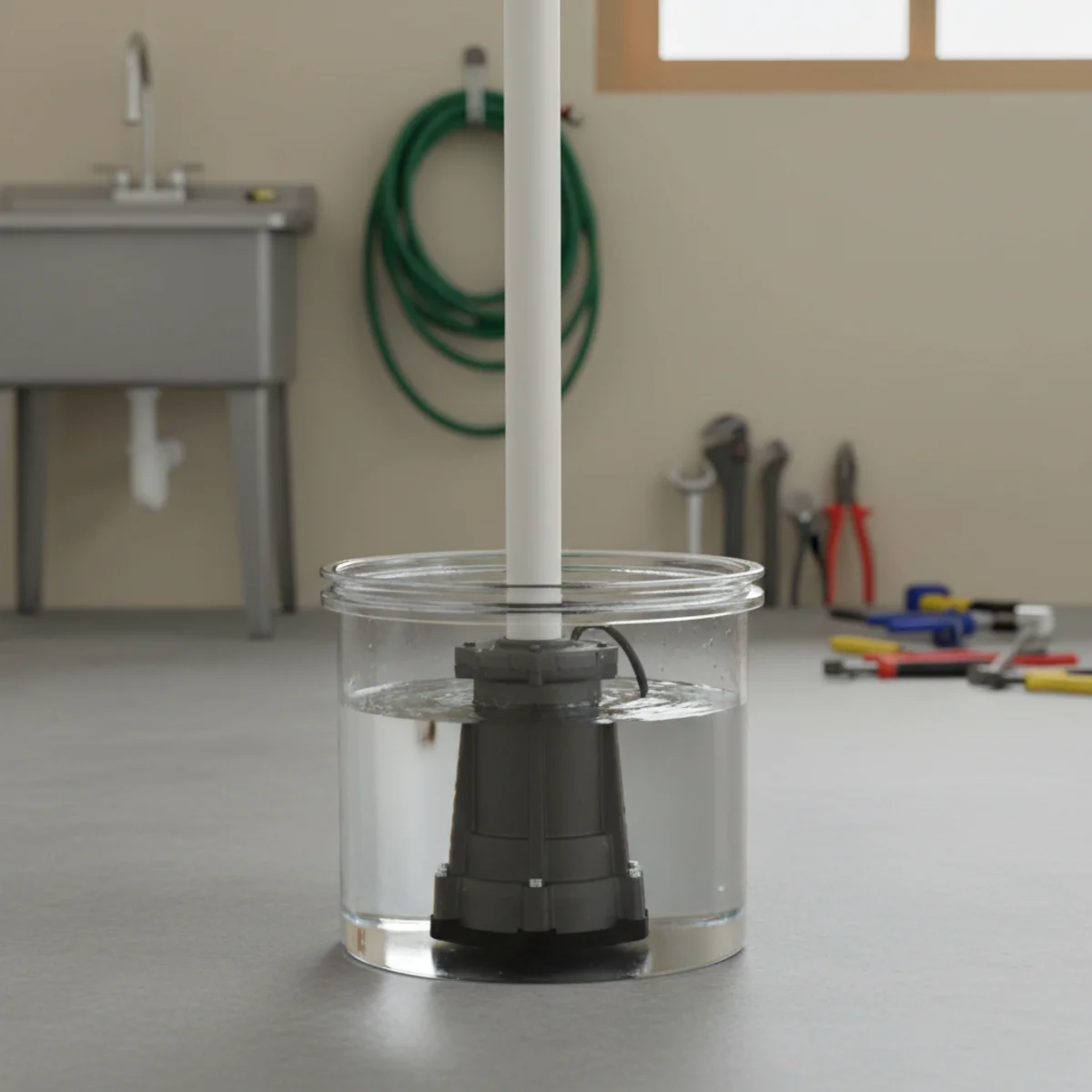
- The pump and motor sit inside the pit, sealed and underwater. Quiet, compact, and able to move a lot of water, which is why it is the most common primary pump in finished basements. Submersible pumps →
- Pedestal sump pump
- The motor sits on a column above the pit and only the intake goes into the water. Louder, but it fits narrow or shallow pits and the motor is easy to reach for service. Pedestal pumps →
- Battery backup sump pump
- A second pump that runs from a battery when the power fails or the primary pump stops. It covers the most common way basements flood: a storm knocks out power. Battery backup installation →
- Water-powered backup sump pump
- Uses city water pressure instead of electricity to pull water out of the pit, so there is no battery to run down. It needs municipal water service and uses water while it runs. Water-powered backups →
- Combination sump pump system
- A primary pump and a battery backup installed together in one pit, often with a shared alarm. The most complete protection for a finished basement. Combination systems →
- Sewage ejector pump
- Not a sump pump: it moves wastewater from a below-grade bathroom or laundry up to the sewer line, in a sealed and vented basin. Sewage ejector pumps →
Which type of sump pump is best?
For most basements, a submersible pump with a cast-iron housing is the dependable default: it is quiet, it handles heavy water, and the housing sheds motor heat during long runs. A pedestal pump makes sense when the pit is too narrow or shallow for a submersible. If the space below is finished or a failure would be expensive, add a backup pump — the power tends to go out during the same storms that fill the pit.
Size matters as much as type. A 1/3 HP pump covers typical residential water loads; 1/2 HP suits higher water tables, deeper pits, and longer or taller discharge runs. Compare submersible vs pedestal pumps and cast iron vs plastic housings for the details.
Compare your options
Find the Right Sump Pump for Your Basement
We size and install each of these for Littleton homes. The right choice depends on your pit, water load, and what's at stake below grade.
Submersible Sump Pump
Sits in the pit, runs quiet, handles debris — our most-installed type.
Best for: Most Littleton basements, finished spaces, and higher water loads
View detailsPedestal Sump Pump
Motor sits above the pit — easy to service, fits narrow basins.
Best for: Narrow or shallow pits and crawl spaces with easy top access
View detailsCast Iron Sump Pump
The durable housing that holds up to mineral-rich Colorado water.
Best for: Homeowners who want maximum longevity and debris/mineral resistance
View detailsCombination Sump Pump
Primary + backup in one pit — the most dependable single setup.
Best for: Finished basements and high-water-table homes that can't risk a failure
View detailsSmart Sump Pump Alarm
Early warning to your phone before a failure becomes a flood.
Best for: Anyone who wants early warning — especially homeowners who travel
View details1/2 Horsepower Sump Pump
More capacity for heavy water loads and longer discharge runs.
Best for: Homes with heavier water loads, deeper pits, or long discharge runs
View details1/3 Horsepower Sump Pump
The everyday size for typical residential basement water loads.
Best for: Typical residential basements with average water loads
View details1 HP Sump Pump
High-capacity power for deep pits, high water tables, and big loads.
Best for: High water tables, deep pits, long/high discharge, and demanding sites
View detailsSump Pump Comparison
A quick side-by-side of the systems we install most.
| Pump Type | Best For | Horsepower | Est. Lifespan* | Backup Compatible |
|---|---|---|---|---|
| Cast-Iron Submersible | Most Littleton basements; debris/mineral resistance | 1/3–1/2 HP | 7–10 yrs | Yes |
| Pedestal | Narrow/shallow pits; crawl spaces with top access | 1/3–1/2 HP | 5–8 yrs | Yes |
| Battery Backup System | Power-outage protection during storms | 1/4–1/3 HP | 5–7 yrs pump / 3–5 yrs battery | Is the backup |
| Primary + Backup Combination | Finished basements; high water table | 1/3–1/2 HP primary | 7–10 yrs / 5–7 yrs | Yes (integrated) |
| High-Capacity Dual-Pit | Finishing basements; expansive clay saturation | 1/2–3/4 HP | 7–10 yrs | Yes |
* Estimated lifespan assumes routine testing and annual maintenance; estimates only and will vary by use and water conditions.
Sump Pump Types: Common Questions
Primary pumps come in two designs: submersible (sealed inside the pit) and pedestal (motor above the pit). Backup pumps are either battery-powered or water-powered, and a combination system installs a primary and a battery backup together. The primary is the pump that runs on household power every day; a backup only takes over when the primary fails or the power goes out.
For most basements, a cast-iron submersible pump is the dependable choice, paired with a battery backup if the space is finished. A pedestal pump fits pits that are too narrow or shallow for a submersible.
Submersible pumps are quieter and move more water, so they suit most basements. Pedestal pumps are louder but easier to service and fit narrow or shallow pits. The pit size usually decides.
A 1/3 HP pump handles typical residential water loads. Choose 1/2 HP for higher water tables, deeper pits, or long and tall discharge runs. Call (207) 419-2600 and we can size it for your pit.
Not Sure Which Type Fits Your Pit?
Get professional sump pump help from a local Littleton specialist. Clear, upfront estimates and careful, clean workmanship.
Available by appointment. Emergency sump pump help available.