

Sump Pump Type
1/3 Horsepower Sump Pump Installation
The everyday workhorse for typical residential water loads.
A 1/3 horsepower sump pump is the everyday workhorse — enough capacity to handle the water load most residential basements see, without paying for power you won't use. For a standard basement with an average water table, it's often exactly right. Littleton Sump Pump Pros installs properly sized 1/3 HP systems for Littleton homes.
It's the default for many homes here — but only after we confirm it matches your water load.
- Local Littleton Service
- Professional Installation
- Clear, Upfront Estimates
- Battery Backup Options
- Careful, Clean Workmanship
- Emergency Help Available
When 1/3 HP Is Enough
If your basement has a typical water table, a standard pit depth, and a normal discharge run, a 1/3 HP pump handles it efficiently. It's the right balance of capacity and cost for most homes.
What a Typical 1/3 HP Pump Handles
A 1/3 HP pump is the most common size in homes for a reason. It moves enough water to keep up with the inflow many basements see, at the lift heights found in most houses, while drawing modest power and fitting standard pits. For a basement with an average water table and a short, direct discharge run, it's often all that's needed.
It also tends to run healthy cycles in builder-size pits, where a larger pump might empty the basin too quickly. That balance of capacity and cycle length is part of why it lasts well in the right setting.
Its lower power draw also helps if you plan to run the pump from a generator during long outages, since a smaller motor is easier to start and keep running on a portable unit.
A Quick Check Before You Buy
A 1/3 HP pump is likely a good fit if most of these are true:
- Your current pump keeps up during snowmelt without running nonstop
- Water in the pit stays well below the top during storms
- The basement isn't unusually deep, so the lift to the outlet is moderate
- The discharge line exits the house and ends a reasonable distance away
- The pit is a standard residential size
- A backup pump is in place, or planned, for outages
When to Step Up to 1/2 HP
Consider more capacity if you have a high water table, a deep pit, a long or high discharge run, or a finished basement where you want extra headroom for peak snowmelt. We'll tell you honestly which size your home needs.
Quality Matters More at This Size
Because 1/3 HP pumps are so common, the range of quality is wide. A well-built unit with a cast-iron or stainless housing, a sturdy mechanical float, and a screened intake can serve for many years. A bargain pump with a plastic switch and thin housing may not last long in a pit that cycles often.
When replacing a 1/3 HP pump, it's worth replacing the check valve at the same time and making sure the pump sits slightly off the bottom of the pit. Those two details often add more life than moving up a size.
Look at the warranty and the switch design before the price tag. A pump that costs a little more but uses a heavier float and better seals is usually the cheaper choice over its life.
Pairing a 1/3 HP Pump With a Backup
A 1/3 HP primary pairs well with a battery or water-powered backup in the same pit. Because the primary doesn't draw heavy power, the system's design stays simple, and in a combination unit the backup often matches the primary's lift capability closely.
For a finished basement, the backup matters more than the primary's size. A modest primary with a reliable backup and an alarm protects better than a larger primary with nothing behind it.
Test both pumps together a couple of times a year, with the main pump unplugged for the backup test.
Replacing an Older 1/3 HP Pump
If your current 1/3 HP pump has kept the basement dry for years and simply wore out, a like-for-like replacement is usually the right call. Match the discharge size and check that the new pump's height and float style suit the pit. If the old pump struggled every spring, look at the check valve, the pit size, and the discharge first, then decide whether to step up in size.
From the field
Why 1/3 HP Is Our Most Common Install
In many of the basements we work in, a quality 1/3 HP pump is the right answer. The pit fills at a moderate rate, the lift is reasonable, and the pump runs steady cycles without strain.
Where we see 1/3 HP pumps fail early, the cause is usually the setup, not the size: an old check valve leaking water back, a pump sitting in silt, or a float catching the pit wall. Fixing those keeps the pump running far longer.

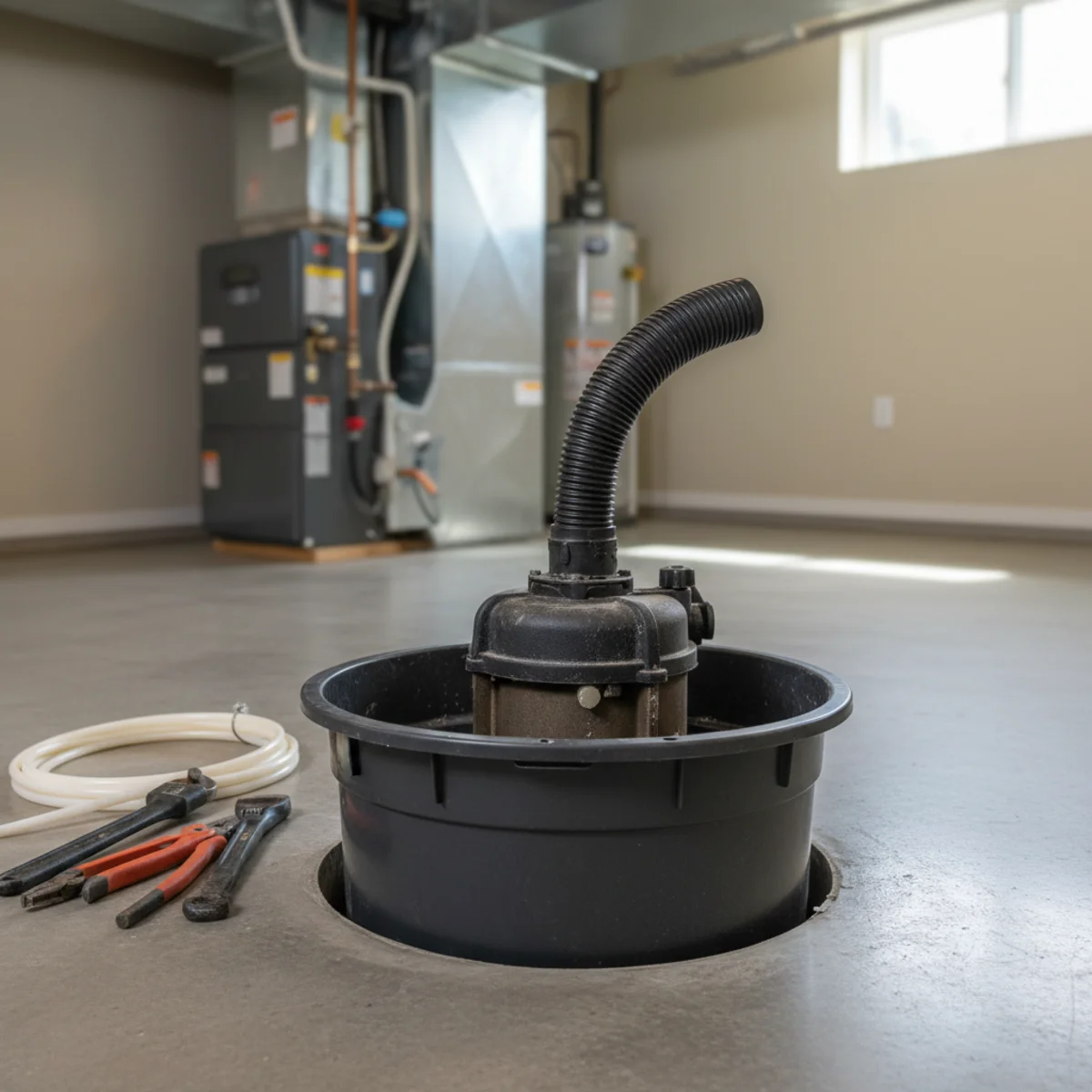

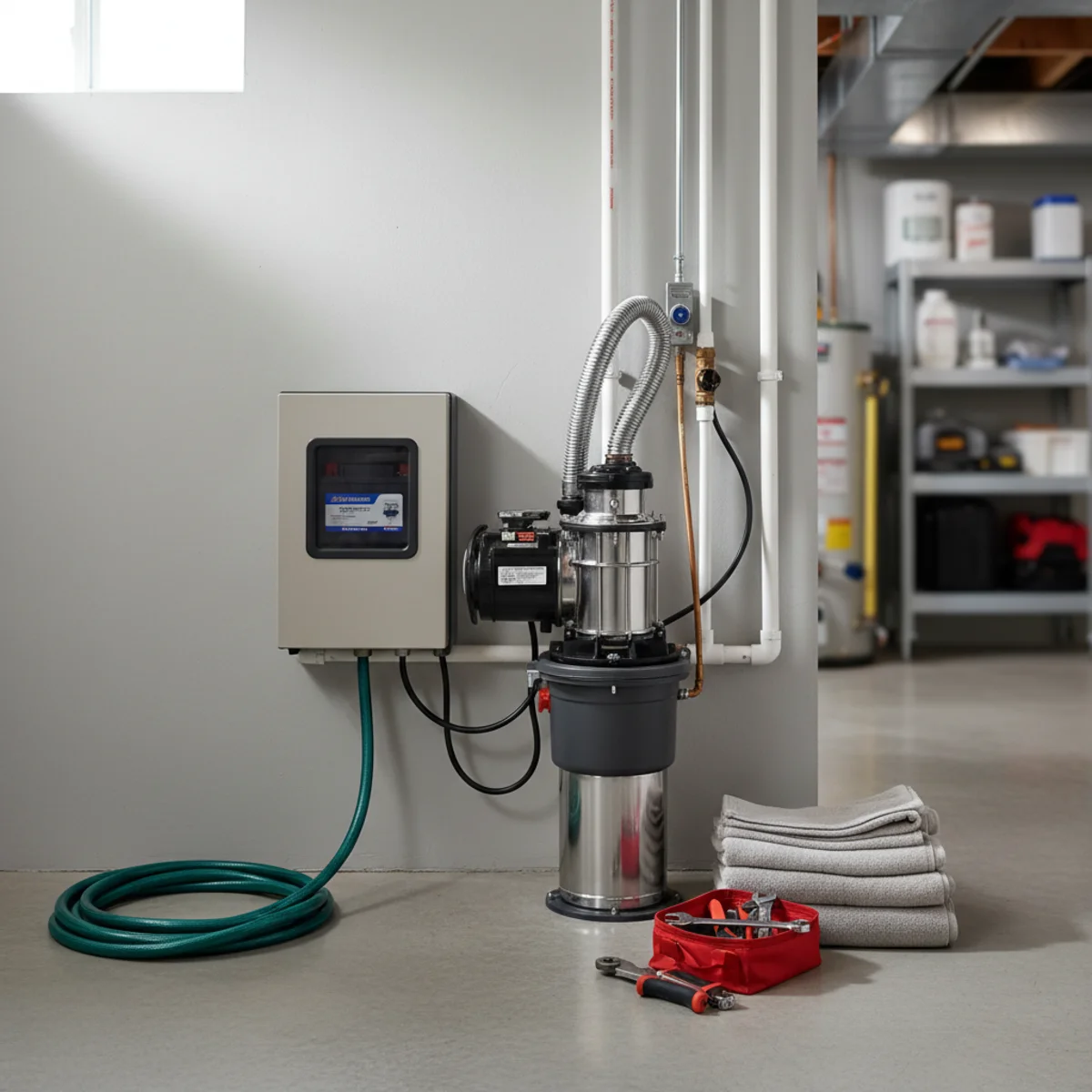
1/3 HP Sump Pump: Best For, Pros & Cons
Best for
Typical residential basements with average water loads
Ideal property: Standard basements with a moderate water table and normal discharge runs
Pros
- Plenty of capacity for typical residential water loads
- Efficient and cost-effective
- Widely available and well-suited to standard pits
- Good everyday choice for most homes
Cons
- May be undersized for high water tables or long discharge runs
- Less headroom during extreme snowmelt than a 1/2 HP pump
Services and Guides for a 1/3 HP Sump Pump
1/3 HP Sump Pump Questions Answered
For most standard residential basements with an average water table, yes. If you have a high water table, deep pit, or long discharge run, a 1/2 HP pump may serve you better. We size it to your home.
A 1/2 HP pump moves more water and pushes it farther. A 1/3 HP pump handles typical loads efficiently and costs less. The right choice depends on your water load and discharge geometry, not just a bigger number.
For a typical basement, yes. For lots with a high water table or heavy clay-soil saturation during snowmelt, we may recommend stepping up for more headroom.
Many last around seven to ten years, depending on how often they run, the quality of the pump, and the water in the pit. Pumps that cycle constantly in spring, or sit in silt, tend to wear out sooner.
It can be, if the water load is typical and a backup is in place. The finished space raises the cost of a failure, so the backup and an alarm matter as much as the primary's size.
Get Help Choosing a 1/3 HP Sump Pump
Get professional sump pump help from a local Littleton specialist. Clear, upfront estimates and careful, clean workmanship.
Available by appointment. Emergency sump pump help available.