

Sump Pump Type
Submersible Sump Pump Installation
Quiet, powerful, and sealed underwater — the workhorse of most basements.
A submersible sump pump sits down inside the pit, fully sealed, with the motor underwater. It's the type we install most often in Littleton basements — quiet, powerful, and out of the way. If you have a finished basement or a real water load, this is usually the right starting point.
Because the whole unit lives in the basin, it runs quietly and handles small debris better than a pedestal pump.
- Local Littleton Service
- Professional Installation
- Clear, Upfront Estimates
- Battery Backup Options
- Careful, Clean Workmanship
- Emergency Help Available
How a Submersible Pump Works
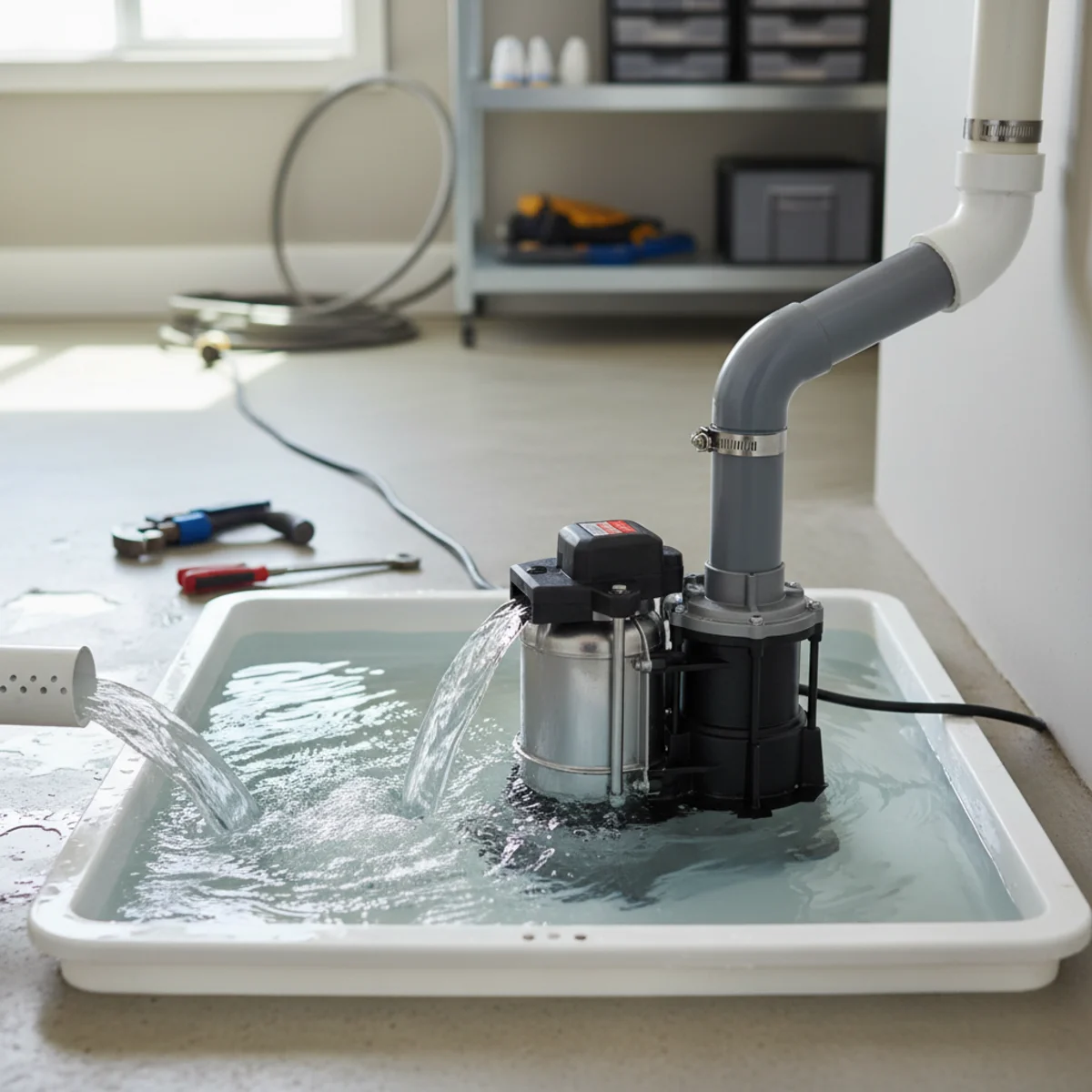
Water enters the pit, lifts a float switch, and the submerged motor drives an impeller that pushes water up the discharge line and out of the house. When the pit drops, the float shuts it off. Because it's sealed and underwater, it stays quiet and cool.
What Sets a Submersible Apart
A submersible pump is built to live underwater. The motor is sealed inside an oil-filled or air-filled housing, and the whole unit sits on the floor of the pit. Water flows in through a screened intake near the bottom, the impeller pushes it up, and it leaves through a discharge port on top.
That design has three practical effects. The surrounding water cools the motor, which helps it run long cycles during snowmelt. The water and a sealed lid muffle noise, which matters in a finished basement. And because nothing sticks up out of the pit, the lid can sit flush and seal, keeping out debris, odor, and curious kids or pets.
Submersible vs Pedestal, in Practice
The main trade-off is access versus performance. A pedestal pump's motor sits above the pit, so it's easy to see and service, and it never gets wet. But it's louder, takes up headroom, and needs an open or vented lid. A submersible is out of sight and quieter, moves more water for its size, and fits a sealed lid, but it has to be lifted out for service.
For most finished and partly finished basements, those advantages make the submersible the better choice. A pedestal still earns its place in a narrow or shallow pit that can't fit a submersible, or in an unfinished utility space where noise doesn't matter.
If you're replacing a pedestal with a submersible, check the pit first. Some older basins are too narrow for a submersible and its float, and the upgrade means a new basin as well as a new pump.
Is It Right for Your Littleton Home?
For most homes here — especially finished basements and lots with a real water load — yes. We typically pair a cast-iron submersible with a check valve, a sealed lid, and a battery backup for a complete, dependable system.
If your pit is unusually narrow or shallow, a pedestal pump may fit better. We'll confirm during the estimate.
Choosing a Submersible: Housing, Switch, and Size
Three choices matter most. The housing affects heat and durability: cast iron sheds heat best and suits pits that cycle often, thermoplastic costs less and suits lighter loads, and stainless steel resists corrosion at a higher price. The switch affects reliability: vertical floats suit most residential pits, tethered floats need room to swing, and electronic switches fit tight spaces.
Size comes last, not first. A 1/3 HP submersible handles many homes; deeper basements, long discharge runs, or heavy spring inflow may call for 1/2 HP. The right size delivers enough flow at your lift height without emptying the pit so fast that the pump short-cycles.
What a Good Submersible Installation Includes
- A basin large enough for a healthy cycle, set at the basement's low point
- The pump raised slightly off the bottom so silt doesn't settle at the intake
- A check valve close to the pump, with the arrow pointing up
- A small relief hole drilled in the riser below the check valve to prevent air lock
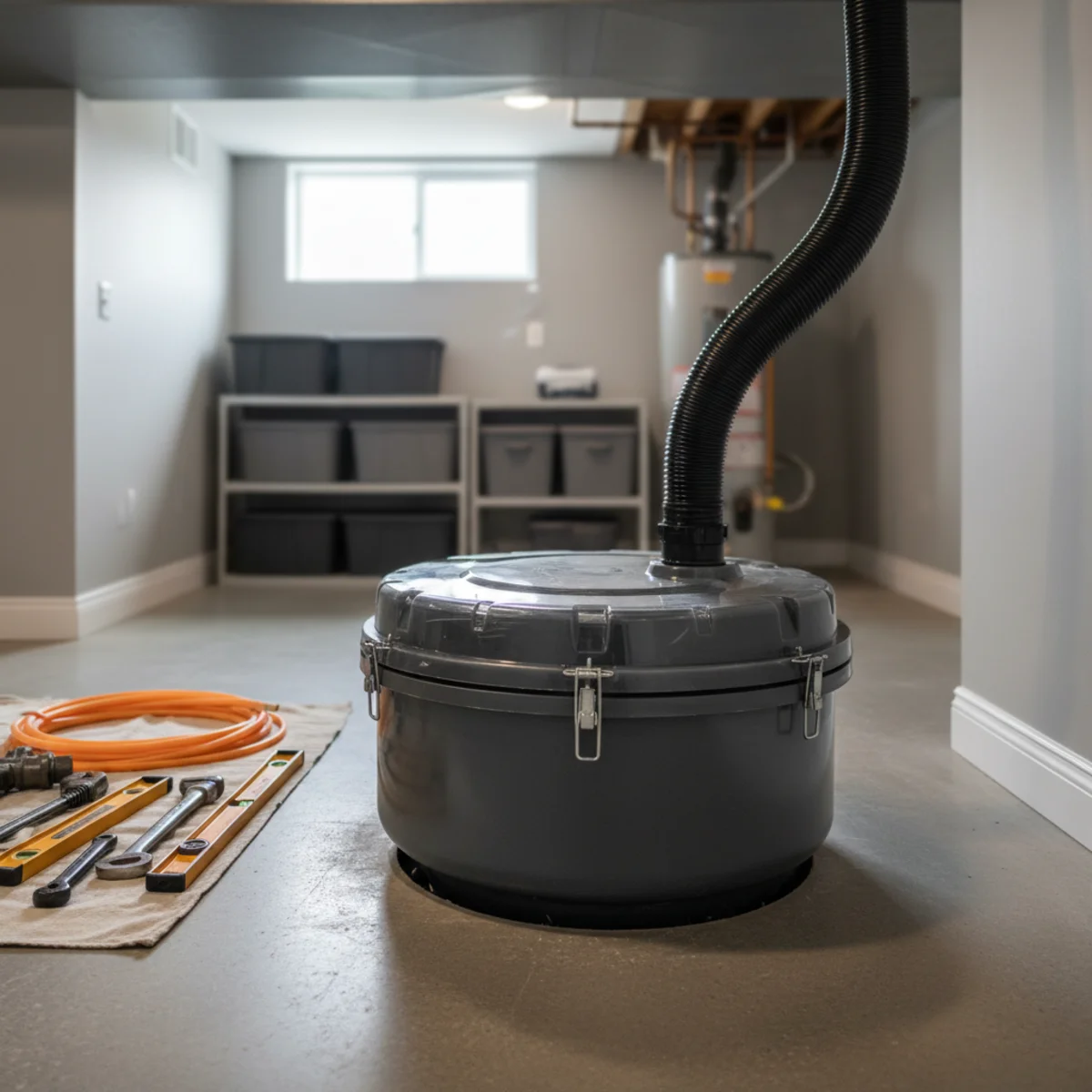
- A sealed, gasketed lid with grommets for the pipe and cords
- A dedicated, grounded outlet with no extension cord
- Room in the pit for a backup pump, or a plan to add one
From the field
What We Check Before Installing One
Before we drop a submersible into an existing pit, we measure the basin's width and depth and look at the float's clearance. Many builder pits are narrow enough that a tethered float catches the wall, so we choose a pump with a vertical float or replace the basin.
We also look at what the old pump left behind. A heavy layer of silt, an old check valve, or a discharge pipe that's been narrowed all affect how a new pump performs. Fixing those at the same time is cheaper than coming back later.


Submersible Sump Pump: Best For, Pros & Cons
Best for
Most Littleton basements, finished spaces, and higher water loads
Ideal property: Finished or unfinished basements where quiet operation and capacity matter
Pros
- Runs quietly because the motor sits underwater in the pit
- Handles higher water loads and small debris well
- Takes up no floor space — fully contained in the basin
- Pairs cleanly with a sealed lid and battery backup
Cons
- Slightly harder to service since it sits in the pit
- Quality varies widely — a cast-iron unit outlasts a cheap thermoplastic one
Services and Guides for a Submersible Sump Pump
Submersible Sump Pump Questions Answered
For most Littleton basements, yes — it's quieter, handles more water and debris, and takes up no floor space. Pedestal pumps still make sense for very narrow or shallow pits. We match the type to your pit and water load.
Typically 7 to 10 years, with cast-iron models often lasting longer than thermoplastic ones in Colorado's mineral-rich water. Routine testing and maintenance help it reach the high end of that range.
Yes. We commonly install a submersible primary alongside a battery backup pump in the same pit, with an alarm — the most dependable setup for finished basements.
Air can get trapped between the impeller and the check valve, especially after the pit runs dry. A small relief hole in the discharge pipe, below the check valve and inside the pit, lets that air escape so the pump can move water instead of spinning in air.
It can, but it's better raised a little on a flat stone or brick. That keeps the intake above the silt that settles between cycles, which helps the pump and float last longer.
Get Help Choosing a Submersible Sump Pump
Get professional sump pump help from a local Littleton specialist. Clear, upfront estimates and careful, clean workmanship.
Available by appointment. Emergency sump pump help available.