

Sump Pump Type
Cast Iron Sump Pump Installation
Built to outlast thermoplastic in Colorado's mineral-rich water.
When homeowners ask which sump pump lasts longest in Colorado, the answer usually involves cast iron. A cast-iron housing dissipates heat and resists the mineral-rich water common here, so the pump runs cooler and lasts longer. It's the durable choice we recommend for most Littleton basements.
Thermoplastic pumps are cheaper up front, but cast iron tends to win on lifespan.
- Local Littleton Service
- Professional Installation
- Clear, Upfront Estimates
- Battery Backup Options
- Careful, Clean Workmanship
- Emergency Help Available
Why Cast Iron Lasts Longer Here
Colorado's water carries minerals that wear on pump components. A cast-iron body handles that better than plastic and pulls heat away from the motor, which is the part that usually fails first. The result is a pump that holds up through more seasons of hard use.
Heat Is What Wears Out Pump Motors
Every time a sump pump runs, its motor heats up. In a pit that cycles a few times a day, that's not a problem. In a pit that cycles every few minutes for weeks during snowmelt, heat builds and slowly breaks down the motor's windings, seals, and switch.
Cast iron draws that heat away from the motor and passes it into the surrounding water faster than plastic does. That's the main reason cast-iron pumps tend to last longer in hard-working pits, and why we lean toward them for many Littleton basements.
Littleton's water adds to the load. Groundwater here often carries minerals that leave scale in the pit and on the pump. Cast iron with a good coating handles that buildup well, and its heavier construction resists the wear that comes from silt and grit moving through the intake.
Cast Iron Compared With Other Housings
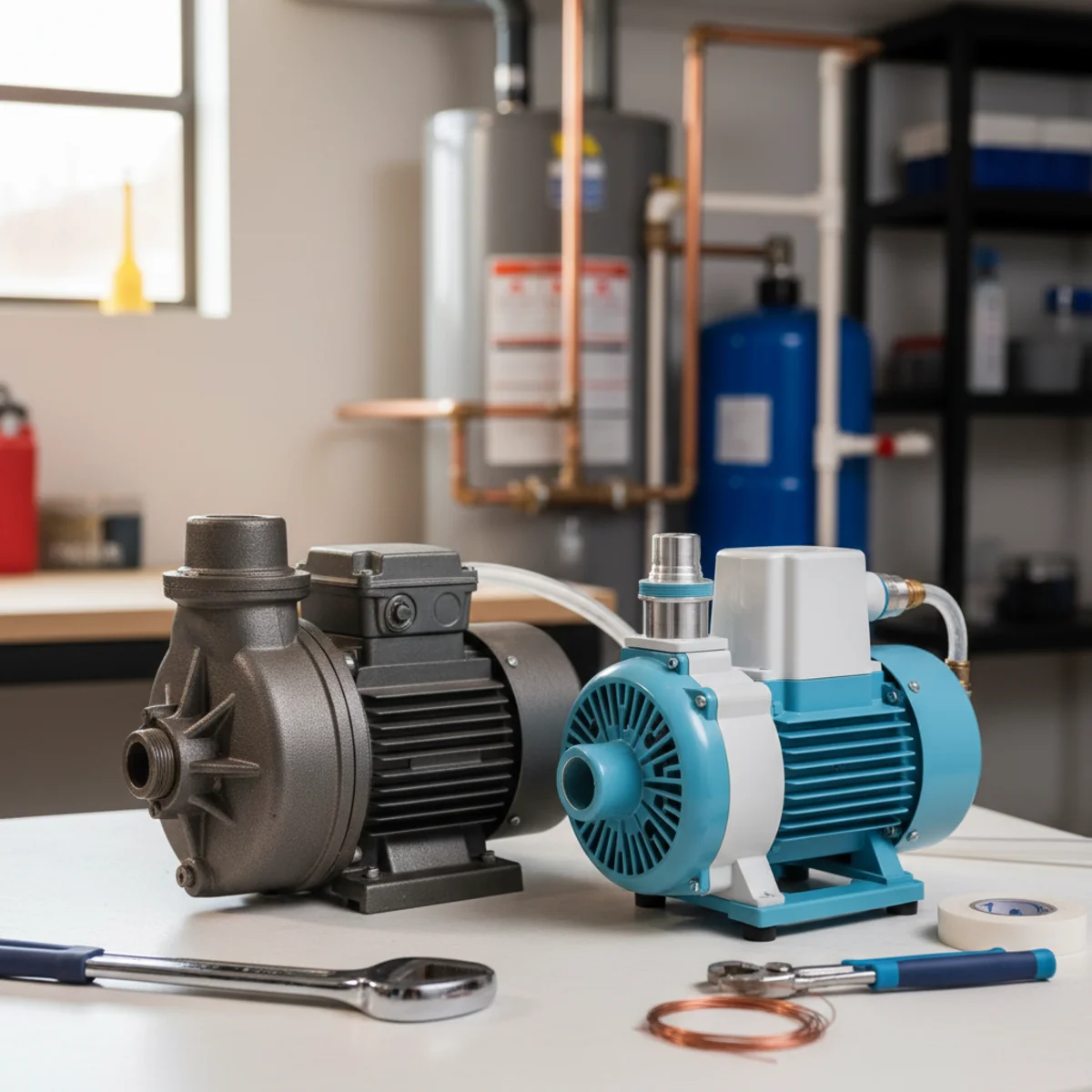
- Cast iron: best heat transfer, heavy, coated to resist rust; suits frequent cycling
- Thermoplastic: light, never rusts, lower cost; suits pits that run less often
- Stainless steel: resists corrosion, lighter than cast iron, higher price
- Cast-iron motor with plastic base: a common middle ground on mid-priced pumps
- Bronze: rare in homes; used where water is especially corrosive
The Long-Term Value
Spending a bit more on a cast-iron submersible often means fewer replacements over the life of the home. For a finished basement — where a failure is expensive — that durability is worth it.
We'll spec the right cast-iron pump for your water load and pit, and pair it with a backup for full protection.
Features to Look For in a Cast-Iron Pump
Not every cast-iron pump is built the same. Look for an epoxy or powder coating inside and out, which slows corrosion. A cast-iron or bronze impeller holds up better than a plastic one in silty water. A screened bottom intake keeps gravel out of the impeller.
The switch matters as much as the housing. A mechanical vertical float with a sturdy mount is reliable and easy to service. Check the warranty, too; a longer warranty usually reflects better seals and bearings.
Finally, think about how the pump will be serviced. A heavier cast-iron unit benefits from a union on the discharge line, so it can be lifted out without cutting pipe. That small detail makes every future cleaning and replacement easier.
Getting the Most Years From Cast Iron
Cast iron's durability depends on how it's installed and cared for. Raising the pump slightly off the bottom keeps silt away from the intake. A working check valve stops the pump from re-pumping the same water, which cuts run time and heat. A clean pit and a yearly test catch a sticky float before it causes trouble.
Some surface rust on an older pump is normal. Deep pitting, cracks, or flaking around the seams are signs the housing is near the end.
When the time does come to replace it, plan the swap in the dry season so the new pump goes in with a fresh check valve and a clean pit.
Who Benefits Most From Cast Iron
Cast iron makes the most sense for homes where the pit runs often in spring, the basement is finished, or the pump sits in mineral-heavy water. It's also a good fit for homeowners who'd rather replace a pump less often and are willing to pay a little more up front. For a lightly used pit in an unfinished space, a good thermoplastic pump paired with a backup is often enough.
From the field
What We See in Hard-Working Pits
In pits that run constantly every spring, we often find plastic pumps that wore out in a few years, while cast-iron pumps in similar pits kept going much longer. Heat is usually the difference.
We don't recommend cast iron everywhere. In a pit that rarely runs, or in an unfinished space with a backup in place, a quality plastic pump can be a sensible choice. We base the recommendation on how hard the pit works and what a failure would cost.


Cast-Iron Sump Pump: Best For, Pros & Cons
Best for
Homeowners who want maximum longevity and debris/mineral resistance
Ideal property: Most Littleton basements, especially finished spaces and heavy-use systems
Pros
- Cast-iron housing dissipates heat, helping the motor run cooler and last longer
- Stands up to debris and mineral-rich water better than thermoplastic
- Heavier, more stable in the pit
- Often the best long-term value
Cons
- Higher up-front cost than thermoplastic
- Heavier to handle during service (a pro's concern, not yours)
Services and Guides for a Cast-Iron Sump Pump
Cast-Iron Sump Pump Questions Answered
For most Littleton homes, yes. Cast iron runs cooler and resists mineral-rich water, so it typically outlasts thermoplastic. Over the life of the home, that often means fewer replacements — good value, especially for finished basements.
Cast iron generally lasts longer and handles heat and minerals better. Plastic costs less up front and can be fine for light-duty, unfinished spaces. We match the choice to your water load and how much is at stake below grade.
Often at the higher end of the 7–10 year range, sometimes longer with routine maintenance, thanks to better heat dissipation and durability.
Yes. A cast-iron pump can weigh noticeably more than a plastic one, which makes lifting it out of a deep pit harder. That's worth knowing if you plan to clean the pit yourself. For most homeowners, the extra lifespan outweighs the extra weight.
Yes. A cast-iron primary pump pairs with a battery or water-powered backup in the same pit. Many combination systems use a cast-iron primary and a lighter DC backup pump mounted above it.
Get Help Choosing a Cast-Iron Sump Pump
Get professional sump pump help from a local Littleton specialist. Clear, upfront estimates and careful, clean workmanship.
Available by appointment. Emergency sump pump help available.