

Sump Pump Type
Combination Sump Pump Systems
Primary plus backup, engineered to work together in one pit.
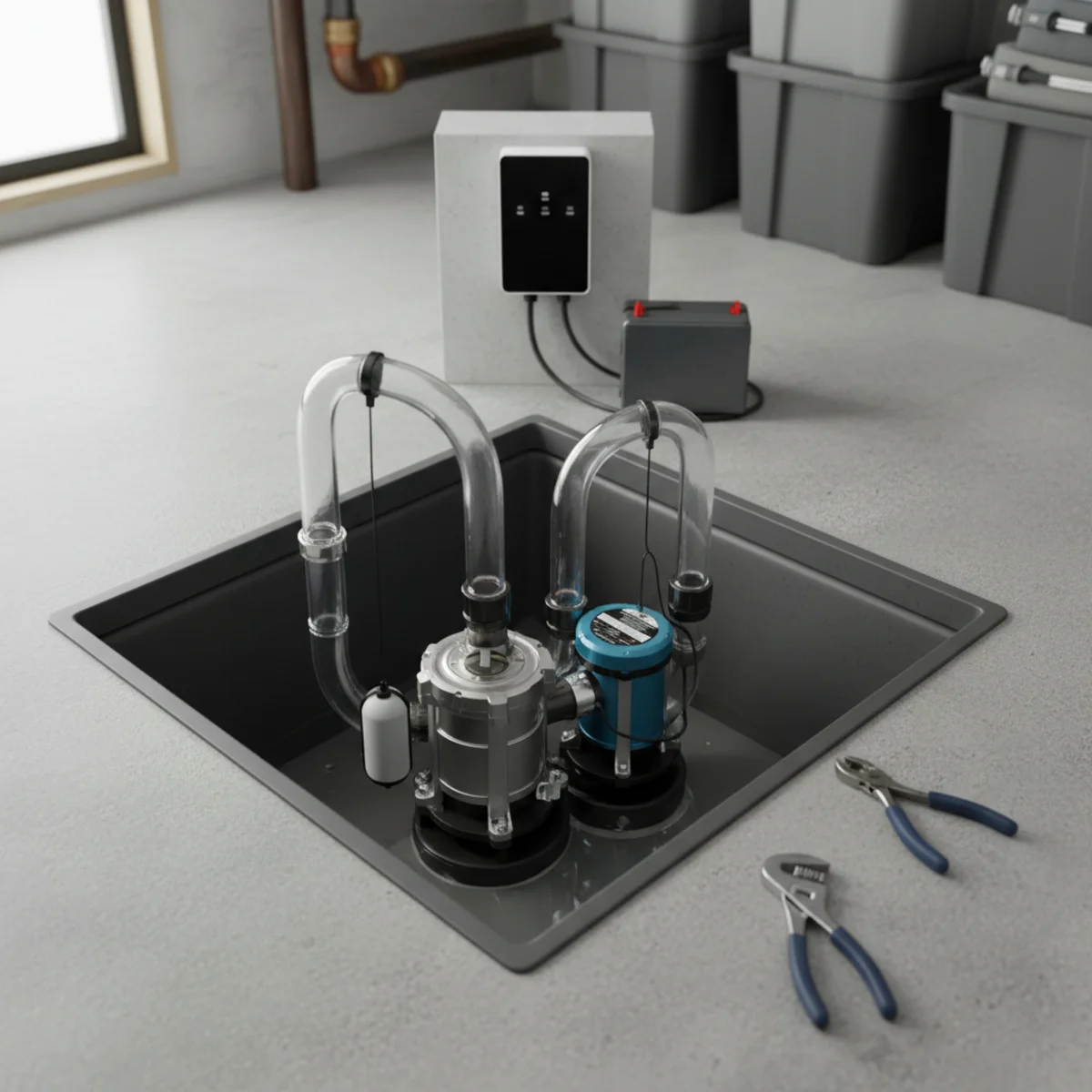
A combination sump pump system puts a primary pump and a battery backup in the same pit, engineered to work as one. The primary handles everyday water; the backup takes over automatically during a power outage or if the primary can't keep up. For finished basements, it's the most dependable setup we install.
If a failure would ruin your lower level, this is the protection to ask about.
- Local Littleton Service
- Professional Installation
- Clear, Upfront Estimates
- Battery Backup Options
- Careful, Clean Workmanship
- Emergency Help Available
How a Combination System Works
Both pumps share the pit. The primary runs on household power for normal water removal. The controller monitors for power loss or rising water and switches to the battery-powered backup automatically, sounding an alarm so you know it engaged.
What's in the Box
- An AC primary pump, often cast iron, that does the everyday work
- A DC backup pump mounted above it, with its own float set higher
- A shared discharge connection with check valves for each pump
- A controller with a charger, battery monitor, and high-water alarm
- A deep-cycle battery, usually purchased or supplied separately
- Pre-plumbed fittings that make the two pumps fit a standard pit
Combination Unit vs Separate Pumps
A combination system is a primary pump and a backup pump designed to work together, often sold assembled on a common discharge. A separate setup uses two independent pumps chosen and plumbed on site. Both give you two ways to keep the pit down.
The combination unit's advantage is fit. Its parts are sized to sit in a typical residential basin without crowding the floats, and the plumbing is planned in advance. The separate setup's advantage is choice: you can pick the exact primary pump, backup, and battery you want, and replace each one independently.
Cost tends to be similar either way once installation is included. The bigger difference is long-term: with a combination unit, replacing the primary often means replacing the whole assembly, while separate pumps can be swapped one at a time.
Who Should Consider One
Finished basements, homes with a high water table, and anyone who has lost power during a storm. The combination removes the single biggest risk — the primary pump having nothing to run on when the power's out.
We size both pumps to your water load and confirm the pit can house the pair.
Pit Size and Installation Details
Two pumps need room. In a narrow builder pit, a combination unit is often the only way to fit a backup without replacing the basin. In a larger pit, either approach works. Either way, each pump's float needs clear space to move, and the backup's float must sit above the primary's so the two never fight.
The controller and battery mount outside the pit, on the wall or a shelf, out of splash range and where someone will hear the alarm. The battery should sit in a vented box off the floor.
Plan the discharge, too. A shared discharge needs a check valve on each pump's line before the two join, or one pump can push water back through the other. A union on each line makes future service much easier.
Caring for a Two-Pump System
A combination system needs the same care as any sump pump, plus attention to the backup. Test the primary with a bucket of water. Then unplug it and test again to make sure the backup starts and empties the pit. Check the controller's status lights monthly, and replace the battery every three to five years even if it still shows a charge.
Because the backup rarely runs, its float and switch can stick without anyone noticing. A twice-yearly test is the only way to know it will start when it's needed.
If the alarm sounds, take it seriously. It means either the primary has failed or the water is rising faster than it can handle, and the backup is doing the work.
Choosing the Battery
Most combination systems ship without a battery or with a basic one. A sealed AGM deep-cycle battery is the usual choice in finished basements because it needs no water and doesn't vent fumes during normal use. Larger batteries give longer runtime during outages. Write the install date on the battery and plan to replace it every three to five years.
From the field
When We Recommend a Combination Unit
We recommend combination systems most often when a homeowner wants backup protection in a standard pit that's too tight for two independent pumps. The pre-planned layout keeps both floats clear and the plumbing neat.
When the pit is larger, or the primary pump is fairly new, we often suggest separate pumps instead. That way each part can be replaced on its own schedule, and the homeowner isn't replacing a good primary just to add a backup.



Combination Sump Pump: Best For, Pros & Cons
Best for
Finished basements and high-water-table homes that can't risk a failure
Ideal property: Finished basements, high water tables, and homes prone to outages
Pros
- Primary and backup engineered to work together
- Automatic switchover during a power outage or primary failure
- Built-in high-water alarm
- The most dependable single setup for finished basements
Cons
- Higher up-front cost than a primary alone
- Backup battery still needs replacement every 3–5 years
Services and Guides for a Combination Sump Pump
Combination Sump Pump Questions Answered
It's a primary pump and a battery backup pump installed together in one pit, with a controller and alarm. The backup engages automatically if the power fails or the primary can't keep up — the most dependable single setup for finished basements.
It's purpose-built to work as one unit, which simplifies installation and switchover. Functionally it delivers the same protection as a well-matched primary plus backup — we'll recommend whichever fits your pit and budget.
Yes — plan on every 3 to 5 years. We test battery health at maintenance visits so the backup is ready when you need it.
Many will, since they're designed for standard residential basins. Very narrow or shallow pits may not have room for both pumps and their floats. We measure the pit first, and if it's too small, a larger basin may be the better upgrade.
Usually the old pump is replaced by the combination unit, since the primary is part of the system. If your current pump is newer and in good shape, adding a separate backup pump may make more sense.
Get Help Choosing a Combination Sump Pump
Get professional sump pump help from a local Littleton specialist. Clear, upfront estimates and careful, clean workmanship.
Available by appointment. Emergency sump pump help available.