

Resource
Sump Pump Battery Backup Guide
What it is, how long it runs, and whether your basement needs one.
Quick answer
A sump pump battery backup is a second pump powered by a dedicated battery that takes over when the power goes out — which, during a storm, is exactly when your primary pump is needed and has nothing to run on. For most finished basements in Littleton, it's the single most important upgrade you can make.
Here's how backups work, what to expect, and how to decide.
- Local Littleton Service
- Professional Installation
- Clear, Upfront Estimates
- Battery Backup Options
- Careful, Clean Workmanship
- Emergency Help Available
How a Battery Backup Works
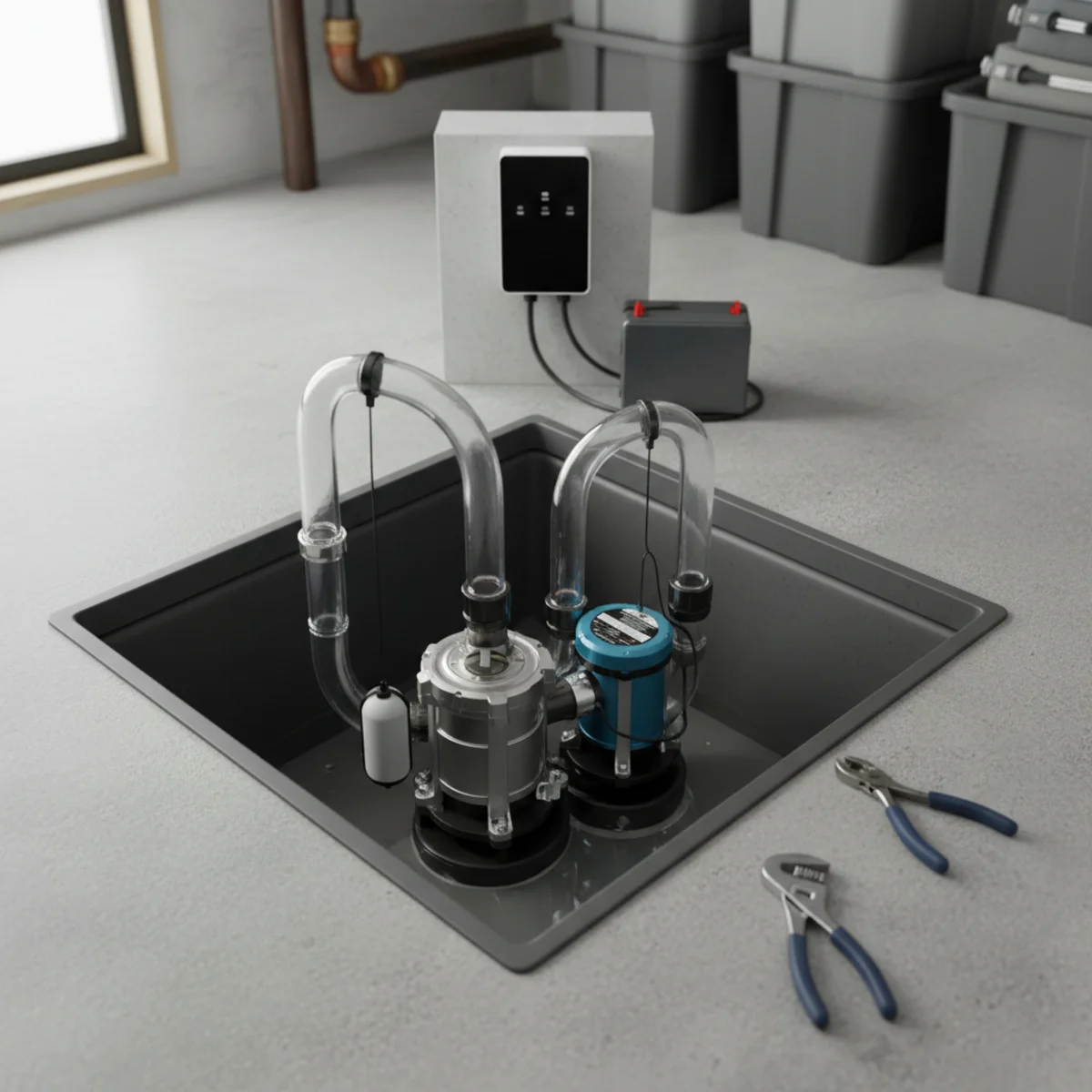
The backup pump sits in the same pit as your primary, with its own battery, charger, and controller. When household power fails — or the primary can't keep up — the controller switches to the battery-powered backup automatically and sounds a high-water alarm. The charger keeps the battery topped off so it's ready.
The backup's float sits a little higher than the main pump's, so under normal conditions it never runs. It only starts when the water rises past the point where the main pump should have handled it. That design means the backup also covers a failed primary pump, a stuck float, or a pump that simply can't keep up, not just power outages.
Most systems include a controller with status lights and an alarm that sounds when the backup runs or the battery is low. Some newer models also connect to Wi-Fi and send alerts to your phone.
Because it's a separate pump, the backup also protects against a mechanical failure of the main pump on an ordinary rainy day, when the power never goes out at all.
What Comes in a Backup System
- A DC backup pump that sits beside or above the main pump
- Its own float switch, set higher than the main pump's
- A deep-cycle battery, usually sealed AGM or flooded marine type
- A charger and controller that keep the battery ready and show its status
- A high-water alarm, often built into the controller
- A separate check valve and a connection into the discharge line
How Long Does It Run?
- Runtime depends on how often the pump cycles and battery capacity
- A healthy deep-cycle battery typically covers a normal outage
- Long outages or heavy water may need a larger or second battery
- Batteries last 3–5 years and need scheduled replacement
What Changes Runtime
Runtime is not a fixed number. It depends on the battery's capacity, its age, how much water enters the pit, and how high the pump has to lift it. A battery rated for many hours of light cycling may last far less during heavy spring inflow, when the pump runs every few minutes.
Battery age matters as much as size. An older battery that still shows a full charge at rest may run the pump for only a fraction of its original time under load. That's why scheduled replacement, rather than waiting for failure, is the safer plan.
Choosing and Caring for the Battery
Most backup systems use deep-cycle batteries designed to discharge slowly and recharge many times. Sealed AGM batteries need no water and are the most common choice in finished basements. Flooded batteries cost less but need their water level checked and should sit in a vented box.
Whichever type you choose, write the install date on the battery or the box. Keep it off the floor, away from the pit's splash, and in a spot where the controller's display is easy to see. Check the status lights monthly and replace the battery on schedule, usually every three to five years.
Pay attention to the charger, too. A good controller tests the battery automatically and warns when it can no longer hold enough charge. If yours has a test button or a self-test schedule, use it. If the alarm sounds for a low battery, don't silence it and forget it; that warning is the reason the system exists.
Do You Need One?
If your basement is finished, you have a high water table, or you've ever lost power during a storm — yes. The most common basement flood is a power outage during heavy rain with no backup in place. A water-powered backup is an alternative for homes on city water that never want a battery to manage.
Even an unfinished basement can justify one if it holds a furnace, water heater, or stored belongings you'd rather not lose. The question to ask is simple: what would a few hours of a dead pump during a storm cost you?
Homes that have lost power during a storm before, even briefly, are good candidates too. Short outages often come right when the pit is filling fastest.
Battery Backup vs Water-Powered Backup
Battery backups work in any home, including those on private wells, and they don't use water. Their limit is runtime: once the battery is drained, the backup stops. Water-powered backups use city water pressure to remove water from the pit, so they keep running as long as the municipal supply has pressure, but they use water while running and need a backflow preventer.
For many finished basements on city water, either one is a good choice. Homes on wells need a battery system. Some homeowners with high-value finished space install both, so a long outage or a dead battery doesn't leave the pit unprotected.
Testing a Backup the Right Way
To test a backup, unplug the main pump, then pour water into the pit until it rises past the main pump's start point. The backup should start, empty the pit, and stop. Let the alarm sound so you know it works. Then plug the main pump back in and confirm the controller returns to normal. Do this at least twice a year, before snowmelt and before summer storm season.
Getting a Backup Installed Right
We install and integrate battery and water-powered backups with new and existing systems. Call (207) 419-2600.
A good installation means the backup pump has its own check valve, its float is set above the main pump's, the battery sits in a vented box off the floor, and the controller is mounted where someone will hear its alarm. We test the full system with the main pump unplugged before we leave.
From the field
What We Find When Backups Fail
When a backup fails during an outage, the cause is usually the battery. It looked fine on the controller, but it was years old and couldn't carry the load. The second most common cause is a float set too low, so the backup ran every cycle and wore itself out before it was needed.
Both are easy to prevent. Replace the battery on a schedule, set the backup's float above the main pump's, and test the system under load twice a year.

Protection for the Night the Power Goes Out
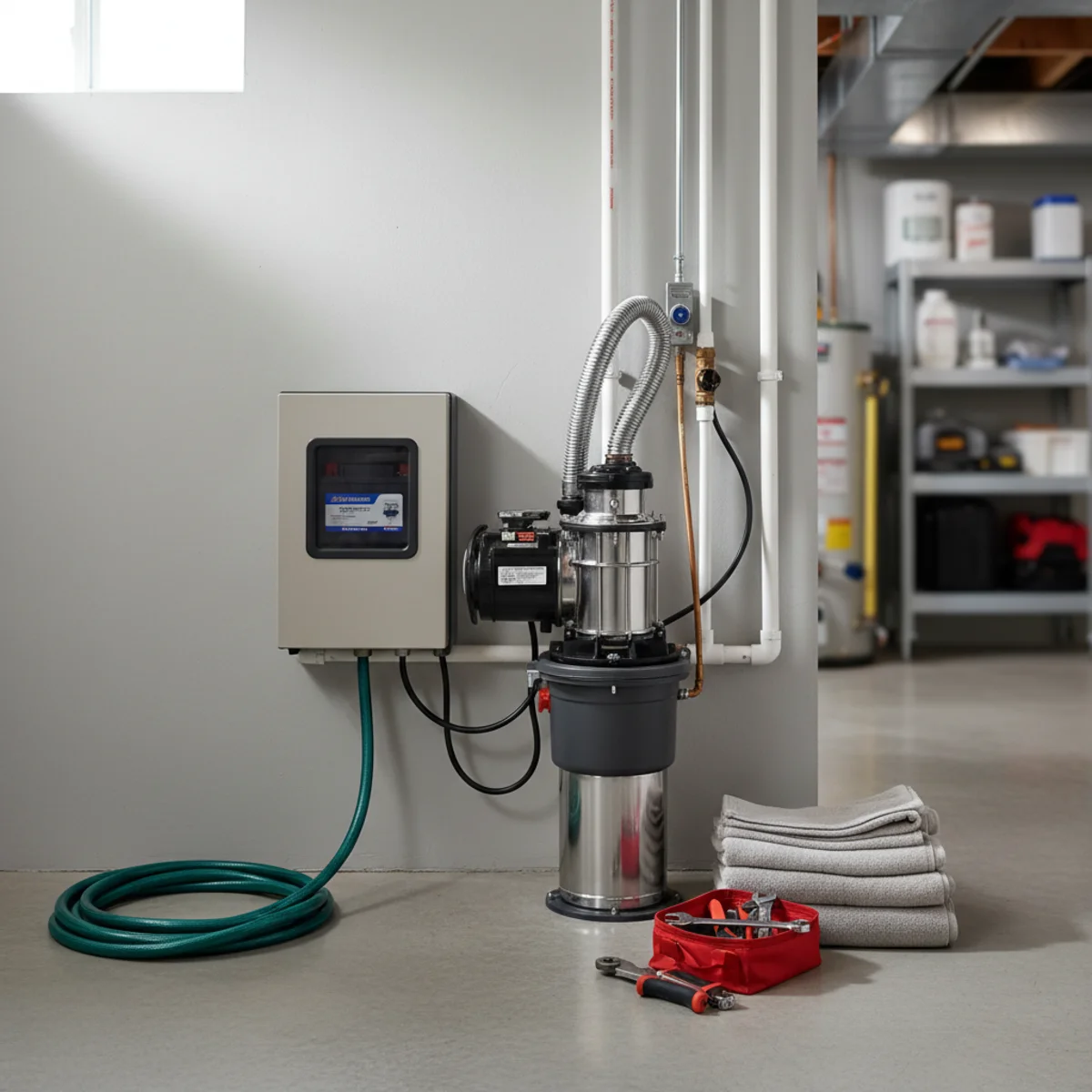
A battery backup turns a power outage from a flooded basement into a non-event. Install it in the same pit with its own float and check valve, choose a battery sized for your water load, and replace that battery on schedule. Test it with the main pump unplugged before each wet season, and it will be ready when the storm arrives.
Want a second opinion on your own system? Call (207) 419-2600 and talk it through with a local sump specialist.
Local service nearby
More guides related to battery backup sump pumps
Battery Backup Sump Pumps: Your Questions Answered
It depends on cycling frequency and battery capacity, but a healthy deep-cycle battery typically runs through a normal outage. For long outages or heavy water, a larger or second battery extends runtime.
Every 3 to 5 years for most systems. Test it during annual maintenance so you're not caught with a dead backup during a storm.
Battery backups are simple and work on any home. Water-powered backups never run out of charge but need municipal water pressure (not for wells). We'll recommend the right fit for your home.
Not usually. A standard battery backup runs its own DC pump, not your main AC pump. To run the main pump during an outage you'd need a generator or an inverter system sized for it. A dedicated backup pump is simpler and starts automatically.
Talk to a Local Pro About Battery Backup Sump Pumps
Get professional sump pump help from a local Littleton specialist. Clear, upfront estimates and careful, clean workmanship.
Available by appointment. Emergency sump pump help available.