

Resource
Sump Pump Discharge Line Guide
How deep, how far, and what size — done right for Colorado winters.
Quick answer
A sump pump discharge line should carry water below the frost line and release it at least 10 feet from the foundation, pitched so it drains fully. Get those three things right — depth, distance, and slope — and the line won't freeze back in winter or recycle water against your basement wall. Get them wrong and the whole system stalls.
Here's how a discharge line should be set up, especially in Colorado.
- Local Littleton Service
- Professional Installation
- Clear, Upfront Estimates
- Battery Backup Options
- Careful, Clean Workmanship
- Emergency Help Available
The Rules That Matter
- Depth: bury the line below the frost line to prevent winter freeze-back
- Distance: terminate at least 10 feet from the foundation
- Slope: pitch the line so water drains fully and doesn't sit and freeze
- Size: match the pump's discharge outlet; don't narrow the pipe
- Direction: route away from walkways, neighbors, and low spots
- Check valve: install one at the pump to prevent backflow into the pit
Planning the Route From Pit to Outlet
A discharge line has three parts: the vertical riser from the pump, the run through the wall or rim joist, and the exterior section to the outlet. Each needs to be right. Inside, the riser should go straight up with the check valve close to the pump, then turn toward the wall with as few elbows as possible.
Outside, the line should slope steadily down from the house to the outlet, with no dips where water can sit. Every low spot is a place for water to freeze. The outlet should end where the ground slopes away from the house, not toward a neighbor's yard, a sidewalk, or the driveway, where water can freeze into ice.
Where the line passes through the wall or rim joist, seal the penetration well. A gap there lets cold air, insects, and water into the basement, and it can let the pipe shift and lose its slope over time.
Common Termination Options
- Pop-up emitter: a buried line ends in a cap that lifts when water flows and closes when it stops
- Daylight outlet: the line exits to open ground on a slope lower than the pipe
- Splash block or above-ground hose: simple and cheap, but needs managing in winter
- Dry well: a gravel-filled pit that lets water soak in, best in soils that drain well
- Storm drain or curb connection: only where local rules allow it; check before connecting
Pipe Size and Materials
Most residential sump pumps discharge through 1-1/4 or 1-1/2 inch pipe, and the line should never be smaller than the pump's outlet. Inside the house, rigid PVC is standard because it holds its shape and seals well at the check valve and unions. Outside, rigid pipe holds slope better than corrugated hose, which sags between supports and traps water.
If the exterior run is long, stepping up to a larger diameter outside can reduce friction and help the pump move water more easily. Avoid flexible hoses that kink, flatten under snow, or get mowed over. They're fine as a temporary fix but not as a permanent line.
Support the pipe inside with hangers or straps so its weight doesn't hang on the pump or the check valve. Outside, a buried line should rest on firm, even soil or a gravel bed, which keeps it from settling into a low spot. A cleanout or union near the house makes it much easier to clear a clog later without cutting pipe.
Keeping the Line From Freezing
A line freezes when water sits in it long enough to turn to ice. The best protection is slope, so the pipe drains completely after each cycle. A buried line below the frost line stays warmer, but it still needs to drain to its outlet.
A freeze relief fitting near the foundation adds a safety outlet. If the buried section ices over, water spills out of the fitting near the house instead of backing up and making the pump run against a blocked line. That's not a long-term solution, but it protects the pump while the line thaws.
Above-ground hoses are the most likely to freeze. Shorten or remove them in winter and let the pump discharge to a splash block close enough to stay clear of drifts.
Seasonal Outlet Checks
- Fall: walk the line, clear leaves from the outlet, and replace any cracked or flattened hose
- Winter: keep the outlet clear of snow piles and check for ice after cold snaps
- Early spring: confirm water flows freely as snowmelt starts and the pump runs more
- Summer: check that mowing, landscaping, or new plantings haven't crushed or blocked the line
- Any time: look for water pooling near the foundation, a sign the line is short or blocked
Where Discharge Water Isn't Allowed
- Into the sanitary sewer or a floor drain connected to it, which most cities prohibit
- Onto a neighbor's property or across a shared walkway
- Into a septic system, which it can overload
- Onto a public sidewalk, where it can freeze into a hazard
Why It's Different in Colorado
Front Range freeze-thaw cycles punish shallow lines. Water left in an above-ground or shallow pipe freezes, ice builds at the outlet, and the pump has nowhere to send water — right when snowmelt is loading the pit. A line trenched below the frost line with a freeze-resistant termination avoids that.
Distance matters too: water dumped next to the foundation soaks back into the clay and presses against the wall again.
Snow cover adds another problem. An outlet that sits low against the house can be buried by a drift or a plowed pile, then ice over at the exact spot where water needs to escape. Outlets should end where snow won't pile up and where melting water can run away freely.
Fixing a Line That Freezes or Floods Back
If your line is above ground, freezes in winter, or releases water near the foundation, it's worth re-routing. We install and correct discharge lines for Colorado conditions. Call (207) 419-2600.
The fix depends on the problem. Some lines need a new route with steady slope. Some need a buried section replaced because it sagged or cracked. Others need a freeze relief fitting near the house or a better termination at the end. We look at the full run, from the pump to the outlet, before recommending changes.
From the field
Lines We Rebuild Most Often
The lines we rebuild most are ones that looked fine when installed but lost their slope over time. A buried pipe settles, a section sags between two rocks, and a low spot forms that holds water. In January, that low spot freezes and the pump runs against a blocked line.
The second most common is an outlet that ends too close to the house. The water soaks back into the clay and returns to the pit, so the pump keeps moving the same water in a loop.

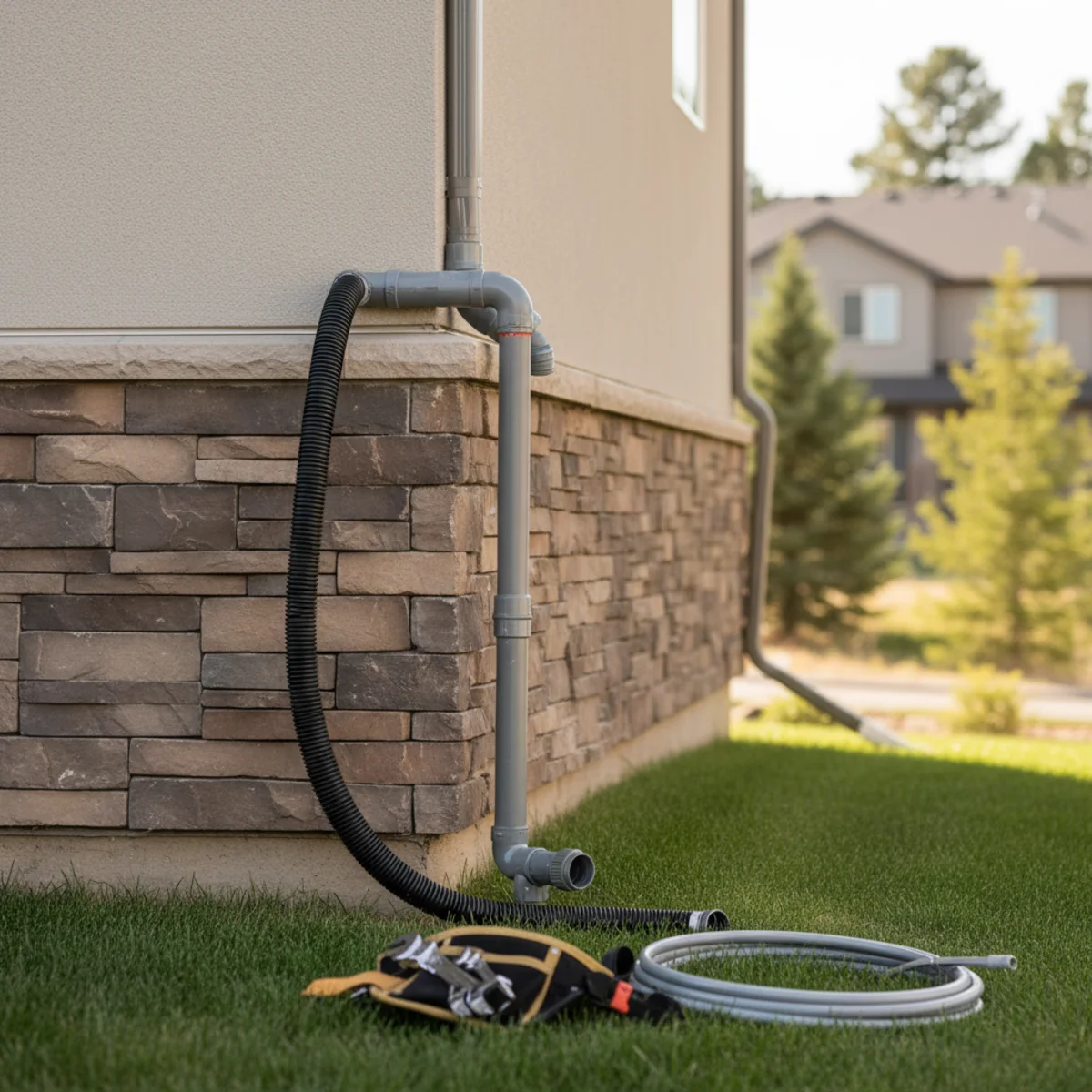

Get the Water Away and Keep It Moving
A discharge line has a simple job: carry water away from the house and drain completely after each cycle. Size it to the pump, slope it steadily, end it well away from the foundation, and protect it from freezing. Check the outlet each season, especially in winter, and the whole sump system will work the way it should.
Want a second opinion on your own system? Call (207) 419-2600 and talk it through with a local sump specialist.
Local service nearby
More guides related to sump pump discharge lines
Sump Pump Discharge Lines: Your Questions Answered
At least 10 feet from the foundation, on ground that slopes away from the house, and not toward walkways or neighbors. Releasing water close to the house just feeds the soil that caused the problem.
Below the frost line for your area. A shallow or above-ground line freezes back in Colorado winters and leaves the pump with nowhere to send water during snowmelt.
Match it to the pump's discharge outlet (commonly 1.5 inches) and keep it full-size the whole run. Narrowing the pipe chokes flow and overworks the pump.
Usually not. Most floor drains connect to the sanitary sewer, and many cities prohibit sending groundwater there because it overloads treatment plants during storms. Discharge should go outside to a safe spot on your property, unless your local utility specifically allows otherwise.
Talk to a Local Pro About Sump Pump Discharge Lines
Get professional sump pump help from a local Littleton specialist. Clear, upfront estimates and careful, clean workmanship.
Available by appointment. Emergency sump pump help available.