
Resource
Best Sump Pump for Basement Protection
How to choose by water load, pit, and what's at stake below grade.
Quick answer
There's no single "best" sump pump for every basement — the right choice depends on your water load, pit size, discharge run, and how much is at stake below grade. That said, for most Littleton basements we install a cast-iron submersible primary paired with a battery backup. Here's how to think it through for your home.
This is advice, not a sales pitch for a brand. The best pump is the one sized correctly for your basement.
- Local Littleton Service
- Professional Installation
- Clear, Upfront Estimates
- Battery Backup Options
- Careful, Clean Workmanship
- Emergency Help Available
How to Choose
- Water load: higher water tables and heavy snowmelt call for more capacity (often 1/2 HP)
- Housing: cast iron outlasts thermoplastic in Colorado's mineral-rich water
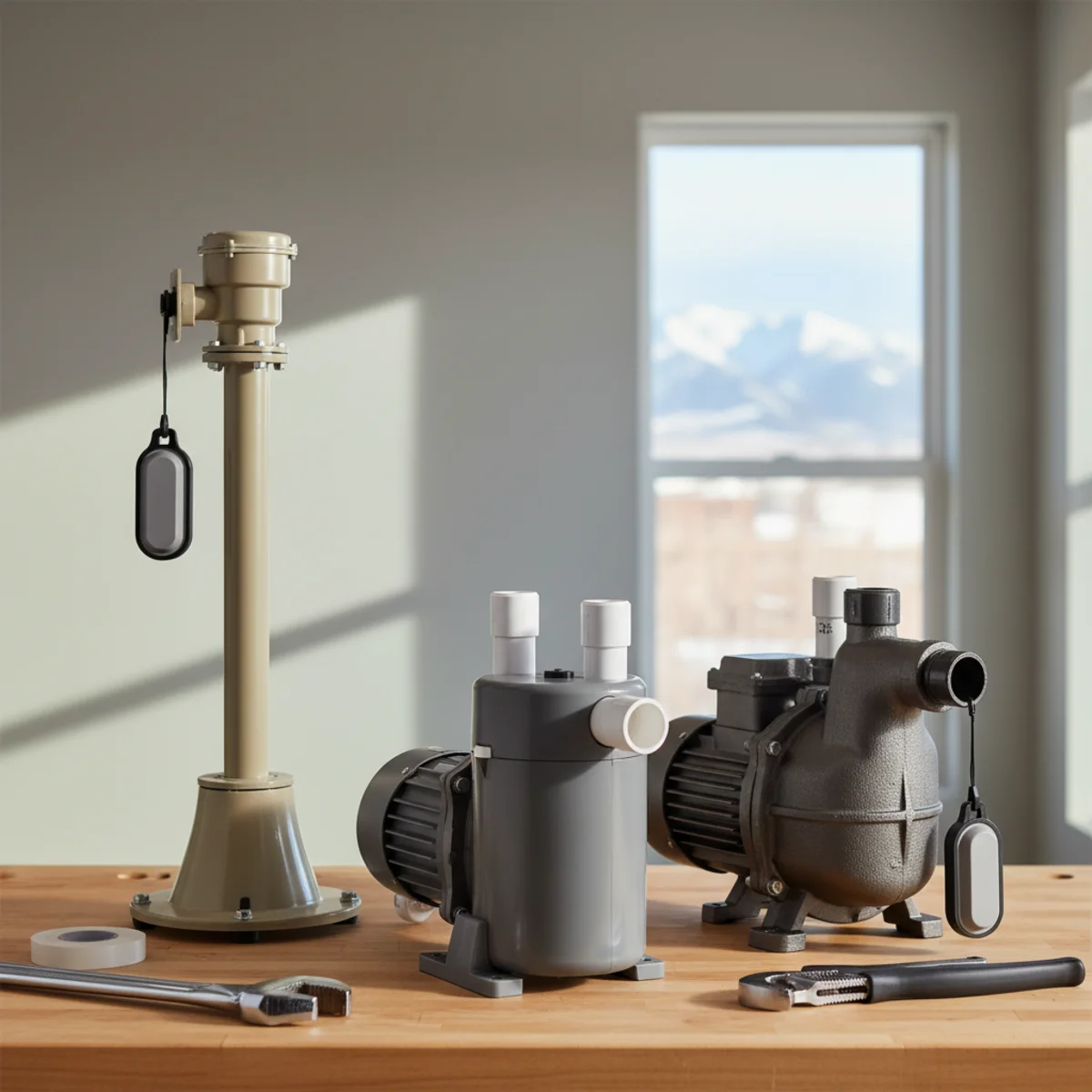
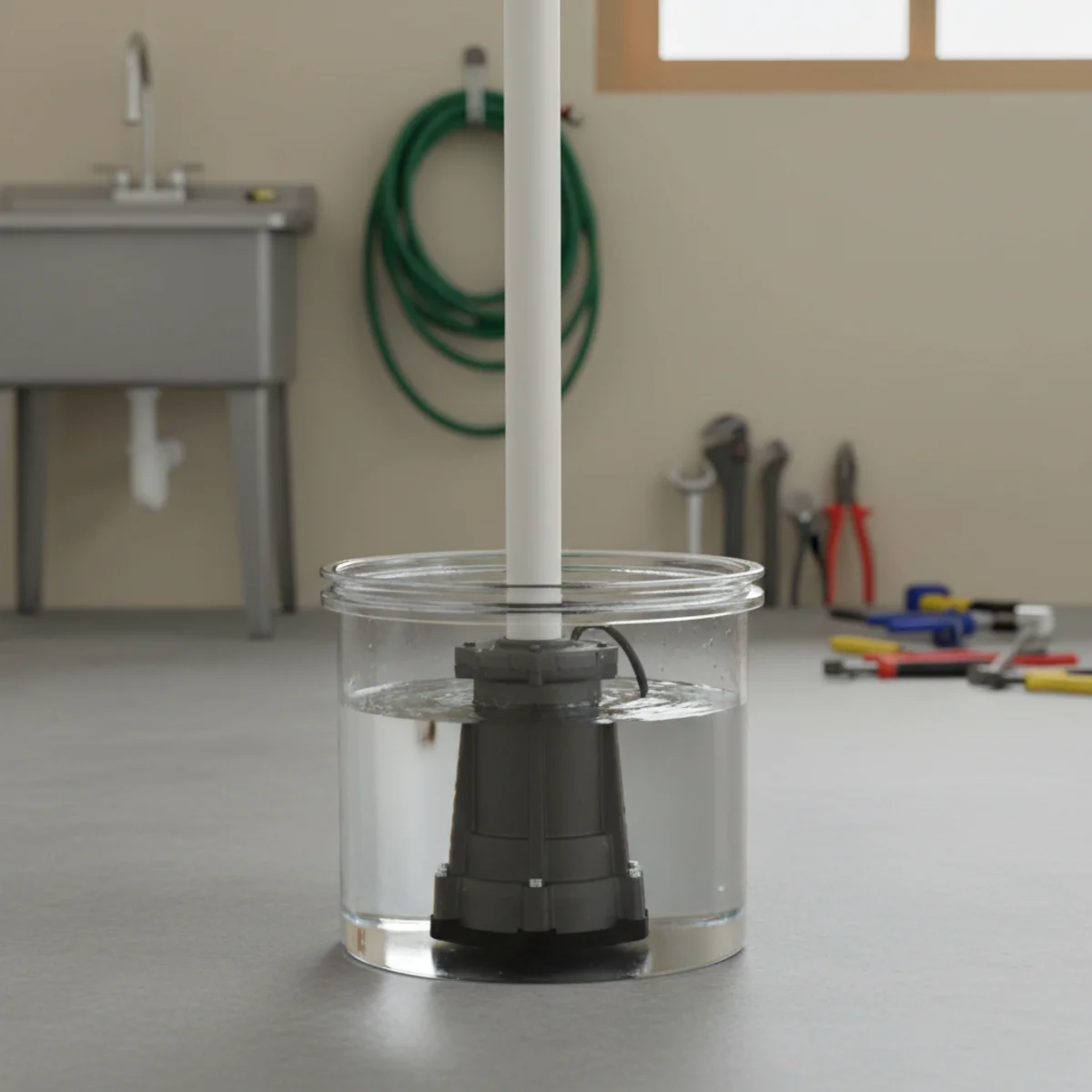
- Type: submersible for most basements; pedestal for narrow/shallow pits
- Backup: a battery or water-powered backup is essential for finished basements
- Pit size: capacity must match the pit so the pump doesn't short-cycle
- What's at stake: finished space justifies a combination system and an alarm
Sizing: Horsepower Is Only Part of It
Most homeowners start with horsepower, but horsepower alone doesn't tell you how much water a pump will move in your basement. What matters is flow at your lift height: how many gallons per hour the pump delivers when it has to push water up the discharge pipe to the outlet. Every manufacturer publishes a pump curve that shows this.
Lift height, sometimes called head, is the vertical distance from the pump to where the pipe exits, plus an allowance for long horizontal runs and elbows. A 1/3 HP pump may be plenty for a shallow basement with a short run, while a deep basement or a long buried line can need 1/2 HP or more to deliver the same flow.
Oversizing has its own problem. A pump that's too strong for a small pit empties it in seconds and starts again moments later. That short-cycling wears the switch and motor faster than steady work.
Estimating Your Water Load
The simplest way to estimate your water load is to watch the pit during the wettest weeks of spring. Count how many times the pump runs in an hour, and note how far the water rises between cycles. A pump that runs a few times an hour has a light load. One that runs every few minutes, or barely keeps up, needs more capacity or a larger basin.
If you're choosing for a new pit with no history, look at neighbors' experience and the depth of the basement. Deeper basements in low parts of a neighborhood usually see more water.
Switches, Housings, and the Details That Matter
The float switch is the part most likely to fail, so it deserves attention when you choose a pump. Vertical floats suit most residential pits. Tethered floats allow longer cycles but need room to swing. Electronic switches fit tight pits but can be thrown off by mineral buildup.
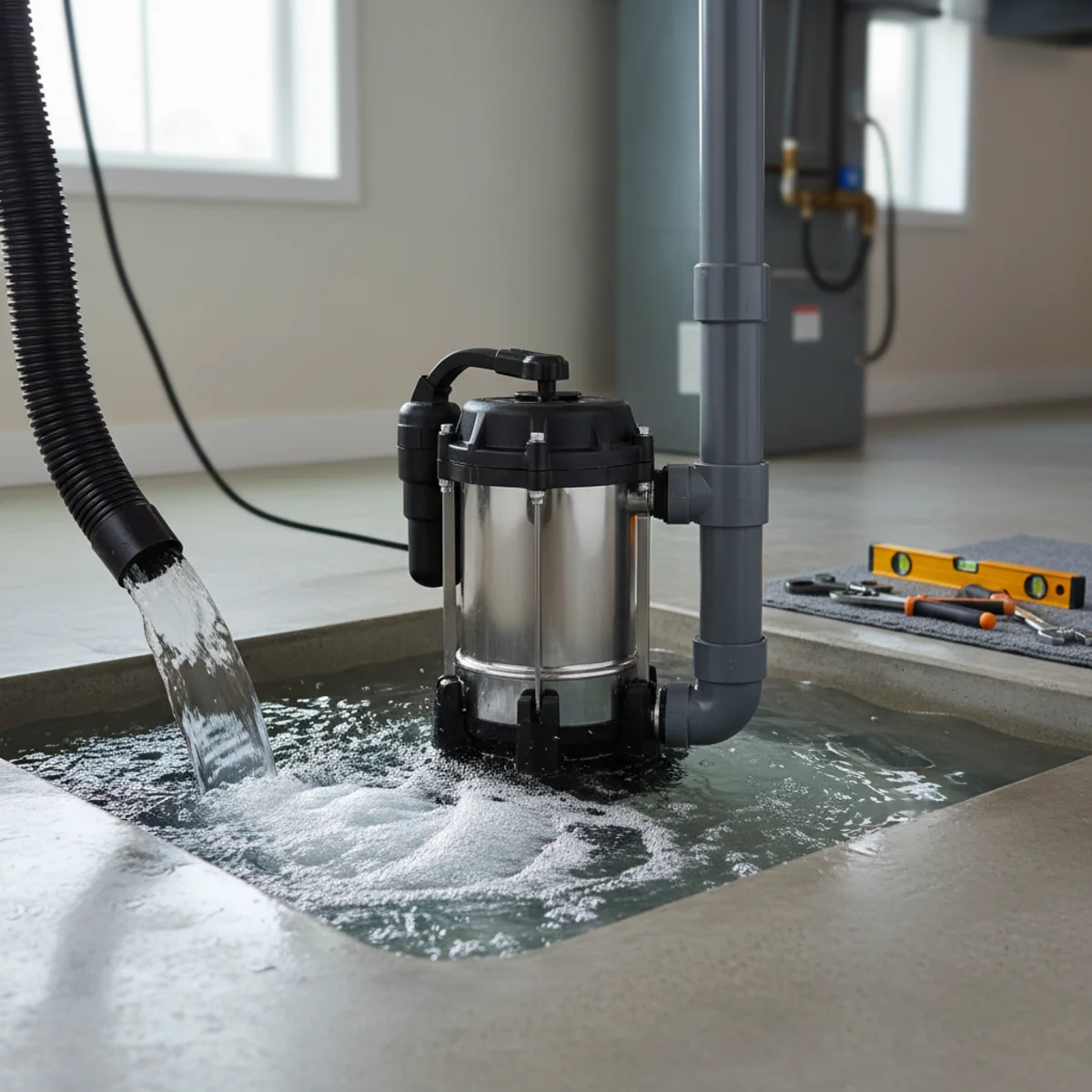
Housing material affects heat and lifespan. Cast iron sheds motor heat well and holds up in pits that cycle often. Thermoplastic is lighter and won't rust, but runs warmer under heavy use. Stainless steel resists corrosion and costs more. Look also at the intake design. A pump with a screened bottom intake handles silty pits better than one that sits flat in the muck.
Common Basement Setups Compared
- Single submersible primary: fine for unfinished basements with a light water load and a deep pit
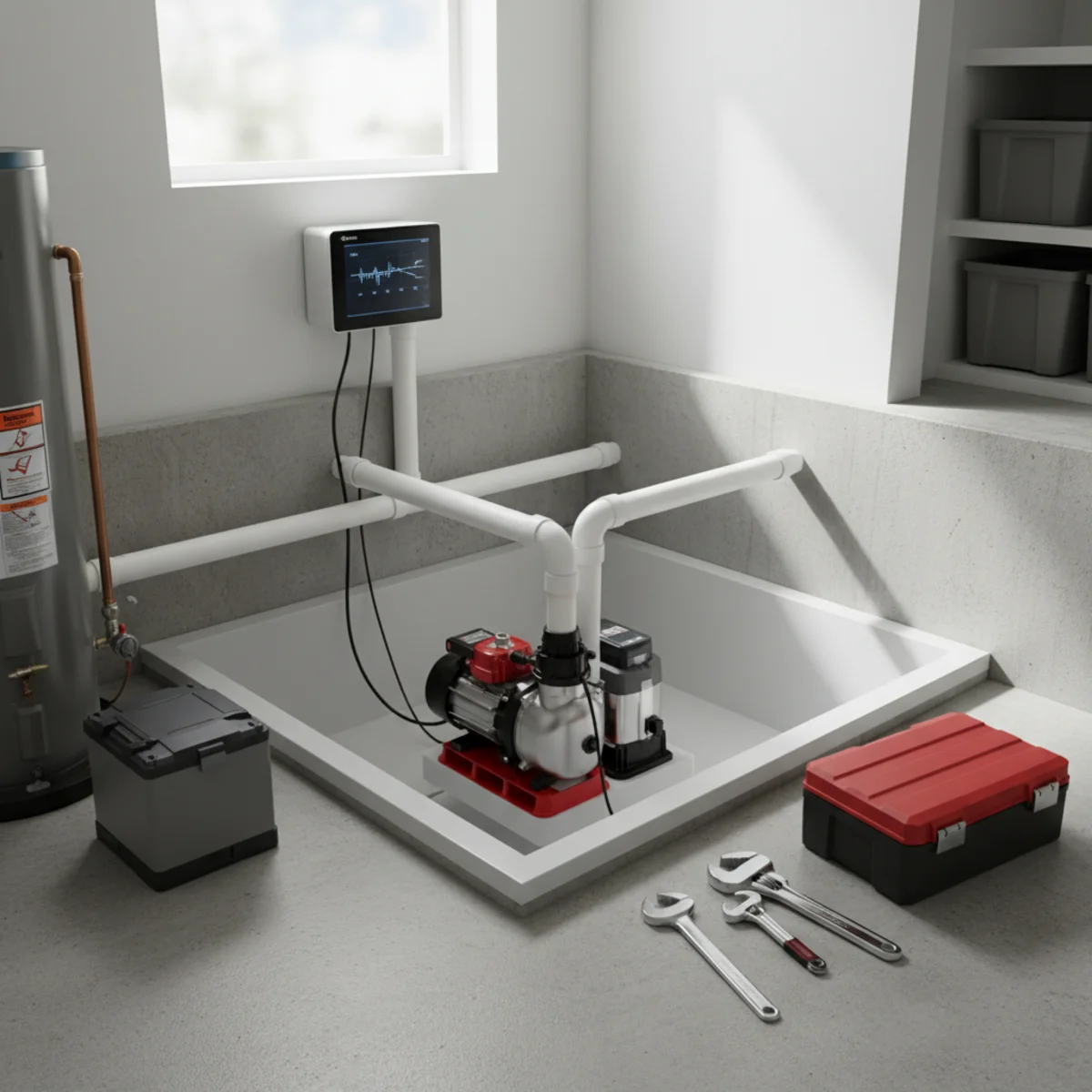
- Submersible primary plus battery backup: the usual choice for finished basements
- Combination system (primary and backup in one unit): simplest way to add backup in a standard pit
- Primary plus water-powered backup: suits homes on city water that want unlimited outage runtime
- Two pits or a larger basin: for high water tables, long basements, or heavy spring inflow
- Pedestal pump: narrow or shallow pits in unfinished spaces
Buying Mistakes to Avoid
- Choosing by horsepower without checking flow at your lift height
- Dropping a larger pump into a small pit, which causes short-cycling
- Skipping the backup under a finished basement
- Reusing an old, worn check valve with a new pump
- Narrowing the discharge pipe below the pump's outlet size
Noise, Odor, and Access in Living Space
When the pit sits in or near living space, how the pump behaves matters as much as how much water it moves. Submersible pumps are quieter because the water muffles the motor. A sealed, gasketed lid cuts noise further and keeps damp, earthy odors out of the room. A quiet check valve, sometimes called a silent check valve, reduces the thump when the pump shuts off.
Plan for access, too. The pit should sit behind a removable panel, in a closet with a door, or under a lid that's easy to lift, never sealed under flooring or drywall. Someone will need to reach the pump for testing, cleaning, and eventually replacement, and that should take minutes, not a demolition project.
What We Install Most in Littleton
For a typical finished basement, a cast-iron submersible (1/3–1/2 HP) with a battery backup and a sealed lid is hard to beat — quiet, durable, and protected against outages. For tight pits, a pedestal pump fits better. For high water tables or basements you're finishing, a combination or dual-pit system adds headroom.
We size every system to the home rather than selling one model to everyone.
For unfinished basements with a modest water load and a deep pit, a quality thermoplastic submersible can be a sensible, lower-cost choice, especially if a backup is in place. The point isn't the most expensive pump; it's a pump that matches how hard your pit works.
Getting a System Sized for Your Basement
If you're choosing a system or replacing an old one, we'll assess your water load and recommend the right pump, capacity, and backup. Call (207) 419-2600.
A sizing visit covers the pit's dimensions, how often the current pump runs, the height and length of the discharge run, and what's at stake in the space. From that we recommend a pump, a backup, and any changes to the pit or discharge, and explain why each piece is there.
From the field
Why We Size From the Pit, Not the Box
When we choose a pump, we look at the pit and the pipe before the pump. A small builder pit can't hold enough water for a strong pump to run a healthy cycle, so sometimes the best upgrade is a larger basin, not a bigger motor.
We also ask how the space is used. The same water load in an unfinished storage room and a finished family room leads to different systems, because a failure costs so much more in the second.
The Best Pump Is the Right-Sized One
There's no single best sump pump, but there is a best fit for your basement. Match flow to your lift height and water load, choose a durable housing and a reliable switch, and size the pit to the pump. If the basement is finished, add a backup and an alarm. Getting those choices right matters more than any brand name.
Want a second opinion on your own system? Call (207) 419-2600 and talk it through with a local sump specialist.
More guides related to choosing a basement sump pump
Choosing a Basement Sump Pump: Your Questions Answered
For most Littleton basements, a cast-iron submersible primary (1/3–1/2 HP) with a battery backup. But the truly 'best' pump is the one sized to your water load, pit, and discharge — which is why we assess on-site rather than recommend one model for everyone.
Generally yes — cast iron runs cooler and resists mineral-rich water, so it lasts longer. Plastic costs less and can be fine for light-duty, unfinished spaces.
A reliable primary plus a battery backup (or a combination system), a sealed lid, and a high-water alarm. The backup is the key piece — it covers the power-outage scenario that floods most finished basements.
Not automatically. A 1/2 HP pump moves more water at higher lift, which helps in deep basements or homes with heavy spring inflow. In a small pit with a light load, it can short-cycle. The right size depends on your lift height and how much water enters the pit.
Talk to a Local Pro About Choosing a Basement Sump Pump
Get professional sump pump help from a local Littleton specialist. Clear, upfront estimates and careful, clean workmanship.
Available by appointment. Emergency sump pump help available.