

Sump Pump Type
1/2 Horsepower Sump Pump Installation
More capacity for heavier water loads and longer, higher discharge runs.
A 1/2 horsepower sump pump moves more water and pushes it farther than a smaller unit — which matters when the discharge run is long, the lift is high, or clay soil is dumping water into the pit during snowmelt. It's a common, sensible size for Littleton basements. Littleton Sump Pump Pros sizes and installs 1/2 HP systems where the water load calls for them.
Bigger isn't always better, but for many homes here, this is the right capacity.
- Local Littleton Service
- Professional Installation
- Clear, Upfront Estimates
- Battery Backup Options
- Careful, Clean Workmanship
- Emergency Help Available
When 1/2 HP Is the Right Size
Step up to 1/2 HP when you have a higher water table, a deeper pit, a long or high discharge run, or a finished basement you can't risk. The extra capacity gives the system headroom during peak snowmelt and storm runoff.
What 1/2 HP Means in Gallons
Horsepower describes the motor, not how much water reaches your yard. What matters is flow at your lift height. A 1/2 HP pump typically moves noticeably more water than a 1/3 HP pump at the same lift, and it keeps more of its flow as the lift gets higher. That extra margin is what you're paying for.
Every pump has a published curve showing gallons per hour at different heights. When we size a pump, we estimate the total lift from the pump to the outlet, add an allowance for long horizontal runs and elbows, and check that the pump still delivers enough flow at that point.
Right-Sizing Matters More Than Raw Power
A pump that's too small can't keep up; one that's too large short-cycles and wears out faster. We size to your actual water load and discharge geometry — not a guess — so the pump runs efficiently and lasts.
Signs Your Home Needs More Than 1/3 HP
- The current pump runs almost constantly during snowmelt or long rains
- Water rises close to the top of the pit before the pump catches up
- The basement is deep, so water has to be lifted farther to reach the outlet
- The discharge line runs a long way across the yard before it ends
- The pit collects water from a large perimeter drain or a high water table
- The basement is finished and you want headroom during peak inflow
Matching the Pump to the Pit
A 1/2 HP pump empties a pit faster than a smaller pump. In a properly sized basin, that's a good thing: each cycle is shorter and the pump rests longer between runs. In a small builder pit, it can empty the basin in seconds and start again moments later. That rapid on-off cycling wears out the switch and motor.
If you're stepping up to 1/2 HP, check the pit. A wider or deeper basin, or a float that allows a longer run between starts, keeps the pump running healthy cycles. Sometimes the right upgrade is a larger pit and a 1/2 HP pump together.
The Discharge Line Has to Keep Up
More flow needs a discharge line that can carry it. The pipe should be at least as large as the pump's outlet and never narrowed along the way. A long exterior run can benefit from a slightly larger pipe outside, which reduces friction.
A new 1/2 HP pump is also the moment to replace the check valve and look at the outlet. An old valve or a partly blocked line can cancel out much of the extra capacity you paid for.
Outside, the outlet matters too. A stronger pump sends more water to the end of the line in a shorter time, so the outlet should end where that water can spread out and drain away, not pool against the foundation or run onto a walkway.
Backup for a 1/2 HP Primary
A 1/2 HP primary usually pairs with a battery backup in the same pit. Check that the backup pump's flow at your lift height can handle a meaningful share of the inflow, since many backups are smaller than the primary. For heavy spring loads, a larger battery or a water-powered backup may be worth considering.
From the field
How We Decide on 1/2 HP
We usually reach for 1/2 HP when the current pump runs nearly nonstop during snowmelt, or when the lift and run to the outlet are long enough that a smaller pump loses much of its flow. Deep basements and long buried discharge lines are the most common reasons.
Just as often, we talk people out of it. If the pit is small and the inflow is moderate, a well-installed 1/3 HP pump with a good check valve can outperform a 1/2 HP pump that short-cycles.
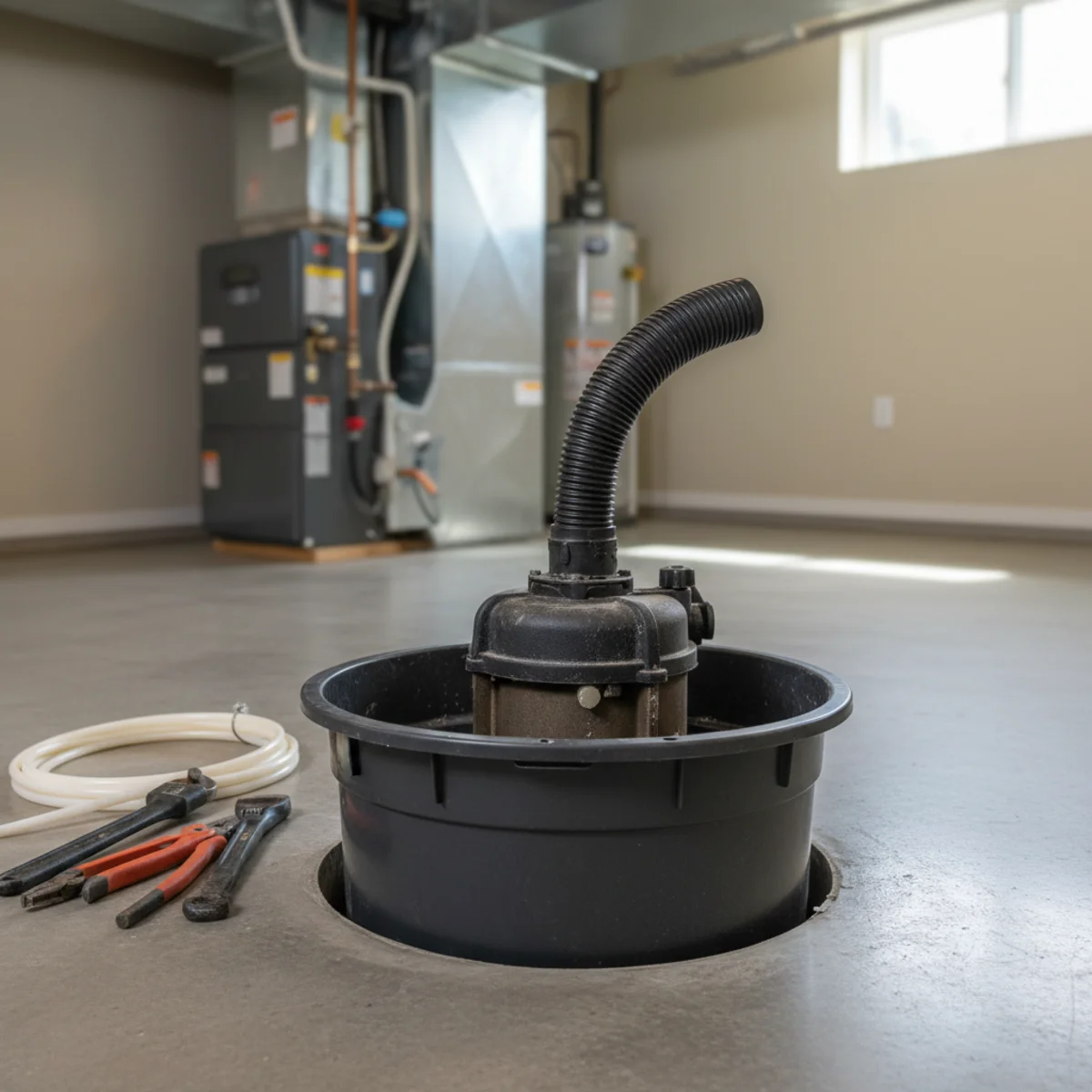
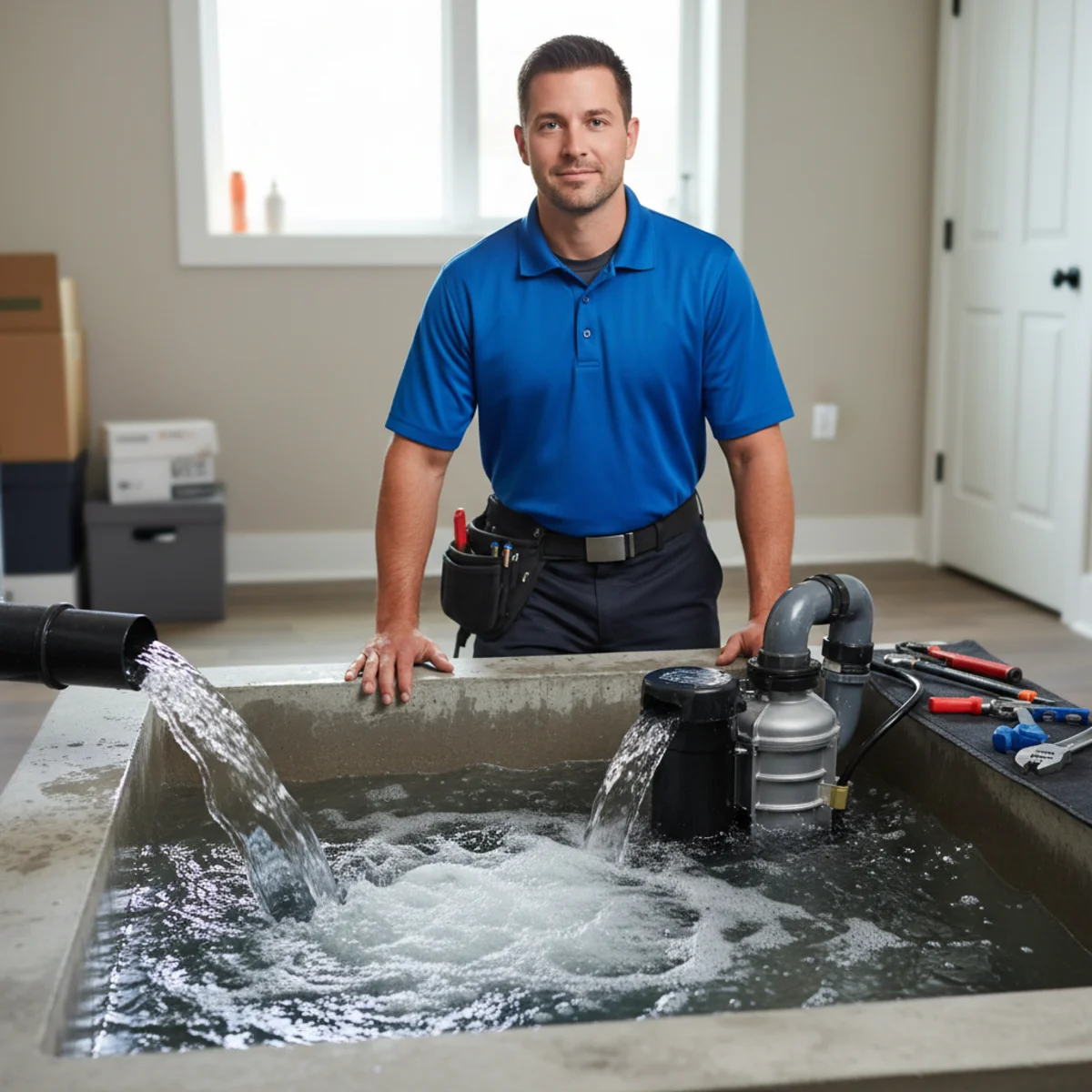


1/2 HP Sump Pump: Best For, Pros & Cons
Best for
Homes with heavier water loads, deeper pits, or long discharge runs
Ideal property: Larger or finished basements and lots with a high water table
Pros
- Moves more water per minute than a 1/3 HP unit
- Handles longer discharge runs and higher lift
- Good fit for clay-soil saturation and high water tables
- Headroom for heavy snowmelt and storm runoff
Cons
- Higher cost than a 1/3 HP pump
- Overkill for a small basement with a light water load
Services and Guides for a 1/2 HP Sump Pump
1/2 HP Sump Pump Questions Answered
It depends on your water load, pit depth, and discharge run. A 1/2 HP pump suits higher water tables, longer or higher discharge, and finished basements. A 1/3 HP unit handles typical residential loads. We size it on-site rather than guessing.
Not if the water load calls for it. For small basements with light water, it can be more than needed and may short-cycle. The goal is matching the pump to the job, which is what we do during the estimate.
Only if your basement needs the capacity. The right size — paired with proper discharge and a backup — keeps a basement dry far more reliably than simply buying the biggest pump.
It draws more power while running, but because it moves water faster, it often runs for shorter periods. In a properly sized pit, the difference in electricity use over a year is usually modest compared with the protection it adds.
Often, yes, if the pit is large enough for a healthy cycle. In a small or narrow pit, a 1/2 HP pump can short-cycle. We check the pit's size and the float's range before recommending it.
Get Help Choosing a 1/2 HP Sump Pump
Get professional sump pump help from a local Littleton specialist. Clear, upfront estimates and careful, clean workmanship.
Available by appointment. Emergency sump pump help available.