

Sump Pump Type
Pedestal Sump Pump Installation
Motor up top, easy to service, and a fit for narrow or shallow pits.
A pedestal sump pump keeps its motor on a column above the pit, with only the intake down in the water. That design makes it easy to service and a good fit for narrow or shallow basins where a submersible simply won't sit. Littleton Sump Pump Pros installs pedestal pumps where they're the right tool.
It's the practical choice for tight pits and crawl spaces with top access.
- Local Littleton Service
- Professional Installation
- Clear, Upfront Estimates
- Battery Backup Options
- Careful, Clean Workmanship
- Emergency Help Available
How a Pedestal Pump Works
The intake sits at the bottom of the pit while the motor stays dry on a pedestal above. A float triggers the motor, which draws water up and out. Keeping the motor out of the water makes it simple to inspect and longer-lived in some setups — at the cost of more noise.
The Parts of a Pedestal Pump
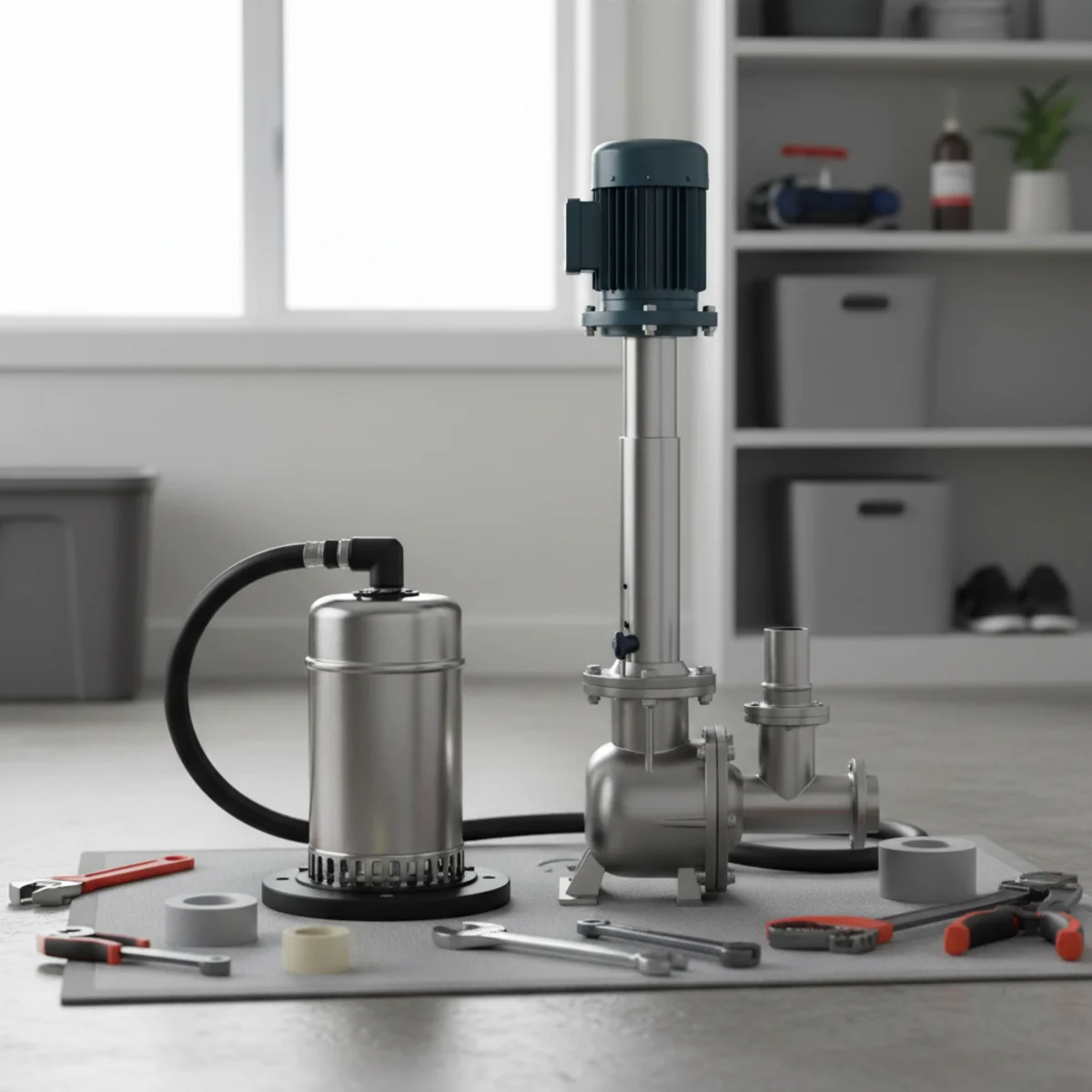
A pedestal pump has a motor on top of a column, with the pump body and impeller at the bottom of the column, resting on the floor of the pit. A float rod runs alongside the column. As water rises, a float on the rod lifts and trips a switch at the motor. The motor turns a shaft that spins the impeller, pushing water up the discharge pipe.
Because the motor stays above the water, it never has to be sealed against it. That's why pedestal motors are easy to inspect, and why the float rod's stops can be adjusted to set exactly when the pump turns on and off.
Where a Pedestal Pump Earns Its Place
The biggest advantage is fit. A pedestal pump only needs room for its narrow base and column in the pit, so it works in small, shallow, or oddly shaped basins where a submersible won't fit. That makes it a common choice in older homes with small pits and in crawl spaces with top access.
Service is the other advantage. With the motor in plain view, it's easy to see if it's running, feel if it's hot, and replace a switch without pulling the whole pump out of the water.
Pedestal pumps also tend to cost less up front than submersibles of similar capacity, which makes them a practical choice for a basic system in an unfinished space or a rental property where the pit is easy to reach.
When a Pedestal Pump Is the Right Call
If your pit is narrow or shallow, or you value easy access for maintenance, a pedestal pump fits well. For finished basements where noise matters or water loads are heavy, a submersible is usually better.
We'll look at your pit and water load and tell you honestly which type serves you best.
Limits to Plan Around
Pedestal pumps are louder than submersibles, because nothing muffles the motor. In a finished basement that can be noticeable, especially at night during snowmelt. They also need open headroom above the pit, so the lid can't sit flush and seal, which lets odor and humidity into the room.
Capacity is more limited, too. Most pedestal pumps are built for typical residential loads. For heavy spring inflow or a long, high discharge run, a submersible usually does the job better. And because the motor is exposed, the pit area needs to stay clear of stored items and out of reach of children.
None of these limits make a pedestal pump a bad choice. They simply mean it fits certain basements better than others. The key is matching the pump to the pit and the room it sits in, and planning a backup if the space below matters.
Keeping a Pedestal Pump Running
- Check that the float rod moves freely and its stops haven't slipped
- Keep the motor's vents clear of dust, lint, and stored boxes
- Make sure the column stands upright and doesn't lean against the pit wall
- Listen for bearing noise at the motor, which is easier to hear than on a submersible
- Test it with a bucket of water before snowmelt and before summer storms
Replacing an Old Pedestal Pump
When an old pedestal pump fails, the easiest fix is a like-for-like swap: same height, same discharge size, same float style. Before doing that, measure the pit. If it's wide and deep enough, a submersible may be a quieter upgrade that allows a sealed lid. If it isn't, a new pedestal with a fresh check valve is a reliable choice.
From the field
Where We Still Install Pedestal Pumps
Most of the pumps we install are submersibles, but we still recommend pedestal pumps in a few spots: very small pits we can't enlarge, unfinished utility rooms, and homes where the owner wants to see the pump working at a glance.
When we replace an old pedestal, we always check whether the pit could hold a submersible instead. Sometimes it can, and the homeowner gets a quieter system with a sealed lid. When it can't, a quality pedestal is a solid choice.


Pedestal Sump Pump: Best For, Pros & Cons
Best for
Narrow or shallow pits and crawl spaces with easy top access
Ideal property: Unfinished basements and crawl spaces where access and budget matter
Pros
- Motor sits above the pit, so it's easy to inspect and service
- Fits narrow or shallow basins where a submersible won't
- Often less expensive up front
- Long service life when kept clean
Cons
- Louder, since the motor isn't underwater
- More visible and takes up some space above the pit
- Handles less debris than a submersible
Services and Guides for a Pedestal Sump Pump
Pedestal Sump Pump Questions Answered
Yes, when matched to the right pit. They're simple, easy to service, and long-lived when kept clean. They're louder than submersibles and handle less debris, so the fit depends on your basin and basement.
Narrow or shallow pits, easier access for maintenance, and a lower up-front cost. For tight basins and unfinished spaces, a pedestal pump is often the practical choice.
It can, but for finished basements we usually lean toward a quieter submersible with a backup. We'll weigh noise, capacity, and your pit size before recommending one.
Usually, yes. Most pedestal pumps have adjustable stops on the float rod. Moving them changes the water level that starts and stops the pump. Set them so the pump runs a healthy cycle without letting water rise close to the top of the pit.
It can be, especially when the pit is small and you can reach it from above. The motor stays dry and easy to check. In a sealed or encapsulated crawl space, a submersible with a sealed lid may suit better.
Get Help Choosing a Pedestal Sump Pump
Get professional sump pump help from a local Littleton specialist. Clear, upfront estimates and careful, clean workmanship.
Available by appointment. Emergency sump pump help available.