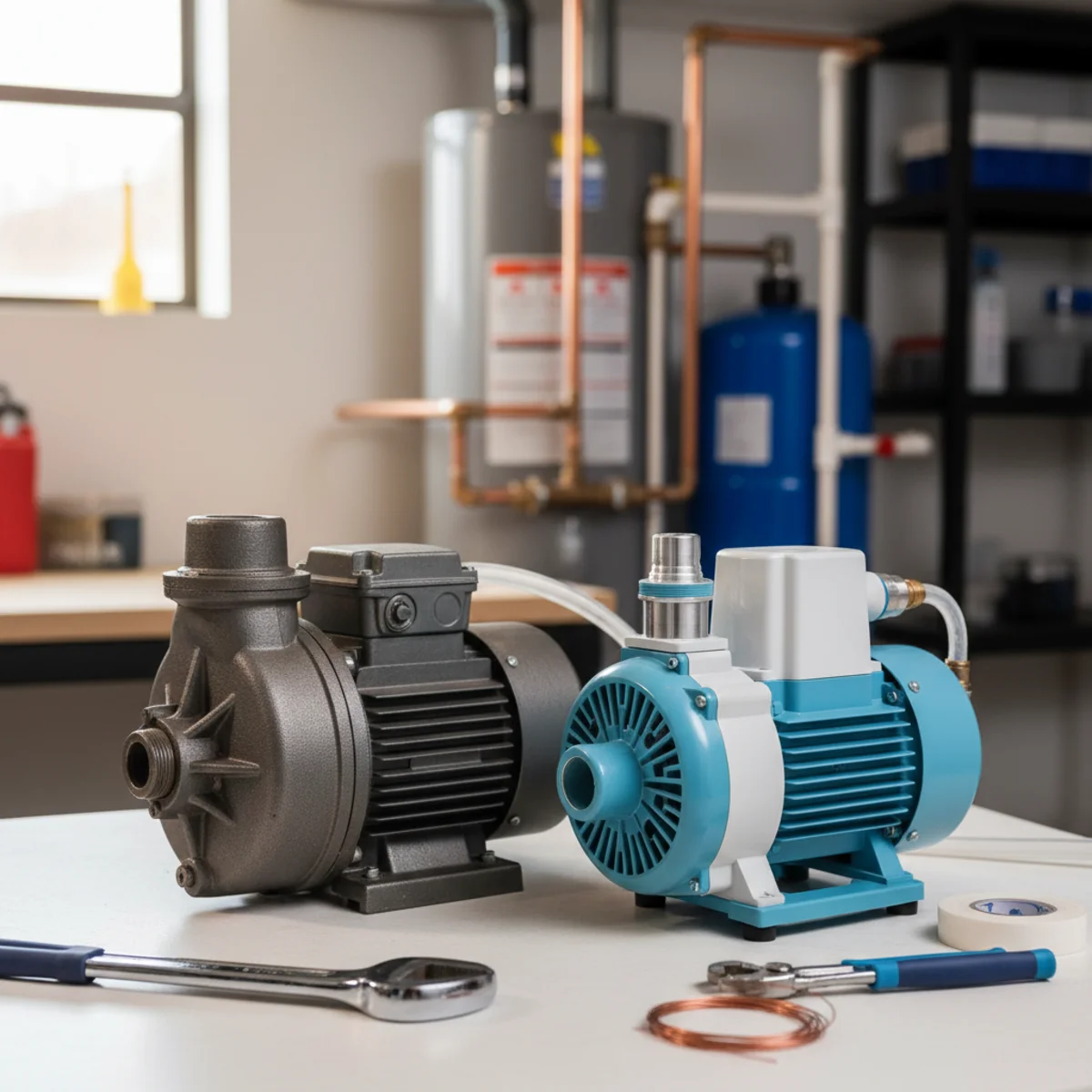
Cast Iron vs Plastic Sump Pumps
Stand in the pump aisle and the choice looks simple. The plastic pump is cheaper. The cast iron pump costs more and weighs a ton. Why pay extra for heavy metal?
Because the cheaper pump is often the one you replace sooner. In mineral-rich Front Range water, lightweight thermoplastic housings tend to wear out faster than cast iron. Pay less now, pay again in a few years, plus the labor each time.
That does not make cast iron the automatic answer for every home. Plastic has real advantages, and there are good reasons to pick it in some situations. This guide lays out the honest tradeoffs so you can match the pump to your basement and your budget, not just grab the most expensive box on the shelf.
- Local Littleton Service
- Professional Installation
- Clear, Upfront Estimates
- Battery Backup Options
- Careful, Clean Workmanship
- Emergency Help Available
The Core Difference: Housing and Heat
The headline difference is the pump housing, the body that surrounds the motor. Cast iron pumps use a heavy metal housing. Plastic pumps, often called thermoplastic, use a molded polymer body that is far lighter and cheaper to produce.
That housing does more than hold the pump together. A submersible pump sits in water that helps cool the motor. Cast iron pulls heat away from the motor better than plastic does, so the motor tends to run cooler under heavy cycling. Cooler running generally means longer life, because heat is what breaks down motor windings and seals over time. During a hard snowmelt week, when the pump barely stops, that cooling advantage is working in your favor.
Weight tells the same story. A cast iron pump is dense and sits solidly in the basin. A plastic pump is light, which is easier to carry but can be more prone to vibrating or tipping if the pit is not set up well. A pump that vibrates against the basin wall wears unevenly and can knock its own float switch out of position, which is a common cause of a pump that runs when it should be off or sits silent when it should be running.
Both types use similar motors and impellers inside. The build quality of those internal parts matters as much as the housing material. A premium plastic pump can outlast a bargain cast iron one. But comparing like for like, at the same quality tier, the cast iron body gives the motor a tougher, cooler home.
Why Littleton Water Favors Cast Iron
Front Range water carries a lot of dissolved minerals. Over years of cycling, that mineral content is hard on pump components. It scales up on surfaces and grinds at moving parts. Heavier cast iron construction generally stands up to that wear better than thin plastic.
Our clay-heavy soil compounds it. Expansive clay swells when wet and pushes groundwater toward the pit, which keeps pumps cycling often, especially through spring snowmelt. A pump that runs more accumulates wear faster, so the durability gap between iron and plastic shows up sooner here than in a drier, sandier region. A pump in clay-heavy ground simply logs more hours than the same pump would somewhere else.
Mineral scaling deserves a mention of its own. As hard water cycles through the pump again and again, deposits build on the impeller and inside the volute, the chamber that channels water out. That buildup makes the motor work harder for the same output. Heavier construction tolerates that strain better than a thin-walled plastic body that flexes and fatigues.
None of this means a plastic pump cannot serve a Littleton home. It means that if you want the longest service life from one install, cast iron usually earns its keep in this water and this soil. The harder a pump has to work, the more its build quality matters.
Side by Side: Cast Iron vs Plastic
Here is the comparison in plain terms. Neither is wrong, they just fit different priorities and different pits. The right answer depends less on which material is best in the abstract and more on how your specific basement behaves.
If your top priority is the longest life and you plan to stay in the home, cast iron leans ahead. If up-front cost or tight pit access is the bigger concern, plastic makes sense. Read the trade-offs and match them to your situation rather than defaulting to whichever one a salesperson pushes hardest.
- Up-front cost: plastic is cheaper, cast iron costs more
- Lifespan: cast iron typically lasts longer, especially in mineral-rich water
- Motor cooling: cast iron sheds heat better under heavy cycling
- Weight: plastic is light and easy to handle, cast iron is heavy and stable
- Corrosion: quality plastic resists rust, cast iron uses coatings to fight it
- Best fit: cast iron for long-term reliability, plastic for budget or lighter-duty pits
Where Plastic Makes Sense
Plastic is not the bargain-bin loser some make it out to be. A quality thermoplastic pump is corrosion-resistant by nature, since there is no metal to rust, and it costs less to buy and to replace.
For a lighter-duty application, a pit that cycles only during big storms, a backup pump that rarely runs, or a tight budget, a good plastic pump can be the practical choice. It is also easier to handle in a cramped crawl space where lifting a heavy cast iron unit into position is a real struggle.
The key is buying a quality plastic pump, not the cheapest thing on the shelf. The reputation plastic has for short life often comes from the lowest-end units with weak motors and flimsy float switches, not from well-made thermoplastic pumps. Spend a little above the floor model and plastic can serve a long time in the right pit. The float switch is often the first thing to fail on a cheap unit, so that is where the savings tend to bite.
How to Choose for Your Home
Start with how hard the pump will work. A basin that cycles frequently through snowmelt and summer storms is a strong case for cast iron's durability. A pit that only sees occasional water can do fine with quality plastic.
Then weigh how long you plan to stay and how much a failure would cost. Over a finished basement, the extra reliability of cast iron is cheap insurance against ruined flooring and drywall. In an unfinished basement or crawl space on a budget, plastic stretches your dollar without much downside.
If you are unsure, that is a fair question to put to an installer who works in Littleton basements every week. We can look at your pit, your water, and your cycling pattern and recommend the pump that fits, then back it with careful, clean workmanship and a clear, upfront estimate.
Frequently Asked Questions
Keep Reading
 Sump Pump Basics
Submersible vs Pedestal Sump Pump: Which Is Better?
Submersible and pedestal sump pumps both keep basements dry, but they differ in cost, noise, and lifespan. Here is how to pick the right one for a Littleton home.
 Sump Pump Basics
Best Sump Pump Setup for a Finished Basement
A finished basement raises the cost of a failure. Here's the pump, basin, and backup setup that actually protects drywall, flooring, and everything you store down there.
 Sump Pump Basics
How Long Does a Sump Pump Last?
Most sump pumps last about a decade, but Littleton conditions can shorten that. Learn the real lifespan, what wears a pump out, and the signs it is time to replace.
Protect Your Basement Before the Next Storm
Get professional sump pump help from a local Littleton specialist. Clear, upfront estimates and careful, clean workmanship.
Available by appointment. Emergency sump pump help available.