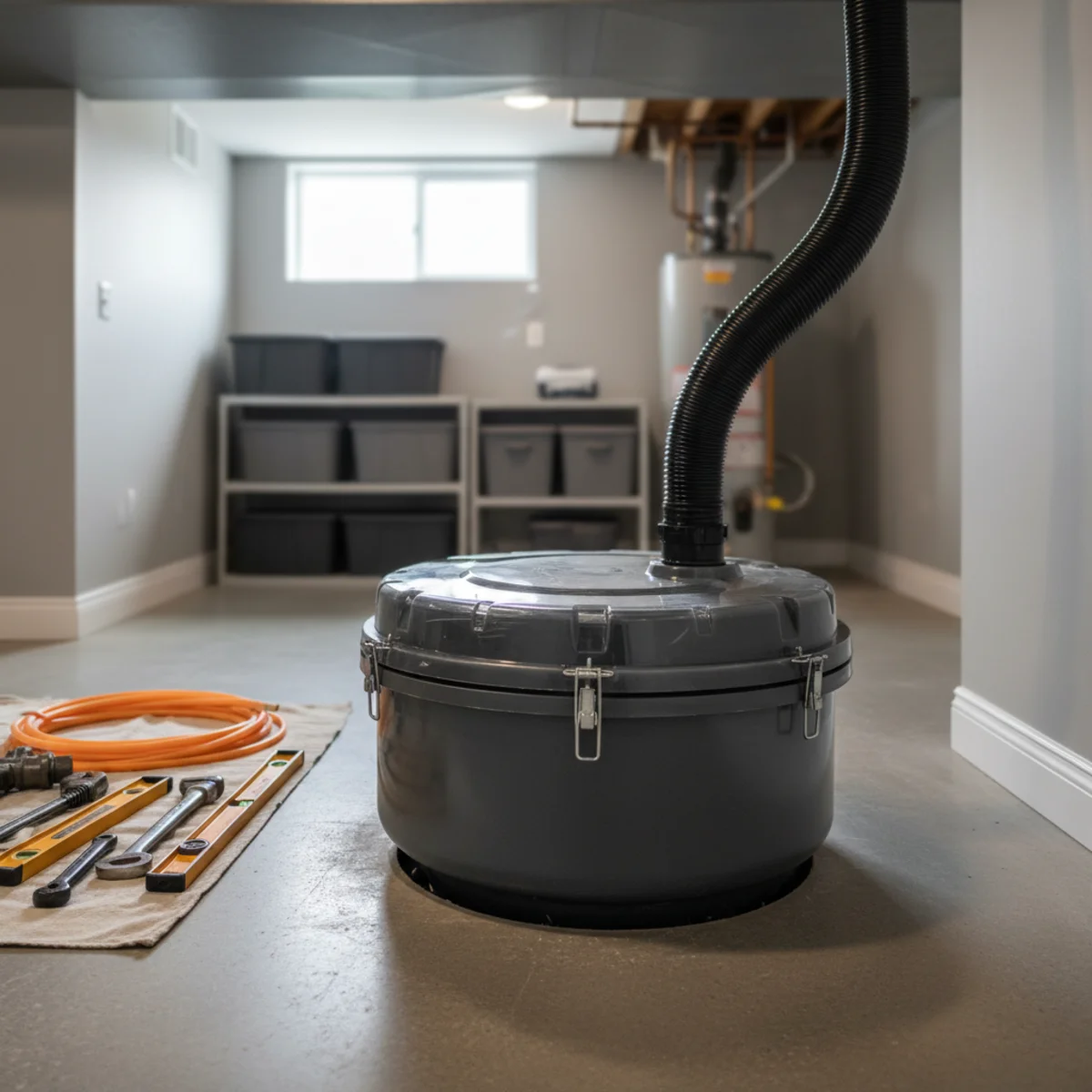
Best Sump Pump Setup for a Finished Basement
You spent good money finishing the basement. New carpet, drywall, a TV on the wall, maybe a guest room. Then one wet spring the power blinks during a thunderstorm and the pit fills up. By morning the baseboards are soaked and the drywall is wicking water up the studs.
That's the problem with a finished basement. The stakes are higher. An unfinished basement floods and you mop it. A finished basement floods and you're tearing out flooring and cutting drywall back a foot to stop mold.
Here's how to set up a sump system that's built for a finished space — primary pump, basin, alarm, and a backup that keeps running when the lights go out. Lead with the parts that fail first, and spend where it counts.
- Local Littleton Service
- Professional Installation
- Clear, Upfront Estimates
- Battery Backup Options
- Careful, Clean Workmanship
- Emergency Help Available
Why a Finished Basement Needs a Better Setup
Around Littleton, the soil does most of the damage. Expansive clay swells when it's wet and shrinks when it's dry. That movement drives hydrostatic pressure against your foundation and pushes groundwater toward the lowest point in the slab — usually right where your pit sits.
Add Front Range snowmelt in spring and hard summer thunderstorms, and the pump in a finished basement works harder than most homeowners expect. A builder-grade pump that was fine for an empty concrete room is now the only thing standing between groundwater and your flooring.
There's a hidden cost, too. In a finished basement the pit is often boxed in behind a wall, under a stair, or inside a closet. That's fine until the pump fails and you can't get to it fast. When we plan a finished-basement system, we keep the pit accessible — a removable access panel or a closet door — so testing, cleaning, and a future replacement don't mean cutting drywall.
So the goal shifts. In a finished basement you're not just moving water. You want a system with redundancy, an alarm that warns you early, easy access for service, and a discharge line that won't freeze and back water up under the floor.
Choosing the Primary Pump
Start with a submersible pump, not a pedestal. A submersible sits down in the sump basin under the water, which makes it quieter and keeps the motor out of your living space. In a finished basement, noise matters — nobody wants a pedestal motor whining away in the corner of a media room.
For the pump body, lean toward cast iron over thermoplastic. Littleton's water tends to be mineral-rich, and cast iron handles that better over the long haul. It also pulls heat away from the motor, so the pump runs cooler during a wet stretch when it's cycling constantly.
Match the horsepower to your actual water load, not to the biggest number on the shelf. An oversized pump short-cycles, which wears out the float switch and the motor faster. We'd rather size it right and pair it with a backup than oversell horsepower you don't need.
- Submersible over pedestal — quieter and hidden in the pit, which matters in a living space
- Cast iron body over thermoplastic for mineral-rich Front Range water and better heat dissipation
- Sized to your real water load to avoid short-cycling and premature float wear
- Solid float switch — vertical or tethered, with room in the basin to travel freely
- A check valve on the discharge line so water doesn't drain back into the pit after each cycle
A Backup System Is Not Optional Here
This is the part people skip, and it's the part that saves finished basements. The most common reason a basement floods isn't a worn-out pump — it's a power outage during the exact storm that's dumping water into your pit. No power, no pump.
A battery backup sump pump runs off a dedicated battery when the main power drops. It kicks in automatically and buys you hours of pumping while the grid is down. For most finished basements, that's the right call. If you want to remove the battery from the equation entirely, a water-powered backup runs off your home's water pressure with no battery to maintain — worth a look if you're on municipal water with good pressure.
A backup also covers more than outages. It carries the load if the primary pump simply dies, if the float on the main pump sticks, or if a hard storm sends in more water than one pump can move. Two pumps in the pit means a single point of failure no longer floods your basement.
Whichever route you take, the math is simple. The backup costs a fraction of what it costs to redo flooring and drywall after one failure.
Add an Alarm and Smart Monitoring
A high-water alarm is cheap insurance. It's a float or sensor set above the pump's normal on level. If the water climbs higher than it should — because the pump failed, the float stuck, or the discharge froze — the alarm sounds before water reaches your flooring.
In a finished basement, take it one step further. A smart sump pump alarm sends an alert to your phone. That matters when the basement is a guest suite nobody visits for a week, or when you're traveling and the house is empty during a spring storm.
Pair the alarm with a sealed basin lid. A sealed lid keeps humidity, pump noise, and any radon down in the pit instead of in your living space. If your home has a radon system, the basin can often be tied in so the pit isn't an open hole venting soil gas into a finished room.
Protect the Discharge Line
Your pump can be perfect and you'll still flood if the water has nowhere to go. The discharge line carries water from the pit to the outside, and in Colorado the enemy is freeze-thaw. A shallow line freezes solid in a January cold snap, the pump pushes against a block of ice, and water has only one way left to go — back into your basement.
Run the discharge line below the frost line where it leaves the house, slope it so it drains fully between cycles, and keep the outlet clear of snow piles and ice. Discharge the water well away from the foundation so it doesn't just soak back into the clay and return to your pit on a loop.
A check valve on the line earns its keep here. Without one, the column of water in the pipe drains back into the pit every time the pump shuts off, so the pump re-pumps the same water and cycles more than it should. More cycles mean more wear on a pump you'd rather not be replacing in a finished room.
If your line has frozen before, that's a design problem worth fixing, not a yearly headache to live with. We deal with frozen discharge lines every winter and most of them trace back to a shallow run or a poor outlet.
Frequently Asked Questions
Keep Reading
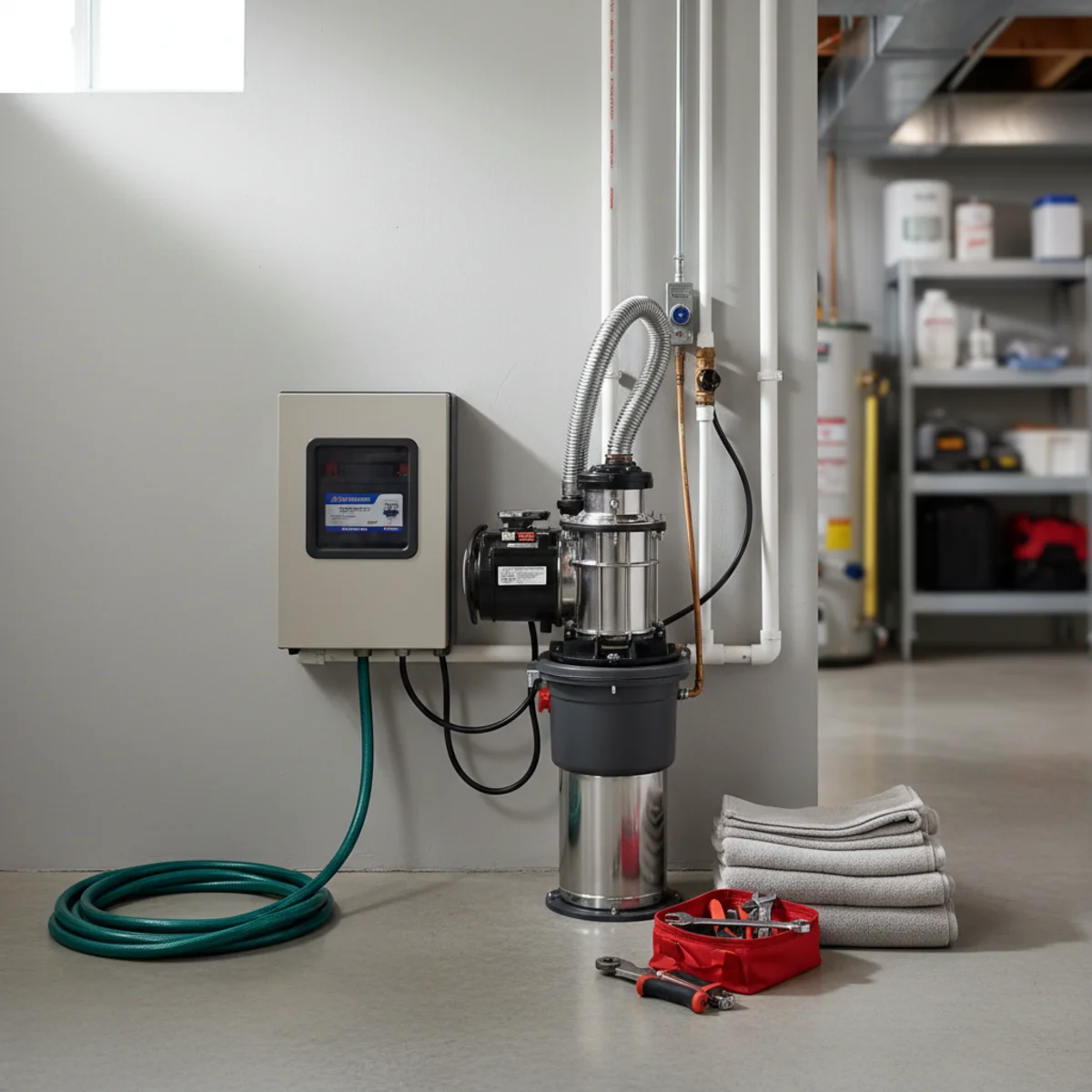 Backup Pump Systems
Is a Battery Backup Sump Pump Worth It?
Storms knock out power right when your sump pump matters most. Here is when a battery backup sump pump is worth it for a Littleton basement, and when it is essential.
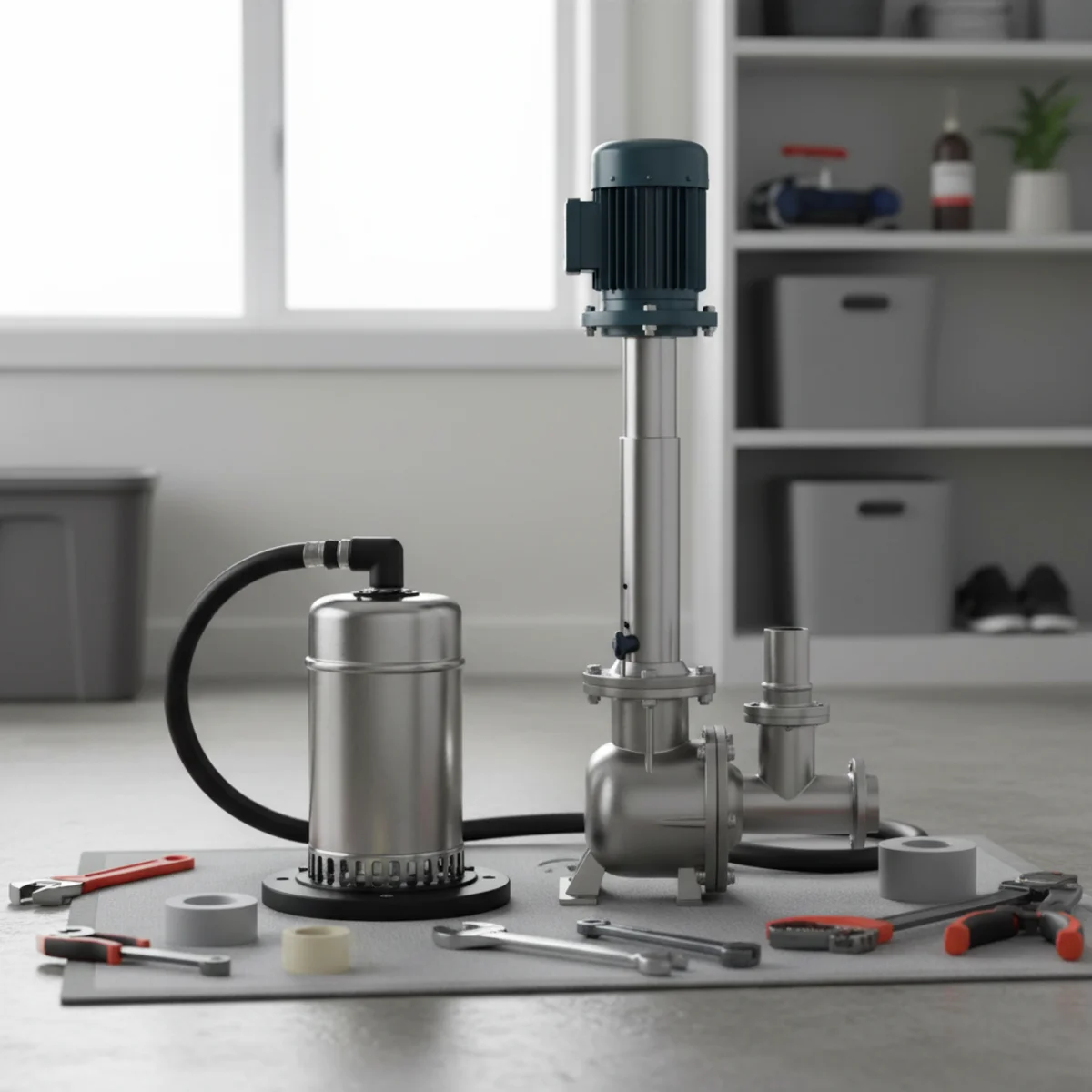 Sump Pump Basics
Submersible vs Pedestal Sump Pump: Which Is Better?
Submersible and pedestal sump pumps both keep basements dry, but they differ in cost, noise, and lifespan. Here is how to pick the right one for a Littleton home.
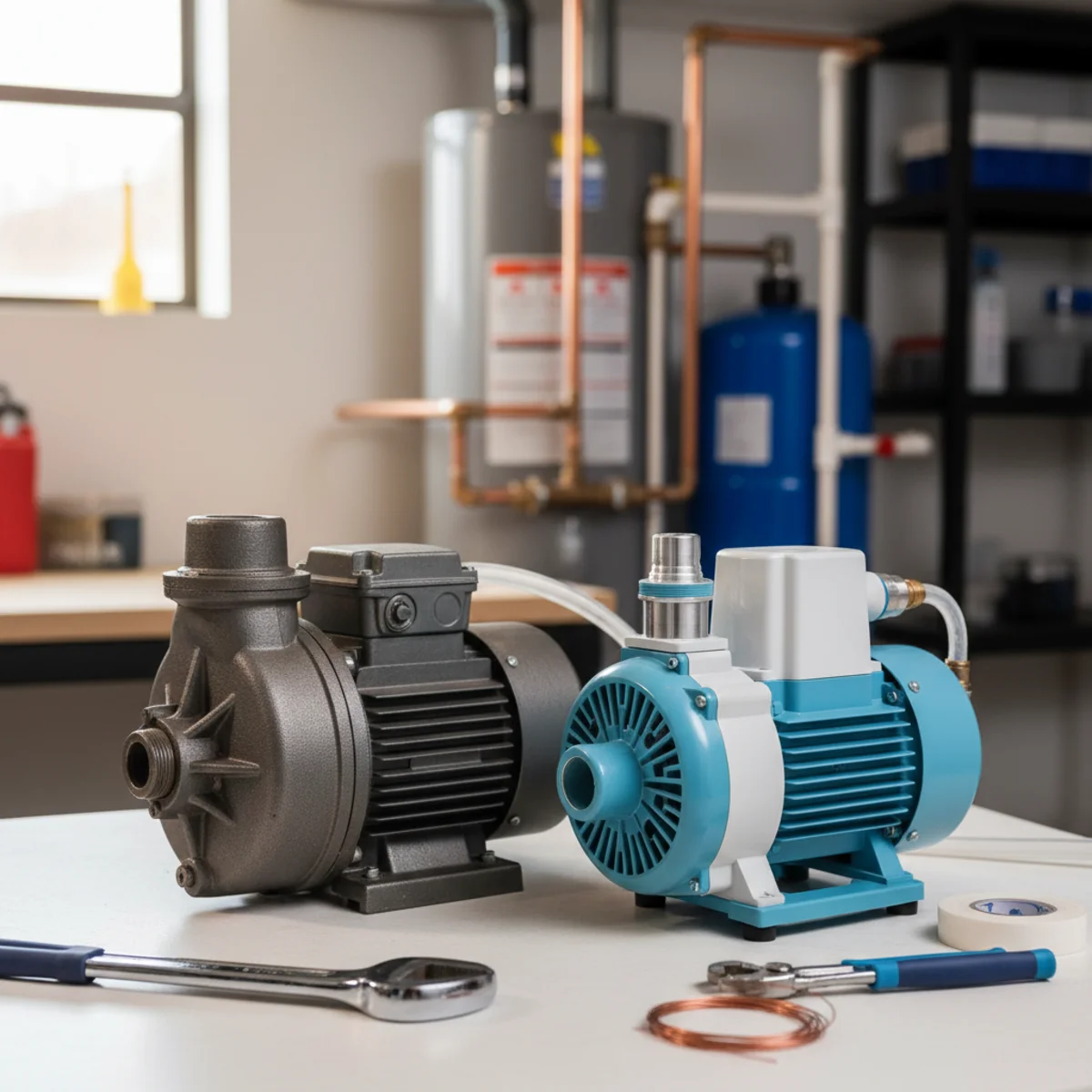 Sump Pump Basics
Cast Iron vs Plastic Sump Pumps
Cast iron sump pumps cost more up front but tend to outlast plastic in mineral-rich water. Here is how the two compare for Littleton basements.
Protect Your Basement Before the Next Storm
Get professional sump pump help from a local Littleton specialist. Clear, upfront estimates and careful, clean workmanship.
Available by appointment. Emergency sump pump help available.