

Resource
How to Test a Sump Pump
A five-minute test that beats finding out during a storm.
Quick answer
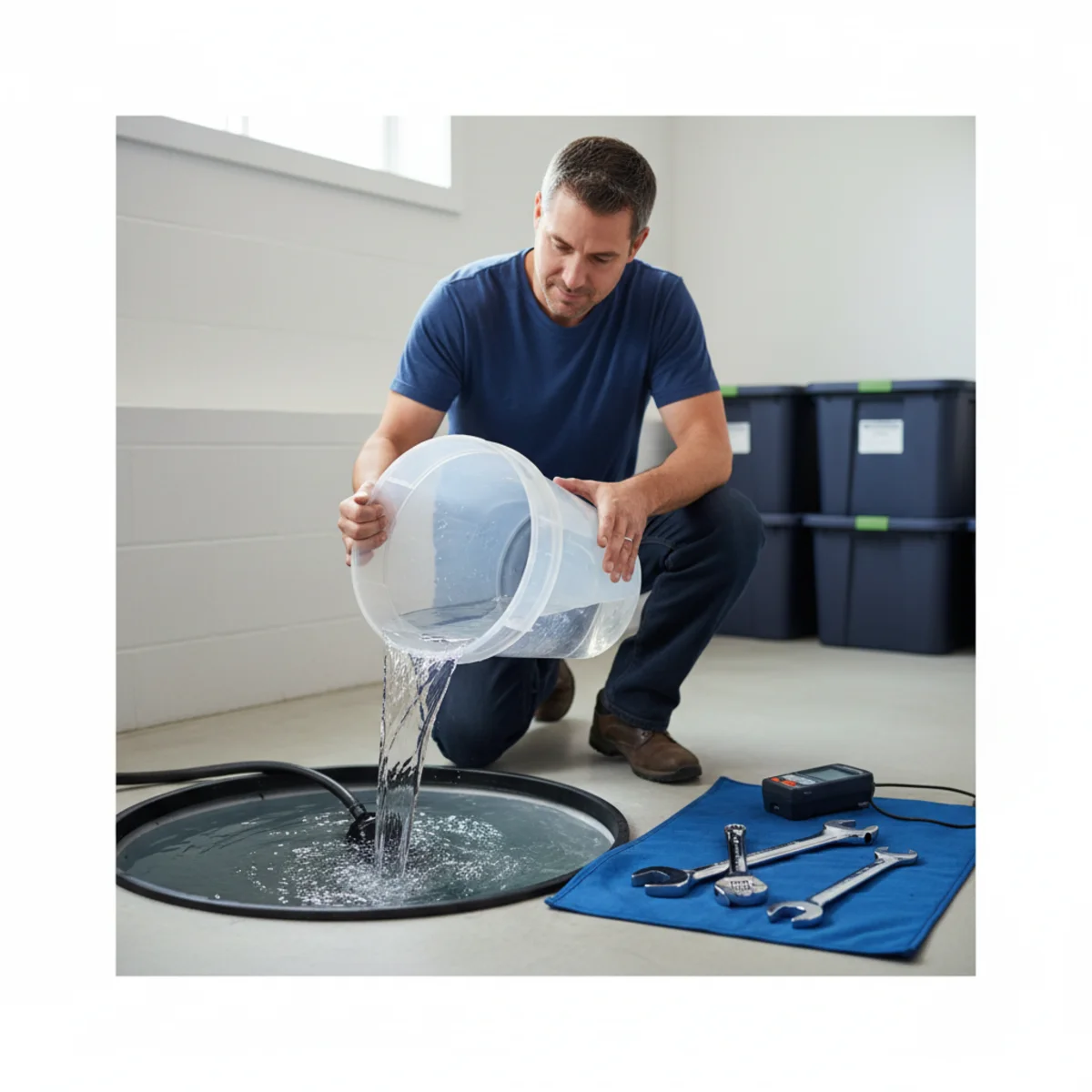
To test a sump pump, pour a bucket of water into the pit until the float rises — the pump should switch on, pump the water out, and shut off on its own. That's the whole test, and you should do it quarterly. Never wait for a storm to discover the pump doesn't work.
Here's how to do it right, and what to do if it fails.
- Local Littleton Service
- Professional Installation
- Clear, Upfront Estimates
- Battery Backup Options
- Careful, Clean Workmanship
- Emergency Help Available
Step-by-Step Sump Pump Test
- Confirm the pump is plugged in and the breaker is on
- Lift the lid (if accessible) and look for debris in the pit
- Slowly pour 5 gallons of water into the pit until the float lifts
- Watch: the pump should turn on automatically
- Confirm it pumps the water out and shuts off on its own
- Check outside that water exits the discharge well away from the foundation
- If you have a backup, unplug the primary and repeat to test the backup
What You Need Before You Start
Gather a five-gallon bucket, a flashlight, and a phone to time the cycle. Wear gloves if you plan to reach near the pit. A second person outside, watching the discharge outlet, makes the test faster and tells you whether the water actually leaves the house. Pick a dry day so the pit isn't already full and you can see the float clearly.
What to Watch and Listen For
The test is only useful if you pay attention to how the pump behaves, not just whether it runs. As you pour, watch the float. It should rise smoothly with the water and trip the pump without touching the pit wall, the cord, or the discharge pipe.
Once the pump starts, time it. A healthy pump clears a five-gallon pour quickly, often in well under a minute, and shuts off on its own. Note the number. Next time you test, compare. A pump that takes noticeably longer than it used to is losing strength.
Listen while it runs. A steady hum and the rush of water are normal. Grinding, rattling, or a high whine can mean a worn bearing or debris in the impeller. When the pump stops, you may hear a soft thump as the check valve closes. A loud bang, or water you can hear running back into the pit, points to the valve.
Reading the Results
- Nothing happens when the float rises: check power, the breaker, and the GFCI, then the float and switch
- Pump hums but no water moves: possible jammed impeller, air lock, or a valve stuck closed
- Pump runs but the pit barely drops: worn pump, clogged intake screen, or a blocked discharge
- Pump keeps running after the pit is empty: stuck float or failed switch
- Water refills the pit right after it stops: check valve failing or missing
- Water doesn't come out outside: frozen, crushed, or clogged discharge line
What a Failed Test Means
If the pump doesn't start, the float may be stuck, the switch may be bad, or the unit may have lost power or failed. If it runs but doesn't move water, the impeller may be jammed or the check valve may be stuck. If water doesn't exit outside, the discharge may be clogged or frozen.
Any of these is fixable — but don't leave it until the next storm.
A partial pass counts too. A pump that starts late, takes much longer than before to clear the pit, or keeps running after the pit is empty is on its way to failing. Treat it as a warning, not a pass.
Write down what you saw, how long the pump ran, and any sounds. That detail makes a repair visit faster, because the problem may not repeat itself when someone else is watching.
Testing the Backup and the Alarm
A backup pump only helps if it works on the night the main pump doesn't. To test it, unplug the main pump, then pour water until the level rises past the main pump's normal start point. The backup's float should lift and start the backup pump. Let it clear the pit, then plug the main pump back in. Don't forget that last step.
If your backup runs on a battery, check the controller for warning lights and note the battery's install date. A battery that looks fine can still run short under a real load. If you have a water-powered backup, make sure the supply valve is open and listen for the flow when it starts.
A high-water alarm should sound when the water passes its sensor. Testing it at the same time as the backup tells you the whole warning chain works.
How Often to Test in Colorado
Every few months is a good routine, but timing matters more than frequency. Test in late winter, before snowmelt starts raising groundwater. Test again in late spring before summer thunderstorm season. And test after any long power outage, or any time the pump has been unplugged for work in the basement.
If the pump hasn't run in months because of a dry stretch, test it before the next wet spell. Pumps that sit idle can stick, especially in pits that collect silt or mineral deposits.
Testing Safely
- Never reach into the pit while the pump is plugged in
- Keep cords and outlets dry, and don't stand in water while touching them
- Don't use a garden hose left running unattended; you can overfill the pit
- If the pit smells like sewage, stop and have it checked; it may be an ejector basin
When a Test Points to a Repair
If the test fails, or the pump sounds rough, get it checked. We diagnose the real cause rather than guessing at parts. Call (207) 419-2600.
Some fixes are simple, like freeing a float or resetting a GFCI outlet. Others, like a worn motor, a failed switch, or a check valve glued into hard pipe, are best handled by someone with the right parts on the truck. If the pump is near the end of its life, we'll tell you whether a repair is worth it or a replacement makes more sense before spring.
From the field
Why We Time Every Test
When we test a pump, we always time how long it takes to clear the pit and compare it with the last visit. A stopwatch catches a weakening pump long before it fails outright. A pump that took twenty seconds last year and forty this year is telling us something.
We also test the backup with the main pump unplugged, every time. Many backups have never run since the day they were installed, and the first real test shouldn't be a storm at night.


A Bucket of Water Tells You a Lot
Testing a sump pump takes a few minutes and a bucket of water, but only if you watch closely. Check that the float moves freely, time the cycle, listen for odd sounds, confirm water leaves the house, and test the backup and alarm too. Do it before snowmelt and before storm season, and you'll find problems while there's still time to fix them.
Want a second opinion on your own system? Call (207) 419-2600 and talk it through with a local sump specialist.
Local service nearby
More guides related to sump pump testing
Sump Pump Testing: Your Questions Answered
Quarterly is a good rhythm, plus once more right before spring snowmelt. A two-minute bucket test now beats a flooded basement later.
After testing the primary, unplug it and pour water in again — the backup should take over and clear the pit. Then plug the primary back in. Also check the battery's age (replace every 3–5 years).
Check that it's plugged in and the breaker hasn't tripped, and look for a stuck float. If it still won't run, it needs service. Don't leave it untested until a storm.
It depends on the pump size and the pit, but a healthy pump usually clears a five-gallon pour in well under a minute. The most useful number is your own pump's time from the last test. If it's getting slower, the pump or intake may need attention.
Talk to a Local Pro About Sump Pump Testing
Get professional sump pump help from a local Littleton specialist. Clear, upfront estimates and careful, clean workmanship.
Available by appointment. Emergency sump pump help available.