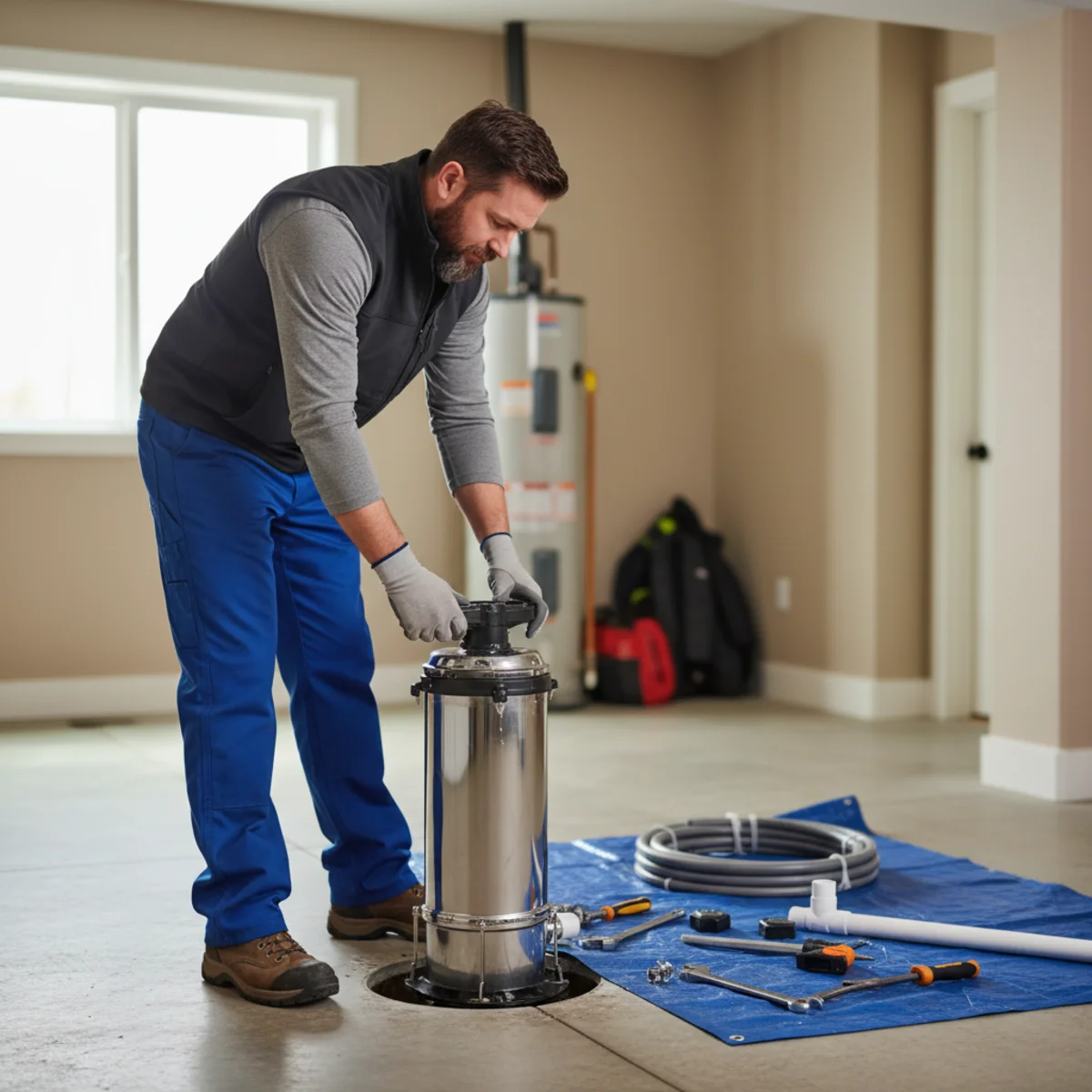
Best Time to Replace a Sump Pump
Your sump pump runs hardest exactly when you can least afford to lose it. A March snowmelt. A July thunderstorm. A saturated yard at 2 a.m. That is when a tired pump quits. And that is the worst possible moment to learn it was on its last leg.
Most homeowners wait too long. They replace a sump pump only after it has already let water into a finished basement. By then you are paying for the pump, the cleanup, and the drywall. The smarter move is to swap an aging unit on your schedule, in dry conditions, before the season that will test it.
So when is the best time to replace a sump pump? Short answer: late winter or early spring, before snowmelt and storm season hit the Front Range. Below we break down the timing, the warning signs, and how Littleton's clay-heavy soil shortens a pump's working life.
- Local Littleton Service
- Professional Installation
- Clear, Upfront Estimates
- Battery Backup Options
- Careful, Clean Workmanship
- Emergency Help Available
The Short Answer: Replace in the Dry Window
Plan the replacement for the calm stretch between hard freezes and spring runoff. Along the Front Range that usually means late February through early April. The ground is not yet saturated, your pit is not cycling constantly, and you are not racing a storm forecast.
Replacing during a dry window means a calm install. We can test the float switch, check the discharge line, and confirm the check valve holds, all without water pouring into the basin. Try the same job mid-storm and everything is harder, wetter, and more rushed. A rushed swap is also a swap where mistakes hide, because nobody has time to test the system the way they should.
There is a cost angle too. An emergency replacement during a flood often comes bundled with water cleanup, ruined flooring, and damaged belongings. A planned swap is just the pump and the labor. The dry window lets you control the whole job instead of reacting to a basement that is already wet.
If you already know your pump is old or struggling, do not wait for the calendar. A failing pump in any season is worth replacing now. The dry window is the ideal target, not an excuse to delay a unit that is clearly done.
How Pump Age Drives the Decision
Sump pumps are workhorses, but they are not forever. A typical submersible runs in a roughly 7-to-10-year range depending on how often it cycles, the quality of the motor, and your water chemistry. A pedestal pump can sometimes run longer because the motor sits above the water, though it usually moves less volume per cycle.
Littleton water is mineral-rich. That mineral content is hard on impellers and seals over time, which is one reason cast iron pumps tend to outlast lightweight thermoplastic in this area. If your pump is pushing the upper end of its lifespan, age alone is a fair reason to plan a swap before the next runoff season rather than hoping for one more year.
Age is not the only signal, though. A pump can fail early if it has been undersized for the pit, fighting a clogged intake, or short-cycling against a bad check valve. Run through the list below. If you check several boxes, the pump is telling you it is near the end.
- Pump is 7 to 10 years old or you simply do not know its age
- It cycles far more often than it used to for the same weather
- You hear grinding, rattling, or a motor that strains and hums
- The pump short-cycles, kicking on and off every minute or two
- Visible rust, a cracked housing, or a float switch that sticks
- It failed to keep up during the last big storm or snowmelt
Why Littleton Soil Wears Pumps Out Faster
Littleton sits on expansive clay. When it gets wet it swells; when it dries it shrinks. That constant movement builds hydrostatic pressure against your foundation and keeps groundwater pressing toward the lowest point in your basement, which is your sump basin.
The practical effect is a pump that cycles more than it would in sandy soil. More cycles mean more wear on the motor and float switch. A pump that might coast to ten years in gentler ground can age noticeably faster here, especially through a wet spring when the clay stays saturated for weeks.
Snowmelt makes it worse. A warm stretch in March can dump weeks of accumulated snow into the water table in a few days. If your pump is already marginal, that surge is often what finally finishes it. The same goes for the fast, heavy thunderstorms that roll through in summer.
This is the local reason a swap-before-it-fails strategy pays off here more than in milder climates. Our soil and weather hand pumps a harder workload, so the gap between a pump that is fine and a pump that is done can close in a single wet season.
Replace or Repair? How to Decide
Not every problem means a full replacement. A stuck float switch or a bad check valve is often a straightforward repair on an otherwise healthy pump. If the unit is only a few years old and the motor is strong, fixing the failed part is usually the right call.
The math shifts as the pump ages. Once a unit is near the end of its lifespan, pouring money into repairs rarely pays off. You fix one part and another fails the following season. At that point a clean replacement is cheaper over time and far more reliable.
A good rule of thumb: repair a young pump, replace an old one. If you are on the fence, factor in what a failure would cost. A finished basement raises the stakes enough that many homeowners replace a borderline pump rather than gamble on one more season over their living space.
When you do replace, it is worth looking at the whole system rather than just dropping in a new pump. The basin, the check valve, and the discharge line all age alongside the pump. Addressing the weak links together means you are not back in the basement next spring chasing the next worn part.
Get the Most Out of the New One
Once the new pump is in, a little upkeep stretches its life. Test it a couple of times a year by pouring water into the pit until the float trips. Keep the basin clear of gravel and silt that can jam the impeller. Make sure the discharge line still slopes away from the house and stays clear below the frost line so it does not freeze in winter.
This is also the right time to think about a backup system. Front Range storms knock out power, and a primary pump is useless without it. A battery backup or a water-powered backup keeps the pit emptying when the grid goes down, which is exactly when you need it most. Pairing a new primary pump with a backup is the single best upgrade for a home that has flooded before.
If you want a second set of eyes before storm season, a quick inspection covers the pump, the float, the check valve, and the discharge run in one visit. Catching a weak link in the dry window beats discovering it during the first big storm of the year.
Frequently Asked Questions
Keep Reading
 Sump Pump Basics
How Long Does a Sump Pump Last?
Most sump pumps last about a decade, but Littleton conditions can shorten that. Learn the real lifespan, what wears a pump out, and the signs it is time to replace.
 Costs & Replacement
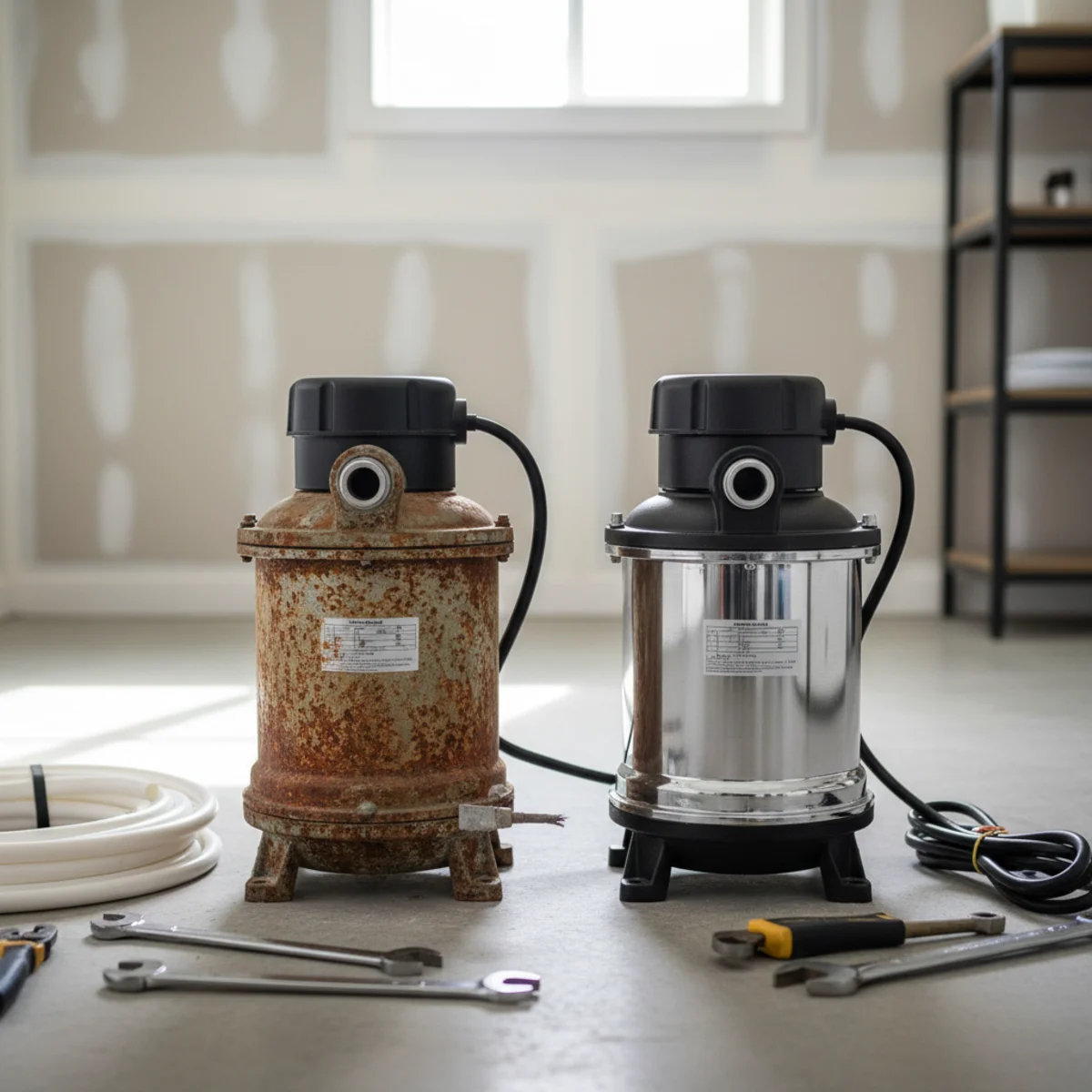
Signs Your Sump Pump Needs Replacement
A sump pump rarely dies on a sunny day — it fails during the storm it was supposed to handle. Here are the warning signs that mean replace it now, before the next one.
 Costs & Replacement
Sump Pump Installation Cost in Littleton, CO
Sump pump installation cost in Littleton depends on the pit, the pump, and the discharge run. Here is what drives the price and how to get an accurate estimate.
Protect Your Basement Before the Next Storm
Get professional sump pump help from a local Littleton specialist. Clear, upfront estimates and careful, clean workmanship.
Available by appointment. Emergency sump pump help available.