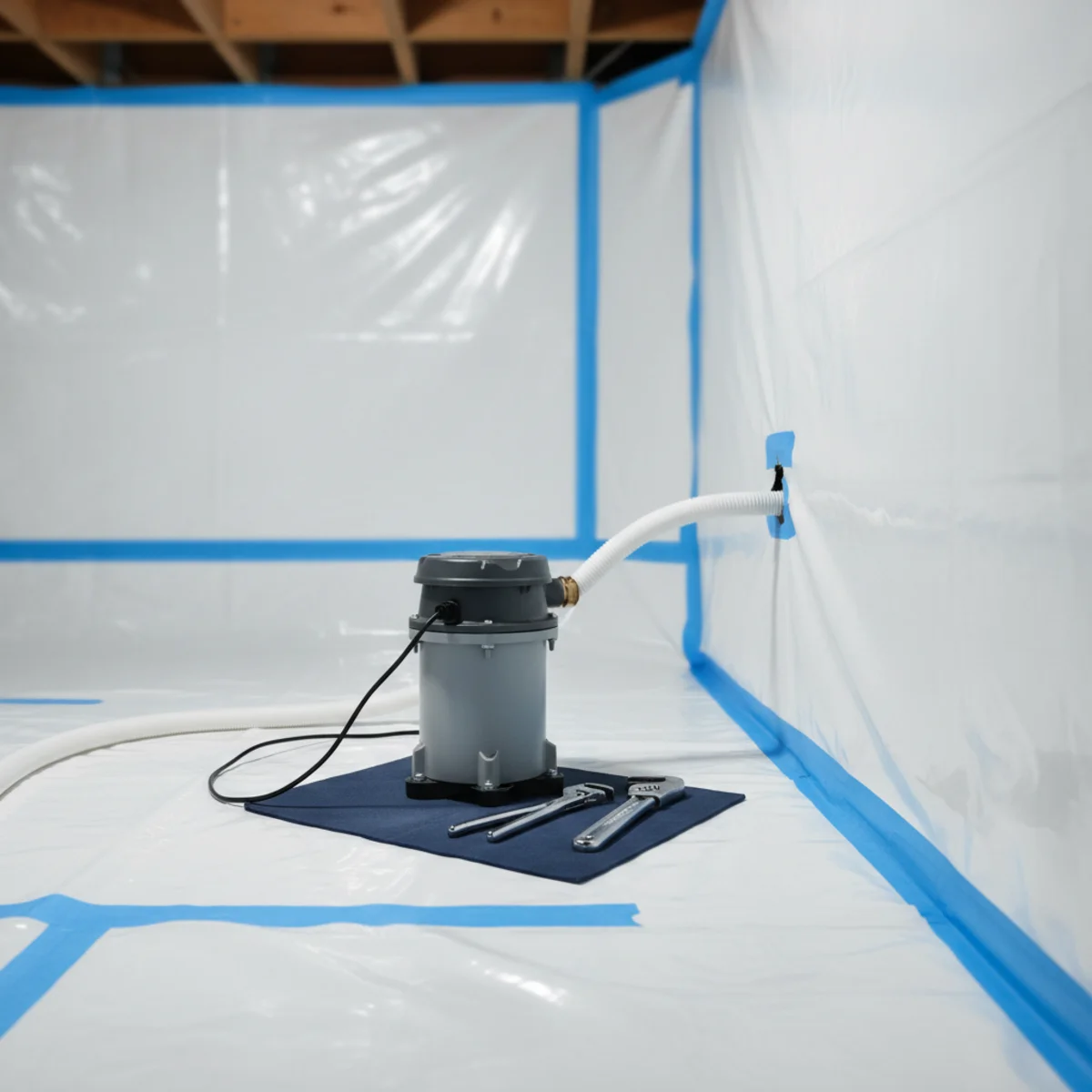
Do You Need a Sump Pump in a Crawl Space?
Most people never look in their crawl space. That's exactly why crawl space water does so much damage before anyone catches it. The water sits down there in the dark, the framing stays damp, and the first sign upstairs is a musty smell or a soft spot in the floor.
If you've found standing water, damp soil, or condensation dripping off the floor joists, your crawl space is telling you something. The ground under your home is holding more water than it can shed, and gravity is pulling it into the lowest, most hidden part of your house.
A crawl space sump pump does the same job as a basement pump — collect groundwater in a pit and push it outside before it pools. The question is whether your crawl space actually needs one. Here's how to decide.
- Local Littleton Service
- Professional Installation
- Clear, Upfront Estimates
- Battery Backup Options
- Careful, Clean Workmanship
- Emergency Help Available
Why Crawl Spaces Get Wet Around Littleton
It comes back to the clay. Littleton sits on expansive clay-heavy soil that swells when wet and shrinks when dry. When that soil is saturated from snowmelt runoff or a run of summer thunderstorms, it can't absorb more, so the water moves sideways and down — straight toward your crawl space.
Clay also holds water against your foundation instead of draining it away. That builds hydrostatic pressure, which pushes moisture through small cracks and through the soil floor of the crawl space itself. Even a crawl space with no obvious crack can get damp from the ground up.
Grading and downspouts play a part too. If the soil around the house slopes toward the foundation, or a downspout dumps right at the corner, that water heads straight down to the crawl space. We see plenty of crawl space water that starts as a surface drainage problem and ends up pooling under the home.
Spring is the worst stretch. The snowpack melts, the ground thaws, and water that was frozen all winter suddenly has somewhere to go. If your crawl space floods, it usually floods in March through June.
Signs Your Crawl Space Needs a Sump Pump
You don't need to guess. Get down there with a flashlight after a heavy rain or during spring melt and look for the signs below. One or two of these means it's time to take it seriously.
Timing your check matters. The crawl space might look bone-dry in late summer and have an inch of water in it during April melt. If you only ever look when it's convenient, you'll miss the wet season entirely. Check it during or right after the times of year water shows up.
If you're seeing standing water at any point in the year, that's not a maybe — that's a yes. Wood framing sitting in or above standing water will eventually rot, and the repair bill for failed joists dwarfs the cost of a pump.
- Standing water or puddles on the crawl space floor, even briefly after storms
- Soil that stays dark and damp instead of drying out between rains
- Condensation or water droplets on the floor joists, ductwork, or vapor barrier
- A musty, earthy smell that drifts up into the rooms above
- Mold or white mineral staining on the foundation walls or wood framing
- Soft, springy, or cupping floors in the rooms directly above the crawl space
- Rusty support posts or hardware, which points to long-term moisture
What a Crawl Space Sump Setup Looks Like
A crawl space pump system starts with a sump basin set into the lowest point of the crawl space floor. Water collects in the basin, a float switch trips when it rises, and a submersible pump pushes it out through a discharge line.
Because crawl spaces are tight and low, the layout matters. The basin has to sit at the true low spot or water pools elsewhere and never reaches the pump. The discharge line has to route up and out without sagging, and it still has to run below the frost line outside so it doesn't freeze in winter.
Access is the other piece. You can't service a pump you can't reach. We set up crawl space pumps so the lid, float switch, and check valve are reachable without crawling the length of the house on your elbows — because a pump you can't easily test is a pump that won't get tested.
A submersible pump is the right tool here. It sits low in the basin, runs quiet, and doesn't need the headroom a pedestal pump requires. Pair it with a sealed basin lid to keep crawl space humidity from feeding back into the air, and a high-water alarm so you know if it fails in a space you rarely visit. A smart alarm that pings your phone is worth it down here, since nobody's checking the crawl space day to day.
Pair the Pump With Drainage and a Vapor Barrier
A pump alone treats the symptom. The water still finds its way in. To actually dry out a crawl space, pair the pump with proper drainage and a good vapor barrier.
Drainage channels around the perimeter collect water and route it to the basin instead of letting it spread across the floor. A heavy vapor barrier laid over the soil stops ground moisture from evaporating up into the framing in the first place. Together, the barrier blocks the slow daily moisture and the pump handles the bulk water during storms and melt.
It helps to fix the easy stuff outside at the same time. Extending downspouts away from the foundation and improving the grade so water runs away from the house cuts down how much ever reaches the crawl space. Less water in means less work for the pump and a drier space year-round.
We're drainage-focused for a reason. The pump is the last line, not the only line. Get the water collected and directed first, and the pump has a much easier job.
What Happens If You Wait
Crawl space water is patient. It doesn't flood your living room overnight, so it's easy to put off. But the damage compounds. Damp framing invites wood rot and mold. Insulation gets wet, packs down, and stops working. Moisture rising into the house drives up humidity and can make the whole home feel clammy in summer.
There's also the foundation. Standing water against footings and posts over years contributes to settling and movement — the same clay-driven movement that cracks foundations does more damage when the soil stays wet.
Wet crawl spaces draw pests, too. Damp wood and standing water make the space inviting to insects and rodents, and they bring their own problems into the framing and insulation. Drying the crawl space takes away the conditions they're looking for in the first place.
If you've confirmed standing water down there, don't sit on it. A crawl space pump is a straightforward install, and catching it early is far cheaper than replacing joists later. Emergency sump pump help is available if you're dealing with active flooding — call (207) 419-2600.
Frequently Asked Questions
Keep Reading
 Littleton Homeowner Guides
How to Know If You Need a Sump Pump in Littleton, CO
Damp floors, musty smells, and spring snowmelt are clues your Littleton basement may need a sump pump. Here is how to tell before water gets in.
 Littleton Homeowner Guides
Common Basement Water Problems in Littleton Homes
From expansive clay to spring snowmelt, Littleton basements face specific water threats. Here are the common problems and how to get ahead of them.
 Sump Pump Basics
How Sump Pumps Help Protect Your Foundation
A sump pump keeps water off the basement floor, but its bigger job is relieving the pressure that works against your foundation. Here is how that protection works in Littleton.
Protect Your Basement Before the Next Storm
Get professional sump pump help from a local Littleton specialist. Clear, upfront estimates and careful, clean workmanship.
Available by appointment. Emergency sump pump help available.