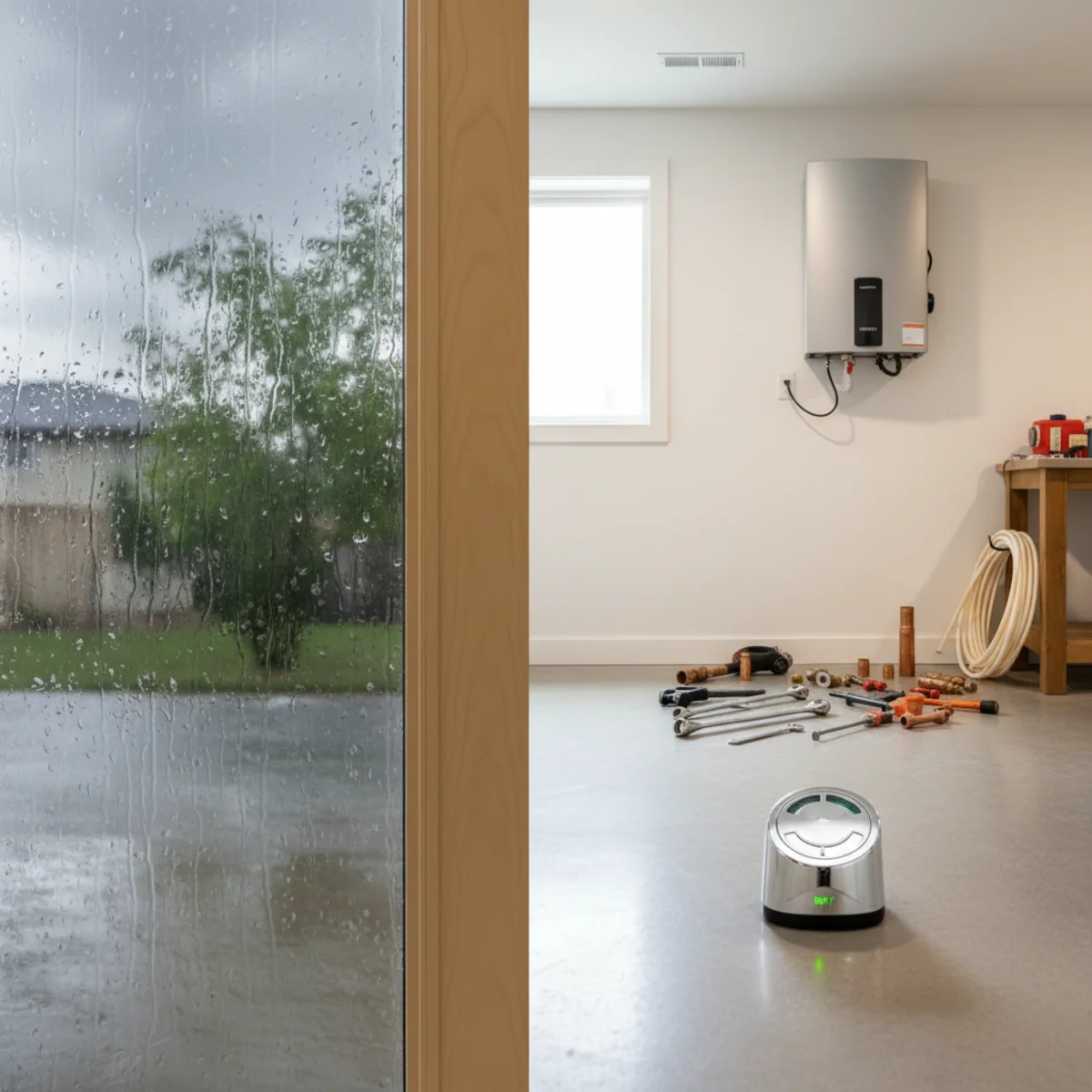
How to Prevent Basement Flooding During Heavy Rain
A summer thunderstorm rolls over Littleton, dumps an inch of rain in twenty minutes, and suddenly your basement carpet is squishing under your feet. It happens fast. By the time most homeowners notice, the water is already in.
The frustrating part is that a flooded basement is usually preventable. The water doesn't sneak in through magic. It follows predictable paths: saturated clay soil pressing against your foundation, a downspout dumping right next to the wall, or a sump pump that quit when you needed it most. Find the path, block it, and the storm passes without a mess.
This guide walks through exactly how to prevent basement flooding during heavy rain. We'll cover the outside grading, the gutter work, the pump and backup setup, and what to do the moment the sky opens up. Most of it you can check yourself this weekend, and the parts you can't are worth a call before the next big storm.
- Local Littleton Service
- Professional Installation
- Clear, Upfront Estimates
- Battery Backup Options
- Careful, Clean Workmanship
- Emergency Help Available
Why Littleton Basements Flood in Heavy Rain
Our soil is the first problem. Much of Littleton and the south Denver metro sits on expansive clay. When it rains, that clay swells and holds water tight against your foundation walls. The result is hydrostatic pressure: water literally being pushed through any crack, cold joint, or gap in the floor. The wetter the ground gets, the harder it pushes.
The second problem is timing. Front Range storms are short and violent. A slow soaking rain gives the ground time to absorb water. A summer cloudburst, or a fast spring snowmelt running over still-frozen ground, sends sheets of water straight toward the lowest point on your lot. That low point is often your foundation, and the water arrives faster than the soil can take it in.
There's a seasonal rhythm to it too. Spring brings melting snow on top of saturated, sometimes frozen soil. Summer brings the afternoon thunderstorms that drop an inch in half an hour. Both overwhelm drainage in different ways, and a basement that stayed dry for years can flood the first time conditions line up.
If your home has a finished basement, the stakes climb. Drywall, flooring, and stored belongings turn a minor seep into an expensive cleanup. Prevention is always cheaper than recovery, and most of it costs far less than a single flood.
Start Outside: Grading, Gutters, and Downspouts
Most basement flooding starts with water that should never have reached the foundation in the first place. Before you touch anything inside, walk the perimeter of your house in the rain. Watch where the water goes. You'll often spot the problem in a minute: a puddle hugging the wall, an overflowing gutter, a downspout pouring out right at the foundation.
The ground should slope away from your foundation, dropping at least six inches over the first ten feet. Over the years, soil settles and backfill compacts, creating a reverse slope that funnels water back toward the wall. A few wheelbarrows of soil to rebuild that grade can do more than any gadget you can buy.
Then look up at your gutters and downspouts. Clogged gutters overflow right at the foundation, undoing all your grading work. Short downspouts dump a roof's worth of water in one concentrated spot. Extend every downspout so it discharges well away from the house, and clear the gutters before storm season so they actually carry water to the downspouts in the first place.
Run through the checklist below before the next storm. Each item keeps water away from the foundation, which is the whole game when it comes to a dry basement.
- Slope soil away from the foundation: at least six inches of drop over the first ten feet.
- Clean gutters before storm season so they don't overflow at the wall.
- Extend downspouts at least four to six feet from the foundation, or farther on flat lots.
- Seal obvious foundation cracks, but treat sealant as a stopgap, not a cure for pressure.
- Keep window wells clear and capped; add gravel and a drain if they pool.
- Check that the lot's low point drains toward the street or a swale, not your wall.
Make Sure Your Sump Pump Is Storm-Ready
When water does get to your foundation, your sump pump is the last line of defense. It collects water in the sump basin and pushes it out through the discharge line before it can rise onto your floor. A pump you haven't tested is a pump you can't trust, and the middle of a storm is the worst possible time to learn it failed.
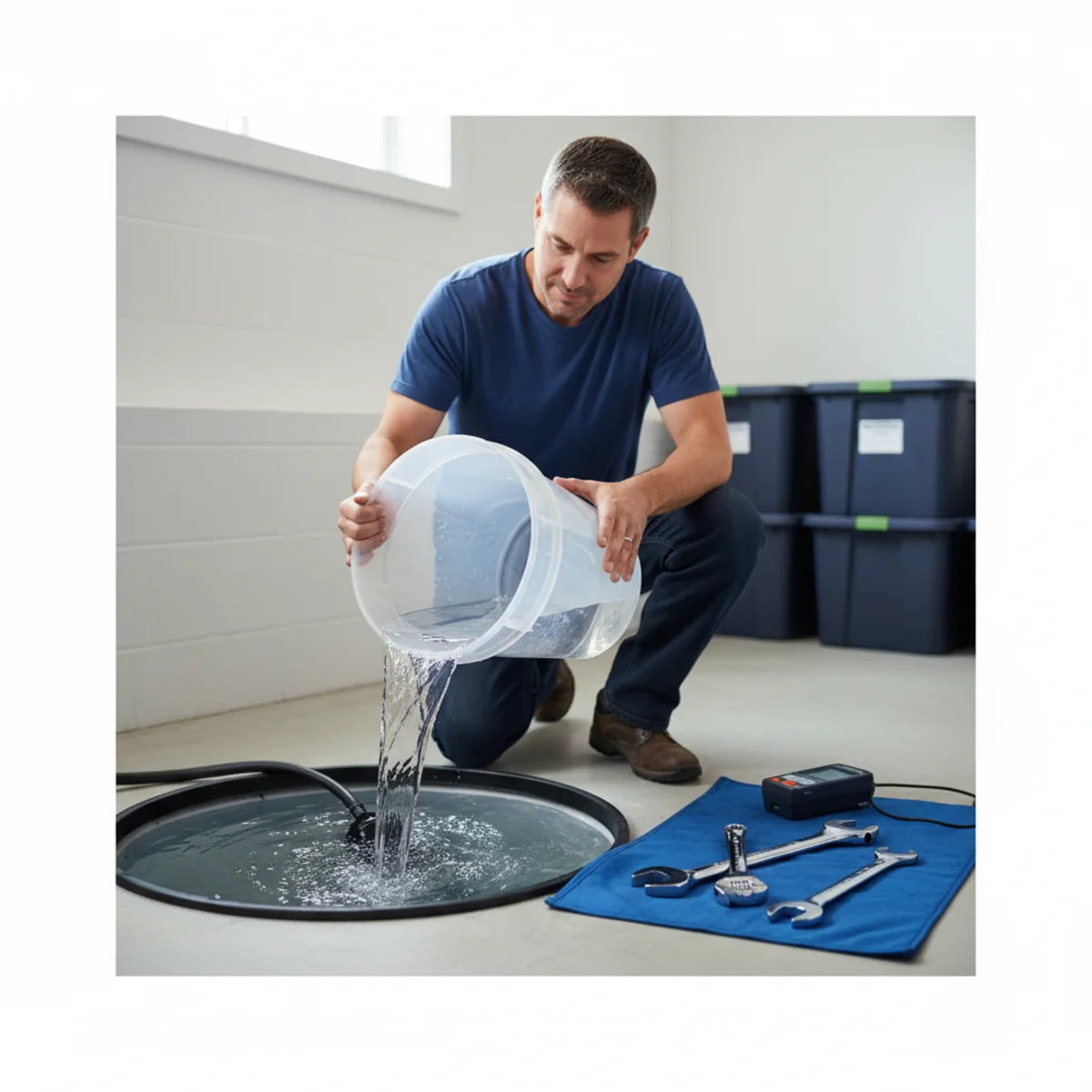
Testing takes five minutes. Pour a few buckets of water into the pit until the float switch rises. The pump should kick on, move the water out fast, and shut off cleanly once the level drops. If it hums but doesn't pump, runs constantly, or the float sticks against the basin wall, deal with it now, not during a storm. Our walkthrough on how to test a sump pump covers the steps in detail.
Also check the check valve on the discharge line. A failed check valve lets pumped water drain back down into the pit between cycles, so the pump turns on again and again and burns itself out. If you hear that repeated short cycling, the check valve is a common culprit and an easy thing to replace before it kills the pump.
While you're down there, look at the age of the pump itself. Pumps wear out, and an older unit that's slowing down may not keep up with a hard rain even if it technically still runs. Run through the quick pre-storm check below.
- Pour water in the pit and confirm the pump starts, clears the water, and stops on its own.
- Make sure the float switch moves freely and isn't pinned against the basin wall or a cord.
- Listen for repeated short cycling, which often points to a bad check valve.
- Clear any debris or gravel that has settled in the bottom of the basin.
- Confirm the discharge line is clear and actually carries water away from the house.
- Note the pump's age; an old, slow unit may not keep pace with a heavy storm.
Plan for Power Outages With a Backup System
Here's the trap that catches so many homeowners: the same storm that floods your basement often knocks out the power. Your primary pump runs on house current. No power, no pumping, and the water rises while you watch, helpless, in the dark.
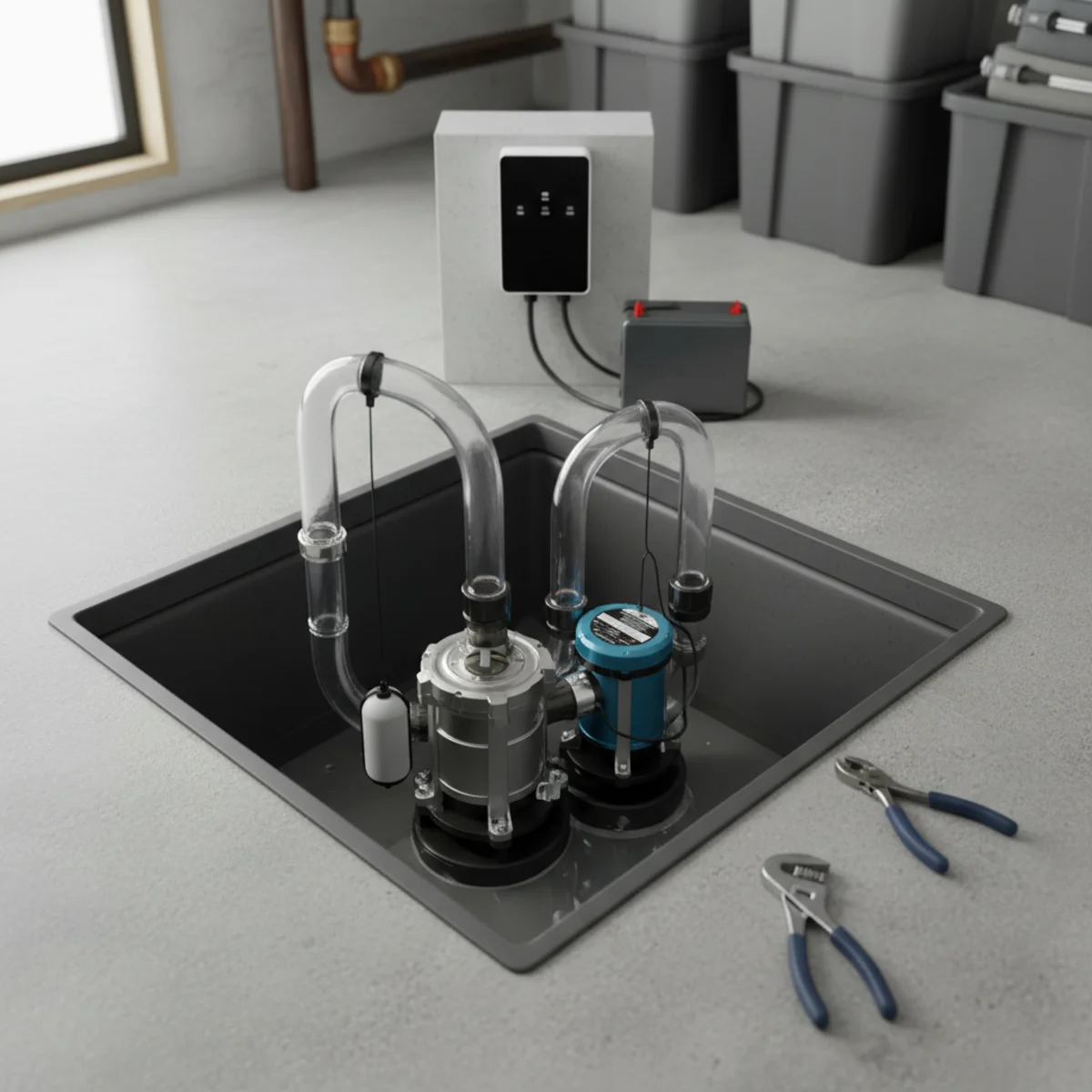
A battery backup sump pump solves this. It sits in the same pit and takes over automatically when the power drops or the primary pump fails. For homes that lose power often, or anyone with a finished basement to protect, this is the single best upgrade you can make. We break down sizing and runtime in our battery backup guide.
There's also a water-powered backup, which uses your municipal water pressure to move water and never needs a battery to stay charged. Each approach has trade-offs around runtime, water use, and whether you're on city water or a well. The right pick depends on your home, but having any backup beats having none when the grid goes down mid-storm.
What to Do When the Storm Hits
Once heavy rain starts, a few quick moves can save you a lot of grief. Listen for your sump pump running, and run periodic ear checks during a long storm. If you have a high-water alarm, make sure it's armed; it gives you precious minutes of warning before water reaches the floor.
Move anything valuable off the basement floor and onto shelves or higher ground while you still have time. Keep cars out of a basement-adjacent garage if water is pooling at the door. And if you smell anything electrical or see water creeping near outlets, stay out of the water and shut off power to the basement at the breaker if you can do so safely.
If water is already coming in and your pump can't keep up, or it has failed entirely, don't wait it out and hope. The faster water is removed, the less damage it does to flooring, drywall, and anything stored down there. Emergency sump pump help is available. Call (207) 419-2600 and we'll walk you through it or get someone out to you.
Frequently Asked Questions
Keep Reading
 Maintenance & Troubleshooting
How to Test Your Sump Pump Before a Storm
The time to find out your pump is dead is not during the storm. Here's a five-minute test you can run yourself before the rain hits.
 Backup Pump Systems
Complete Guide to Sump Pumps with Battery Backup
A primary sump pump is useless when the power goes out, and storms cause both. Here's a complete guide to sump pumps with battery backup for Front Range homes.
 Maintenance & Troubleshooting
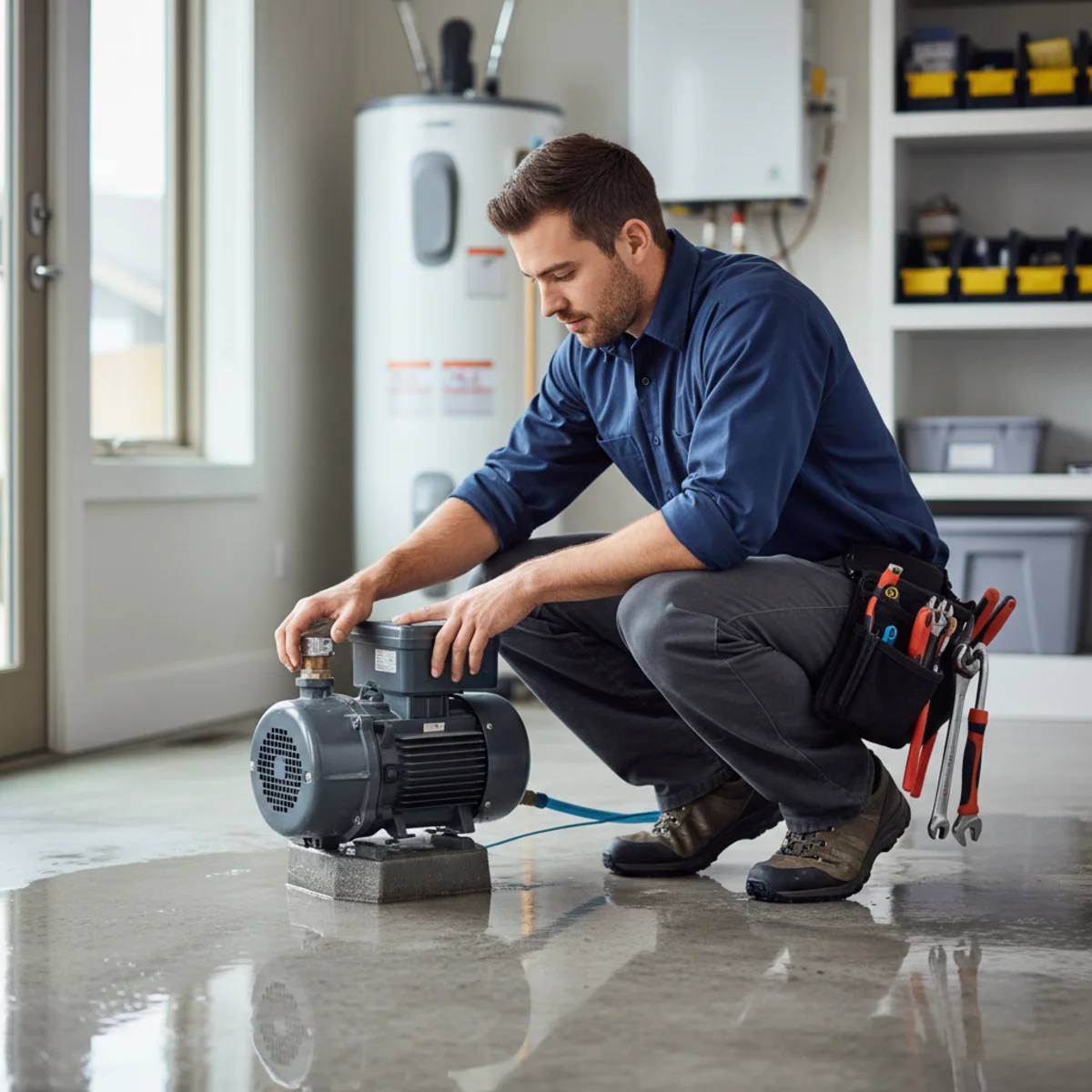
Sump Pump Not Working and Basement Flooded? What to Do Next
Pump dead and water rising? Start with the emergency steps below, then work through the diagnosis. Emergency sump pump help is available.
Protect Your Basement Before the Next Storm
Get professional sump pump help from a local Littleton specialist. Clear, upfront estimates and careful, clean workmanship.
Available by appointment. Emergency sump pump help available.