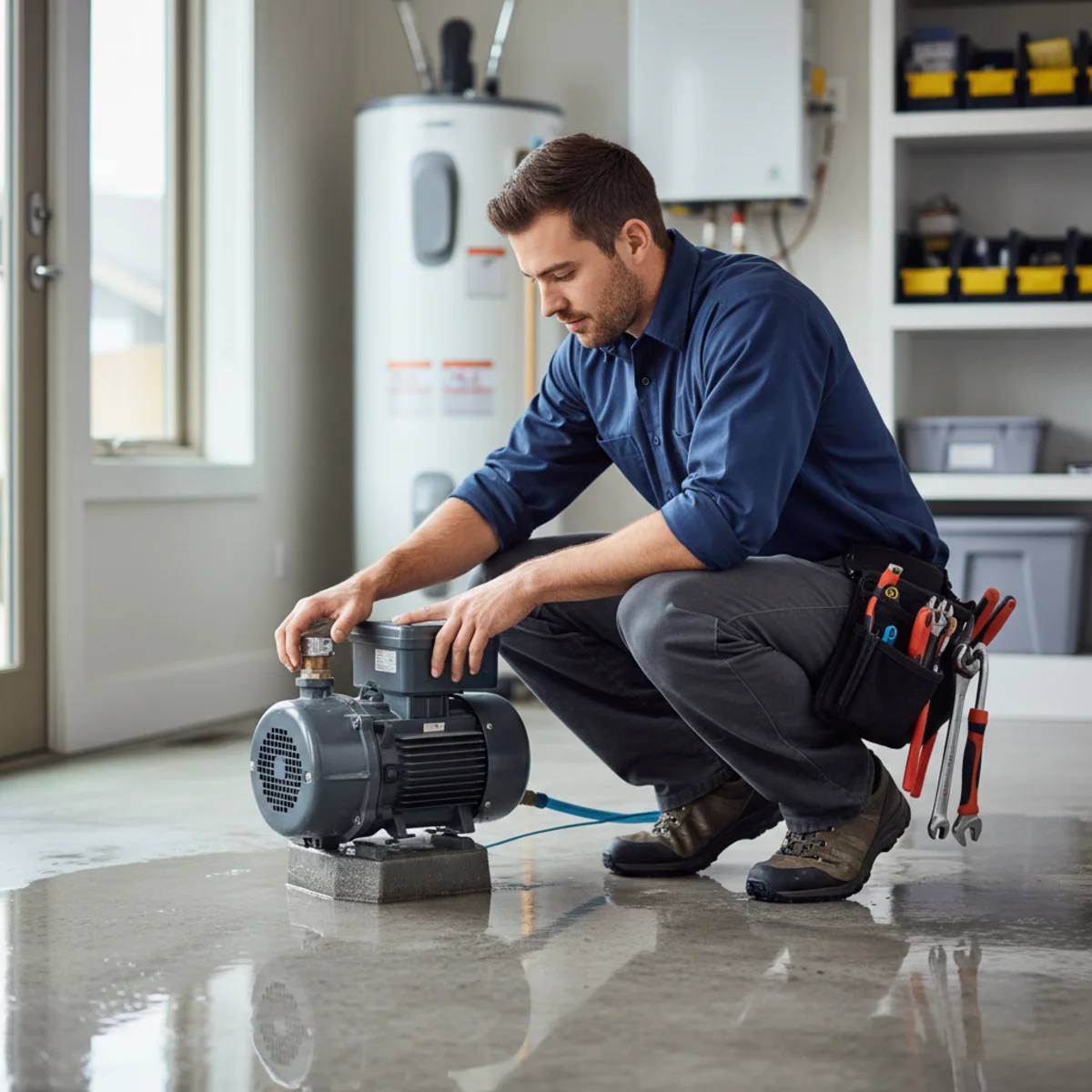
Sump Pump Not Working and Basement Flooded? What to Do Next
Water is rising and the pump is silent. This is the moment every basement owner dreads, and it almost always hits during the worst storm of the season.
Panic doesn't move water. A clear head and a few fast steps do. The goal right now is simple: keep people safe, stop the water from getting worse, and get the pump running again or get help on the way.
Below is exactly what to do right now, followed by how to figure out why the pump quit, and how to keep it from happening again. Read the emergency checklist first.
- Local Littleton Service
- Professional Installation
- Clear, Upfront Estimates
- Battery Backup Options
- Careful, Clean Workmanship
- Emergency Help Available
Do This Right Now
Work through these steps in order. Safety comes first. Standing water and electricity are a dangerous mix, so don't wade into a flooded basement until you've handled the power.
Once people and electricity are safe, your next job is to slow the water and start removing it however you can while help is on the way.
- Stay out of standing water if any outlet, cord, or the pump itself is submerged or live. Shut off power to the basement at the breaker first if you can reach it safely.
- Cut power to the dead pump at the breaker before touching it.
- Move valuables, electronics, and anything off the floor to higher ground.
- Find the water source if you can: a failed pump, a backed-up drain, or water coming through walls or the floor.
- Start removing water with a wet/dry vacuum, mop, or buckets to buy time.
- Check the obvious: is the pump unplugged, is the breaker tripped, is the float stuck up?
- Call for emergency sump pump help — (207) 419-2600 — if the pump won't restart and water keeps rising.
Quick Checks Before You Call
A surprising number of dead pumps aren't broken at all. They've simply lost power. Before you assume the worst, run these checks once the area is safe.
First, confirm the pump is actually plugged in. Pumps share outlets with other equipment, and a cord can get bumped loose. While you're there, check that the outlet itself has power; storm surges can trip a GFCI outlet, and a simple reset may bring the pump back. Next, check the breaker. A tripped breaker is common during storms when the grid is stressed, and resetting it may bring the pump right back to life.
Then look at the float switch. Reach in and see whether it's pinned up against the basin wall, the discharge line, or a chunk of debris. A stuck float can leave a working pump sitting idle in a full pit. Free it and the pump may fire immediately.
One more quick check: listen to the pump. If it hums but doesn't move water, the impeller may be jammed or the discharge line blocked. If it's completely silent with power confirmed and the float free, the motor or switch has likely failed. Either way, if these checks don't restart it and water keeps rising, stop troubleshooting and get help on the way.
Why Sump Pumps Fail When You Need Them
Pumps almost always fail at the worst possible time, and that's not bad luck. The same storm that floods your basement is what exposes a weak pump. Knowing why it failed tells you how to make sure it doesn't happen twice.
Power outages are the big one. Front Range storms knock out power, and a pump without a backup system is dead the moment the lights go out, exactly when the water table is peaking from snowmelt runoff or a downpour. A battery backup or water-powered backup keeps pumping when the grid fails, which is why they're the single best protection against a storm-night flood.
Age is the next factor. A pump that has quietly worked for years may give out under heavy demand. Worn bearings, a burned-out motor, a failed float switch, or a clogged impeller all show up under load. A pump that sounds fine in a dry month can still fail when the pit fills fast, because that's the only time it's truly tested.
Then there's the discharge side. If the discharge line is clogged, disconnected, or frozen below the frost line in winter, the pump runs but moves no water. The basin overflows even though the motor is humming. And sometimes the pump is simply undersized for the lot, unable to keep up no matter how hard it works. Each of these has a fix, but only once you know which one hit you.
- Power outage with no backup system
- Worn-out motor or seized impeller from age
- Failed or stuck float switch
- Clogged, frozen, or disconnected discharge line
- Pump undersized for the volume of water
After the Water Is Out
Getting the water out is step one. Drying things out fast is step two, because the damage from a flooded basement keeps going long after the puddles are gone.
Pull up wet carpet and padding, run fans and a dehumidifier, and get air moving. Mold can take hold quickly in a damp, enclosed basement, and a finished basement raises the stakes on every soaked wall and baseboard. The sooner it dries, the less you lose.
Document everything with photos before you throw anything away. Then figure out what failed and fix it for good. A pump that flooded once with no backup will flood again under the same conditions.
Assess the Damage Before You Move On
Once the basement is drying, take a breath and look around carefully. Floodwater hides its damage, and what you do in the first day or two often decides how big the cleanup gets.
Walk the space and note what got wet and how high the water reached. Drywall and insulation wick moisture upward, so the damage usually climbs higher than the waterline you can see. Check baseboards, the bottom of finished walls, and anything stored on the floor. Electronics and appliances that sat in water shouldn't be powered on until they're checked. The goal is a clear picture of what's salvageable and what isn't.
Good records help here, both for your own planning and for any claim you decide to file. Photograph the standing water if you safely can, then the damaged materials and belongings, before anything gets hauled off. Keep a simple list as you go.
- Photograph standing water and damage before discarding anything
- Check how high moisture wicked up walls and insulation, not just the floor
- Keep appliances and electronics off until they're inspected
- List damaged belongings for your records and any claim
- Watch for musty smells in the days after, an early sign of mold
Make Sure It Doesn't Happen Again
A single failure is a warning. Treat it like one.
The most important upgrade after a flood is a backup system. A battery backup pump keeps water moving during a power outage, and a water-powered backup runs with no battery to maintain at all. A high-water alarm is a cheap, smart add-on that warns you the moment the pit rises too high, so you're not finding out from soaked carpet.
Beyond a backup, regular maintenance catches the small failures before they become floods. Testing the pump before storm season, clearing the pit, and checking the float and check valve go a long way. If your pump is older or just failed under load, replacement is often the smarter move than another patch.
We offer emergency sump pump help and clear, upfront estimates on repairs, backups, and replacements. Call (207) 419-2600 and we'll get you sorted.
Frequently Asked Questions
Keep Reading
 Basement Flood Prevention
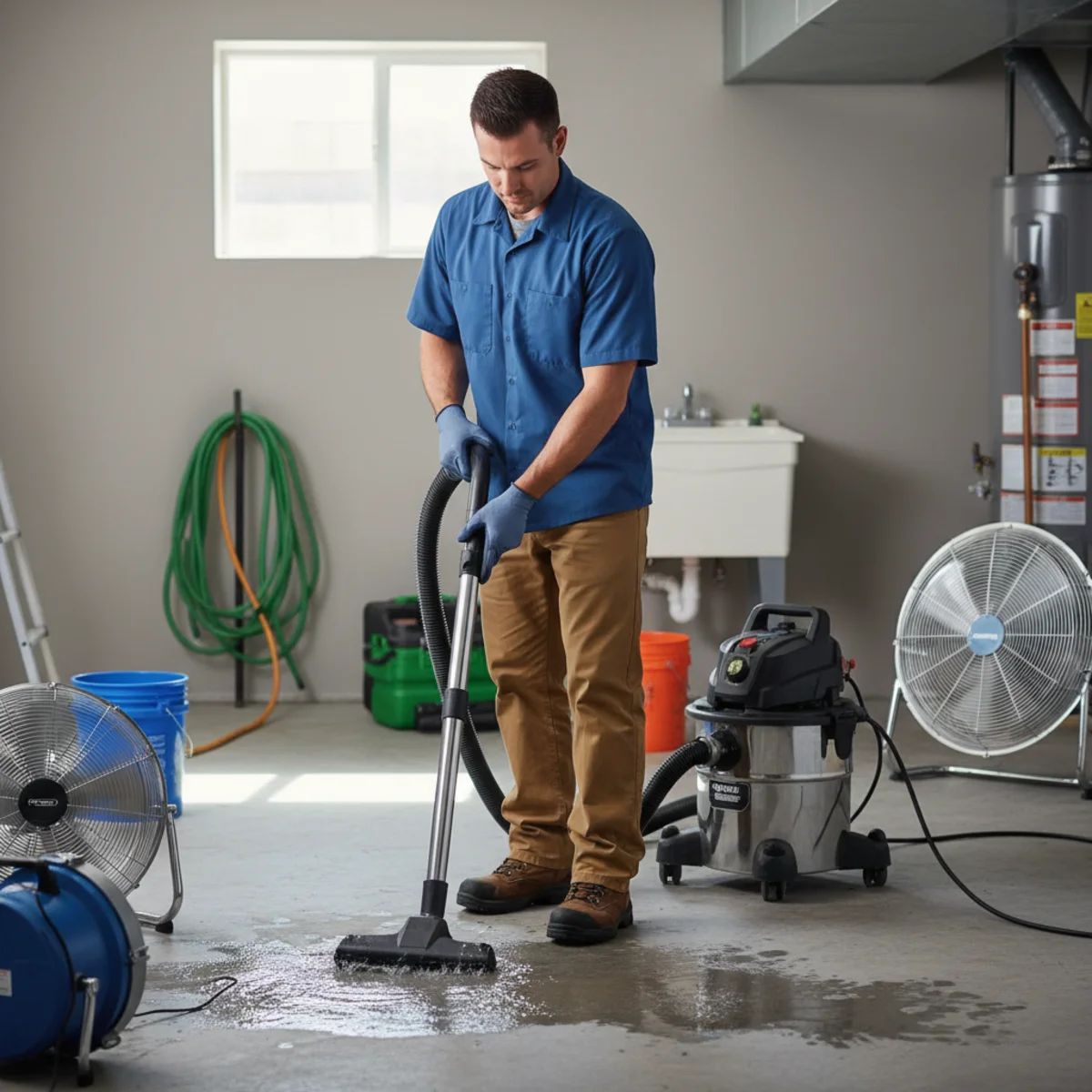
Basement Flood Cleanup After Sump Pump Failure
When a sump pump fails and the basement floods, the first hours matter. Here is a safe, practical cleanup sequence for Littleton homeowners, and how to stop it happening again.
 Maintenance & Troubleshooting
Emergency Sump Pump Repair Guide
When your sump pump quits mid-storm, minutes matter. Here are the steps to take right now and the quick checks that sometimes get it running again.
 Backup Pump Systems
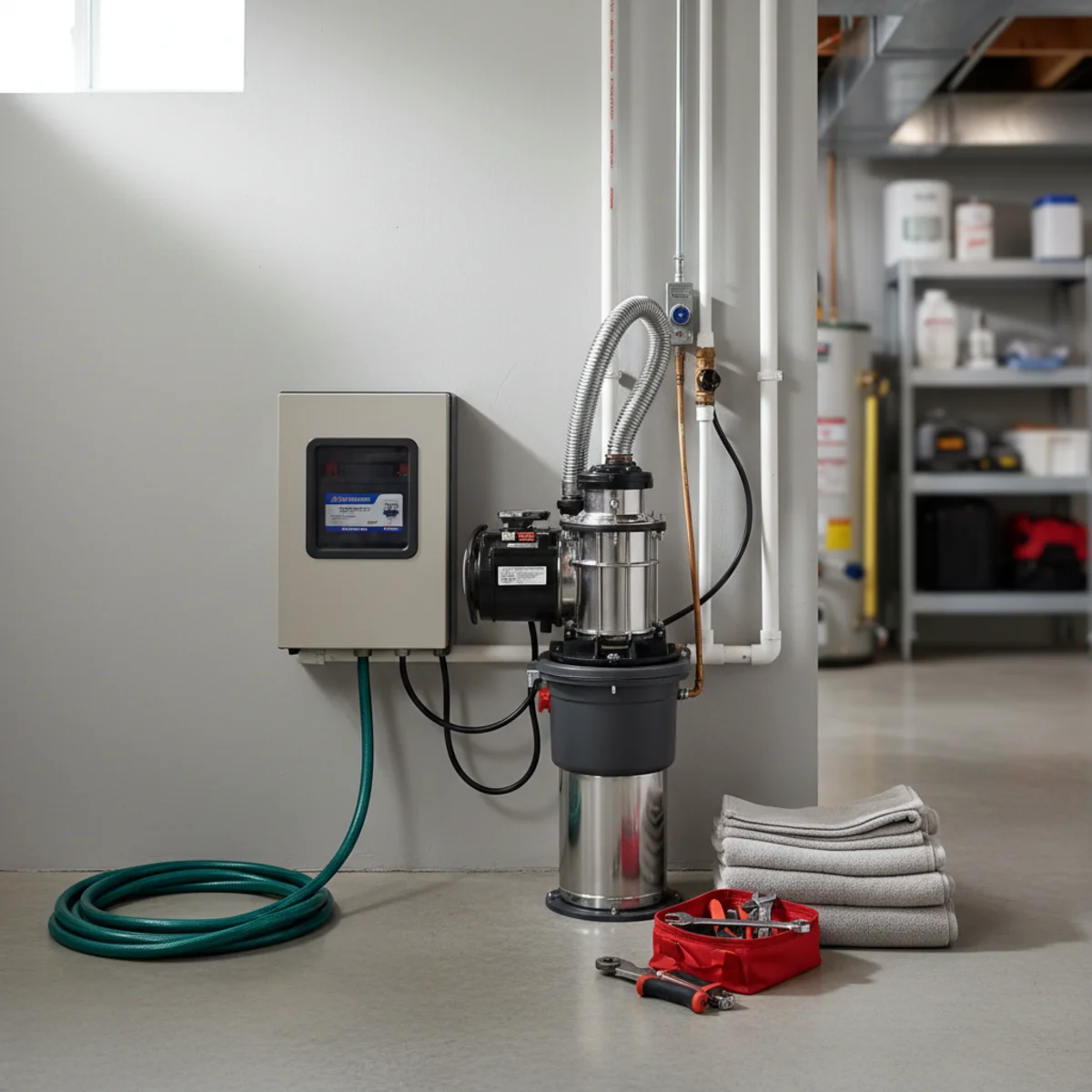
Is a Battery Backup Sump Pump Worth It?
Storms knock out power right when your sump pump matters most. Here is when a battery backup sump pump is worth it for a Littleton basement, and when it is essential.
Protect Your Basement Before the Next Storm
Get professional sump pump help from a local Littleton specialist. Clear, upfront estimates and careful, clean workmanship.
Available by appointment. Emergency sump pump help available.