Basement Flood Cleanup After Sump Pump Failure
You walked downstairs and found water on the basement floor. The pump that was supposed to stop this did not. Right now you want two things: to stop the damage and to keep yourself safe doing it.
Standing water in a basement is not just a mess. It soaks into drywall, swells flooring, and starts growing mold within a day or two. Move fast and you can save a lot. Move carelessly around water and electricity and you can get hurt. Both of those are true at the same time.
This is a practical, step-by-step cleanup sequence for after a sump pump failure, written for Littleton homes. Work through it in order. When the water is out, the last section covers why it failed and how to keep it from happening again.
- Local Littleton Service
- Professional Installation
- Clear, Upfront Estimates
- Battery Backup Options
- Careful, Clean Workmanship
- Emergency Help Available
Safety Before You Touch the Water
Electricity and standing water are a deadly combination. Before you step into a flooded basement, shut off the power to that area at the breaker panel if you can reach it safely and without standing in water. If the panel itself is in the wet zone or you have any doubt, stay out and call an electrician or utility.
Do not wade into water that is touching outlets, cords, or the running pump. If you can smell sewage or the water came up through a floor drain, treat it as contaminated and keep family members and pets away. That is a different cleanup than clean groundwater, and it needs gloves, caution, and disposal of anything porous it touched.
Watch the ceiling and light fixtures too. If water came from above or the level reached outlets and switches, assume the wiring in that zone may be compromised even after the power is off. Do not flip breakers back on until the area is dry and, if there is any doubt, checked by an electrician.
Wear rubber boots and gloves. Open windows for ventilation once power is handled. Your safety comes before any belonging in that basement. No box of stored items is worth a shock.
Stop the Source and Remove the Water
Figure out where the water is coming from. If the sump pit is overflowing because the pump quit, the source is groundwater the pump can no longer keep up with. If the discharge line is frozen or clogged, water the pump moves is coming right back. Knowing the source tells you whether bailing will even keep up.
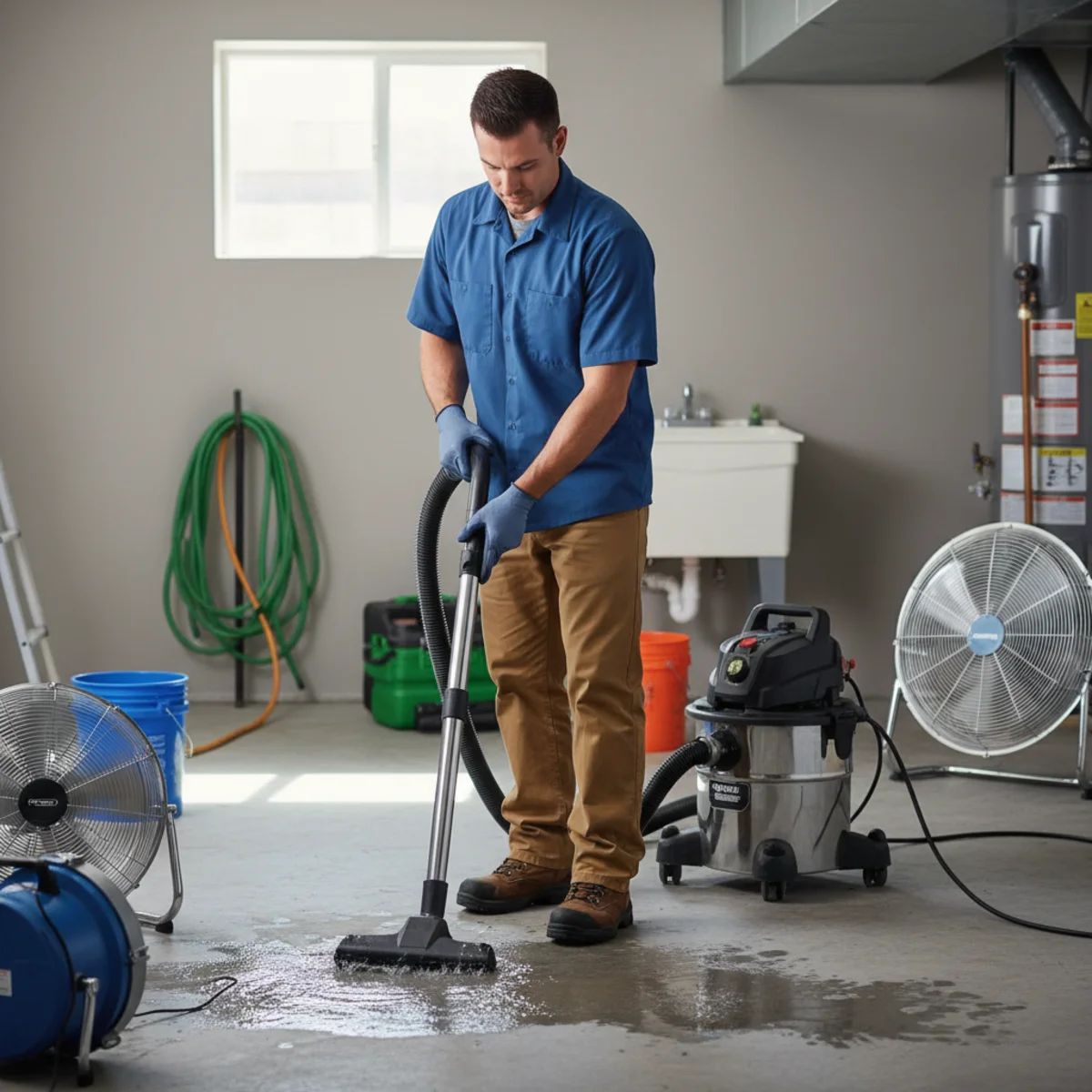
Once it is safe, get the water out. A wet/dry vacuum works for shallow water. For more than that, a portable utility pump or a backup pump moves volume faster. Push or squeegee remaining water toward a floor drain or the pit if it is draining.
Work from the lowest point outward and keep at it until the floor is just damp rather than wet. Standing water that lingers even a few extra hours keeps soaking into the bottom of walls and into anything porous sitting on the slab. The faster you get to a damp floor, the more you save.
This is also the moment to call for emergency help if the water is winning. A failed primary pump during a Front Range storm can be outpaced fast, and professional water removal plus a working pump stops the loss. Emergency sump pump help available — call (207) 419-2600.
The Cleanup Sequence, In Order
Once the standing water is gone, work this list top to bottom. Speed matters here because mold can take hold within a day or two in a damp basement.
- Get belongings up and out: Move soaked boxes, furniture, and stored items to a dry area. Lift anything still dry off the floor.
- Pull wet soft materials: Saturated carpet, padding, and rugs hold water and grow mold fast. Remove them rather than trying to dry them in place.
- Open up wet drywall: Drywall and insulation that wicked up water need to come out so the wall cavity can dry. Wet insulation rarely recovers.
- Dry aggressively: Run fans, a dehumidifier, and open windows. Keep air moving across every damp surface for days, not hours.
- Clean and disinfect hard surfaces: Wash concrete, tile, and framing. If the water was contaminated, disinfect thoroughly and discard porous items that contacted it.
- Document everything: Photograph the damage and damaged items before you discard them in case you file an insurance claim.
- Watch for mold: Check returns over the next two weeks for musty smells or staining and address any growth right away.
If the Basement Is Finished
A finished basement raises the stakes and changes the approach. Water hides behind drywall, under flooring, and inside wall cavities where you cannot see it dry. Surface-dry carpet can sit on soaked padding for weeks and quietly grow mold underneath.
Pull baseboards and check behind the bottom of the walls. Lift a corner of flooring to see what is happening underneath. If laminate or engineered flooring sat in water, it has likely swelled and will need replacing. Solid surfaces have a better chance if dried quickly.
When in doubt with a finished space, get eyes on it sooner rather than later. The cost of opening a wall to dry it properly is far less than the cost of tearing out a moldy finished basement months later.
Why the Pump Failed, and Stopping the Next One
Cleanup treats the symptom. Now find the cause so you are not back here next storm. The usual reasons a pump fails right when you need it: a power outage with no backup, a stuck or dead float switch, a frozen or clogged discharge line, a failed check valve letting water flow back, or simply a pump worn out past its service life.
Each has a fix. A battery or water-powered backup covers outages. A float switch repair or replacement restores reliable triggering. Reworking the discharge line addresses freeze-thaw cracking and clogs. A new check valve stops backflow. And a tired old pump is better replaced before it fails than after.
Have the system inspected after a failure. We will find why it quit, get a working pump back in the pit, and lay out the backup and discharge fixes that keep clay-heavy Littleton groundwater where it belongs. Clear, upfront estimates, no hard sell.
Frequently Asked Questions
Keep Reading
 Maintenance & Troubleshooting
Sump Pump Not Working and Basement Flooded? What to Do Next
Pump dead and water rising? Start with the emergency steps below, then work through the diagnosis. Emergency sump pump help is available.
 Basement Flood Prevention
How to Prevent Basement Flooding During Heavy Rain
Heavy Front Range rain and snowmelt push water against your foundation fast. Here is how to keep your basement dry before, during, and after a storm.
 Maintenance & Troubleshooting
Emergency Sump Pump Repair Guide
When your sump pump quits mid-storm, minutes matter. Here are the steps to take right now and the quick checks that sometimes get it running again.
Protect Your Basement Before the Next Storm
Get professional sump pump help from a local Littleton specialist. Clear, upfront estimates and careful, clean workmanship.
Available by appointment. Emergency sump pump help available.