
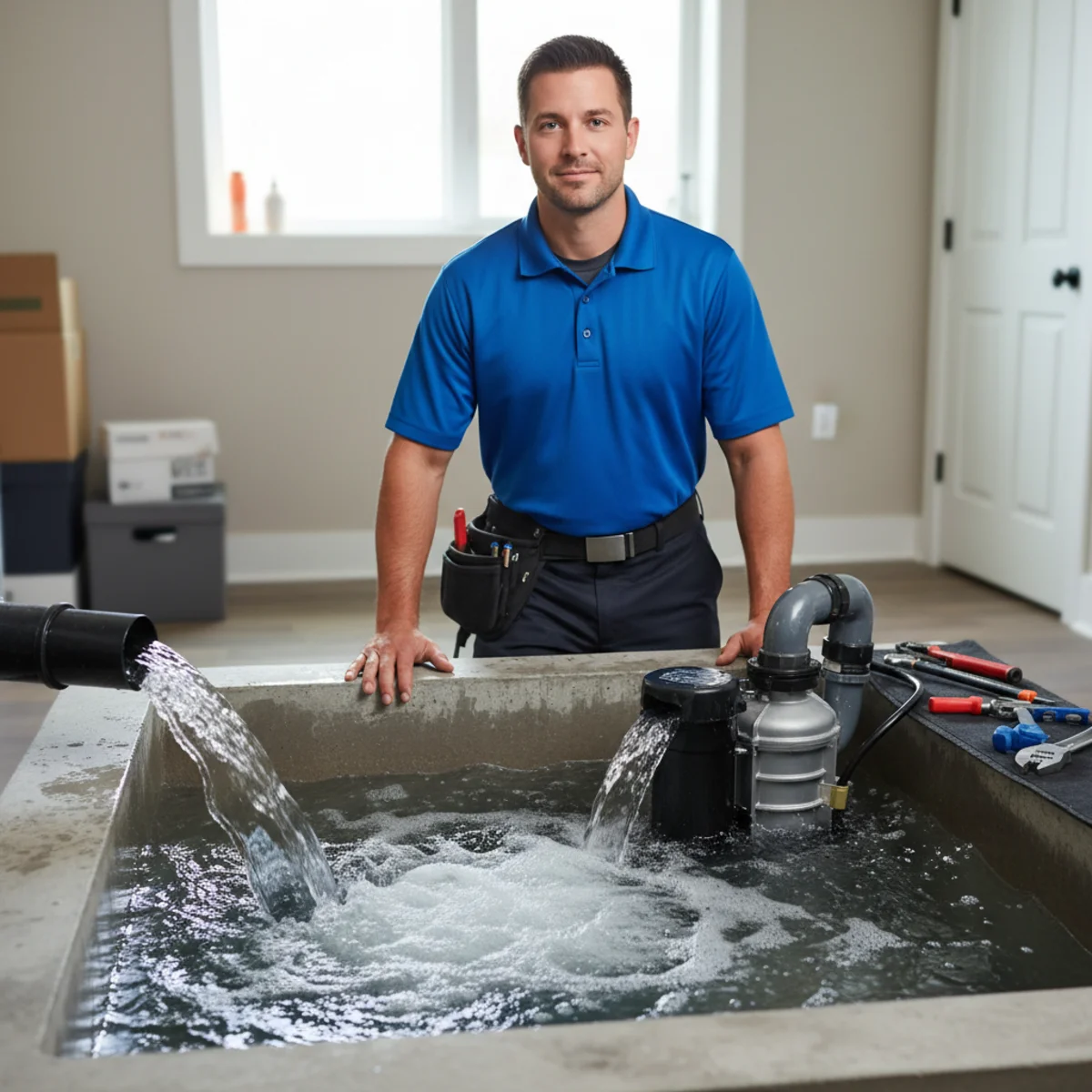
Why Is My Sump Pump Making Noise?
Quick answer
Some noise is normal: the motor starting, water moving, and a soft click at shutoff. A loud bang when the pump stops usually means the check valve; humming without pumping points to a jam, air lock, or frozen line; grinding suggests debris or worn bearings; gurgling means the pit is being pumped dry.
A sump pump is not silent. You will hear the motor start, water moving up the pipe, and a soft click when it stops. That is normal.
What is not normal is a loud bang every time it shuts off, a hum with no water moving, or a grinding sound that was not there last season. Each of those noises points to a specific part, and catching it early is cheaper than replacing a pump after it fails.
- Local Littleton Service
- Professional Installation
- Clear, Upfront Estimates
- Battery Backup Options
- Careful, Clean Workmanship
- Emergency Help Available
A Loud Thud or Bang When It Shuts Off
This is the most common complaint, and it is usually the check valve. When the pump stops, the column of water in the discharge pipe falls back and slams the valve shut. That is water hammer.
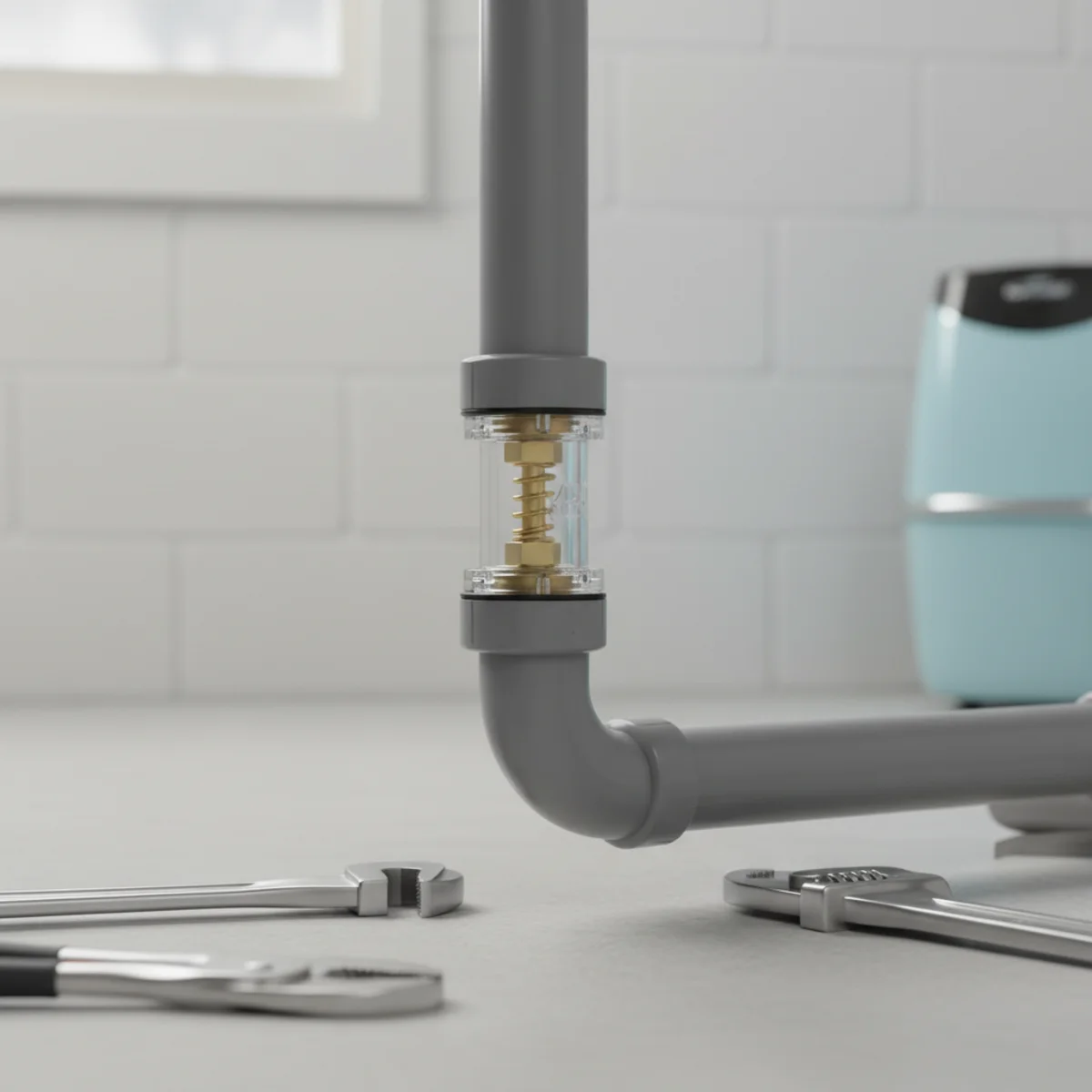
A spring-loaded or quiet-close check valve softens the closing, and lowering the valve so less water is above it helps too. It is mostly a noise problem, but repeated hammering can loosen fittings over time.
Humming With No Water Moving
A hum means the motor is getting power but the impeller is not turning, or it is turning without moving water. A jammed impeller, an air lock, or a frozen discharge line are the usual causes.
Unplug the pump before checking anything. If the impeller is clear and the discharge is open, a pump that still only hums may have a failing motor or capacitor.
Listen for a pattern, too. A pump that hums, goes quiet for twenty minutes, then hums again is often tripping its thermal overload: the motor overheats against a blockage, shuts itself off to cool, and tries again. That cycle protects the motor for a while, but each round shortens its life, so it's worth finding the blockage quickly.
Grinding or Rattling
Grinding often means debris in the impeller housing or worn bearings. A rattle can be as simple as the pump vibrating against the side of the basin or a loose discharge pipe knocking a joist.
Debris can be cleaned out. Worn bearings cannot be fixed economically on most residential pumps, so a grinding pump that is clean inside is usually on its way out.
Gurgling or Slurping
A short gurgle at the end of a cycle is normal as the pump pulls the last water and some air. A long, loud slurp means the pump is running the pit dry, often because the float is set too low or the pump is oversized for the basin.
Running dry is hard on the motor. Adjusting the float or adding a check valve that stops backflow can fix it.
Rattles, Vibration, and Noise Through the House
Sometimes the pump isn't failing at all, but the sound still travels. A discharge pipe strapped tightly to a floor joist carries every vibration into the room above. A pump that has walked across the basin bumps the wall each time it starts. A lid that isn't seated rattles while the pump runs.
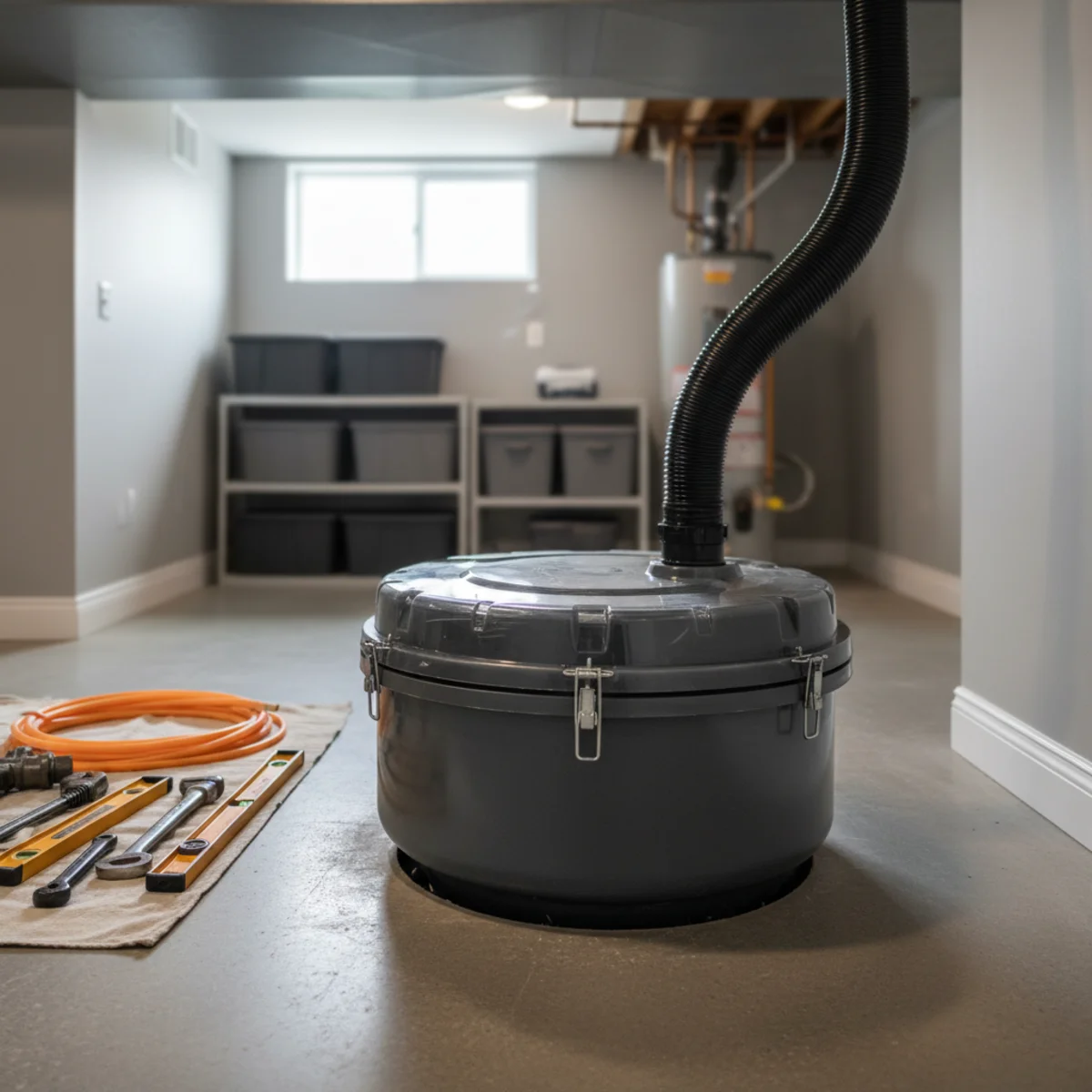
These are usually quick fixes: re-centering the pump, adding a rubber coupling or isolation hanger on the pipe, and seating or sealing the lid. In a finished basement, a sealed, gasketed lid and a quiet-close check valve together make a noticeable difference.
- Pipe strapped hard to joists: add isolation hangers
- Pump touching the basin wall: re-center and level it
- Loose or warped lid: replace with a sealed, gasketed lid
- Thud at shutoff: install a quiet-close check valve
It's Quiet, But It Never Stops
A pump that runs constantly can be quiet and still be a problem. A stuck float, a failed check valve, a discharge that recirculates, or a high water table can all keep a pump running far more than it should.
Constant running wears out the motor early. If you hear the pump starting every minute or two in dry weather, it is worth finding out why.
A Five-Minute Listening Test
If you're trying to describe the sound to someone, or decide whether it's worth a call, this quick routine helps narrow it down. Keep hands out of the pit while the pump is plugged in.
- Pour water into the pit slowly and listen as the float lifts and the motor starts
- Note whether water moves out steadily or the motor just hums
- Listen at shutoff for a thud, a gurgle, or a clean click
- Put a hand on the discharge pipe a few feet up to feel for hard vibration
- Record a short video with sound; it helps a technician diagnose before the visit
When a Noise Means Call Now
- Humming with no water moving while the pit is rising
- Grinding that gets worse over a few days
- Burning smell or a tripped breaker after the pump runs
- A pump that cycles every minute with no rain or snowmelt
Making a Sump System Quieter
If the pump is healthy but the noise bothers you, especially under a bedroom or office, the fixes are mostly about what surrounds it. A cast-iron submersible runs quieter than many lighter pumps because the housing damps vibration and the motor sits under water. A spring-loaded or quiet-close check valve removes the thud at shutoff.
Beyond that, isolating the discharge pipe from the framing, using rubber couplings at the connections, and fitting a sealed lid that blocks sound from the pit all help. None of these are expensive, and together they can make a pump nearly unnoticeable.
If the noise only started after a recent repair or replacement, look at what changed. A new pump mounted without its rubber pad, a check valve installed without a quiet spring, or a pipe left unsupported against the joists can each turn a quiet system loud.
From the field
What a Recording Tells Us
When a homeowner sends us a short video of the pump running, we can often narrow the problem down before we arrive. A sharp bang a second after the motor stops is almost always the check valve. A rising whine with no water movement points to an air lock or blockage. A rough, gravelly sound that gets worse over weeks usually means bearings, and that pump is close to the end.
Sound is also the earliest warning you get. Most pumps change their sound long before they fail, so a new noise is worth paying attention to even if the basement is dry.

When to Act on a Noise
A thud at shutoff or a rattle is usually a simple, affordable fix. Humming without pumping, grinding that worsens, or a burning smell need attention right away, because the pump may stop when you need it most. If you're not sure which you're hearing, record it and call.
Questions about your own system? Call (207) 419-2600 and talk it through with a local sump specialist.
Why Is My Sump Pump Making Noise: Common Questions
Some sound is normal: the motor starting, water moving, and a click at shutoff. A loud bang, constant hum, grinding, or a pump that runs all the time is not, and each usually points to a specific part.
A humming pump that moves no water, grinding from worn bearings, or a motor that starts and stops repeatedly are the most common sounds of a pump near the end of its life.
The bang is usually water hammer from the check valve closing. A quiet-close or spring-loaded check valve, and placing the valve lower on the discharge line, typically stops it.
In an unfinished basement, yes, a little. Under a finished space you may hear it faintly through the floor. A sealed basin lid and a quiet check valve reduce the noise.
A short gurgle at the end of a cycle is normal as the pump pulls the last water and some air. A long, loud slurp means the pump is running the pit dry, often because the float is set too low or the pump is oversized for the basin.
Keep reading
Sump Pump BasicsSump Pump Check Valves Explained
A check valve is a small part that keeps pumped water from flowing back into the pit. Here is how it works and how to spot one that is failing.
 Maintenance & Troubleshooting
Sump Pump Not Turning On? Causes and Fixes
A pump that won't start is usually a power, float, or clog problem before it's a dead motor. Here's how to work through the causes safely, in order.
 Maintenance & Troubleshooting
Why Does My Sump Pump Run Constantly?
A sump pump that never shuts off is wearing itself out and warning you of a bigger problem. Here are the real causes and how to fix them.
Get Local Help: Maintenance & Troubleshooting
Get professional sump pump help from a local Littleton specialist. Clear, upfront estimates and careful, clean workmanship.
Available by appointment. Emergency sump pump help available.