Sump Pump Discharge Line Options for Homeowners
A sump pump does one job: it moves water from the pit up and out of your basement. But out to where, exactly? That's the question the discharge line answers, and it's the part homeowners think about least when they think about their pump at all.
Get it wrong and the water you pumped out simply runs back toward the foundation, refills the pit, and the pump runs again. In a Littleton winter, a poorly planned discharge line can freeze solid, leaving the pump pushing against a plug of ice with nowhere to send water. Either way, the water ends up back where you started.
This guide compares the real options for your sump pump discharge pipe outside, the trade-offs of each, and the details that keep water flowing away from your house year-round. A little planning here saves a lot of pump wear and a lot of basement water down the line.
- Local Littleton Service
- Professional Installation
- Clear, Upfront Estimates
- Battery Backup Options
- Careful, Clean Workmanship
- Emergency Help Available
What the Discharge Line Actually Does
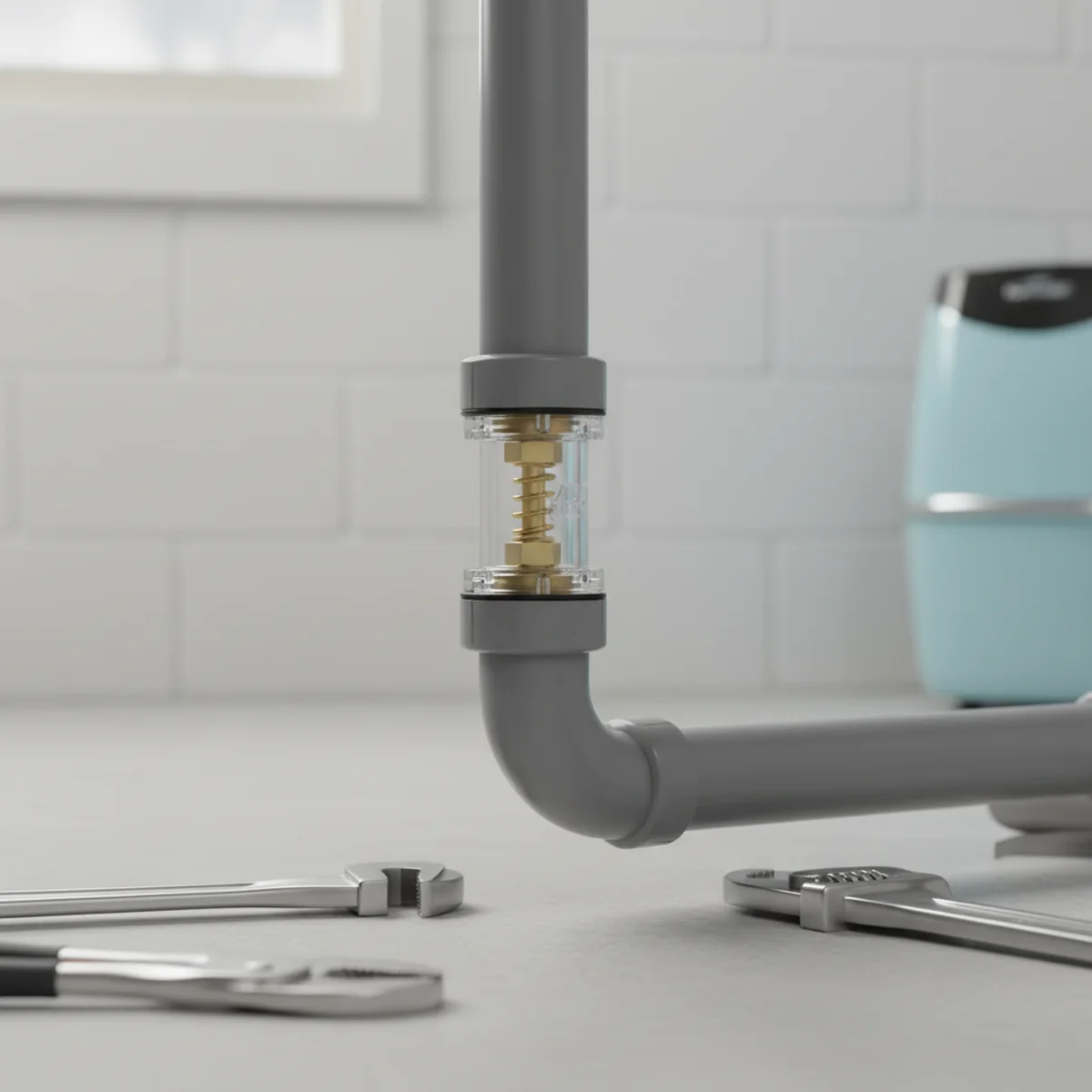
The discharge line is the pipe that carries water from your sump pump to a point outside your home. Inside the basement it usually includes a check valve, which stops pumped water from draining back down into the pit between cycles. Without that valve, the pump short cycles and wears out fast, so it's a small part that protects the whole system.
From there the line exits the foundation and has to get water far enough away that it doesn't just soak back into the soil and return to the pit. On Littleton's clay, that distance matters more than people expect, because the clay doesn't absorb and disperse water quickly; it holds it and lets it run right back toward the low point.
So the goal is simple to state and easy to get wrong: move the water to a spot where it drains away from the house and stays gone. Everything else about discharge line design is in service of that one outcome.
It's worth knowing the pipe material matters over the long haul too. Mineral-rich water is hard on thin thermoplastic fittings over the years, which is part of why some homeowners favor heavier components where the line takes abuse. Whatever the material, the run still has to slope and drain; no pipe survives standing water that freezes inside it winter after winter.
Above-Ground Discharge: Simple but Seasonal
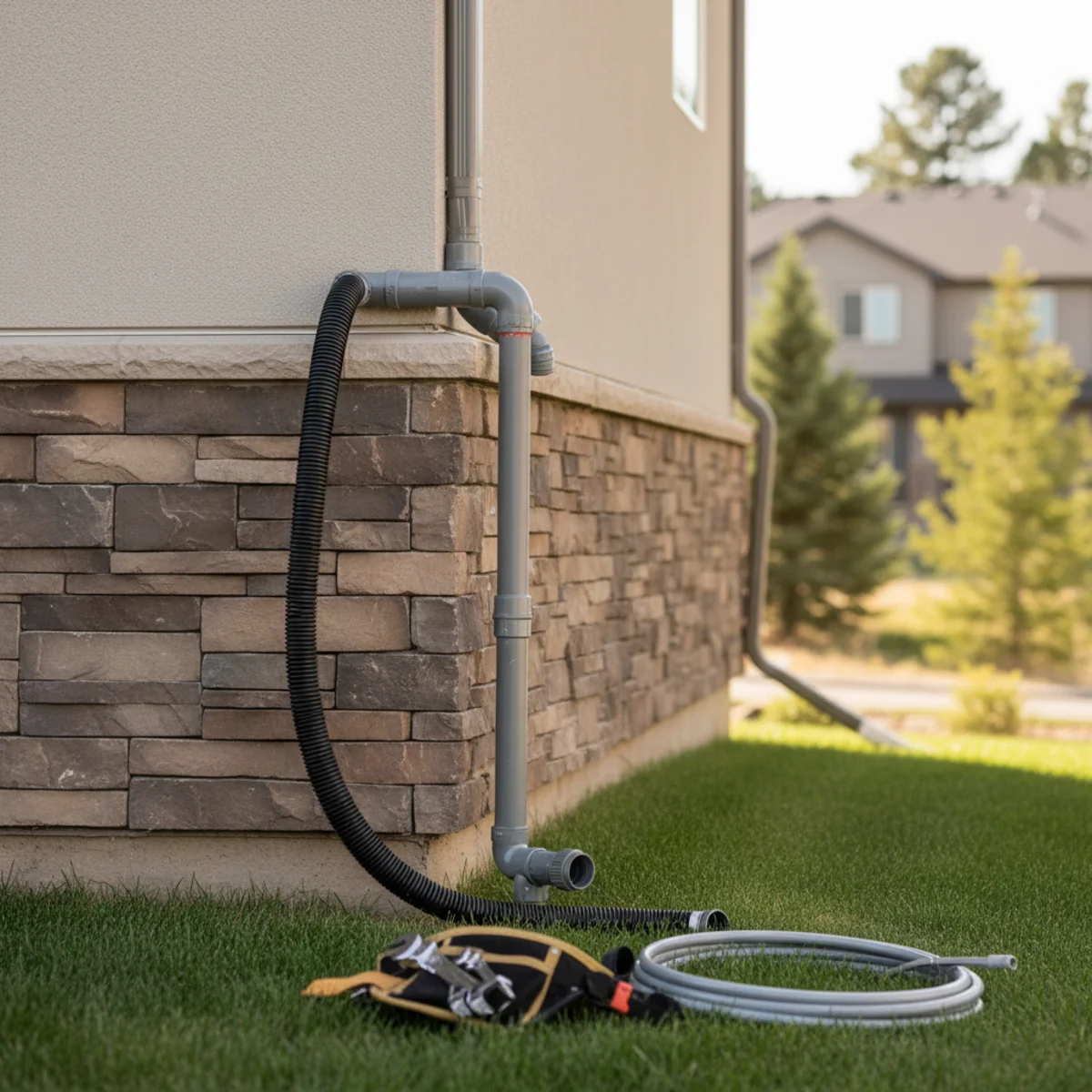
The most common setup is a pipe that exits the foundation and runs along the ground surface, often with a flexible extension that carries water several feet out onto the lawn. It's inexpensive, easy to inspect, and easy to clear if it clogs. For a lot of homes it's a perfectly good warm-weather solution.
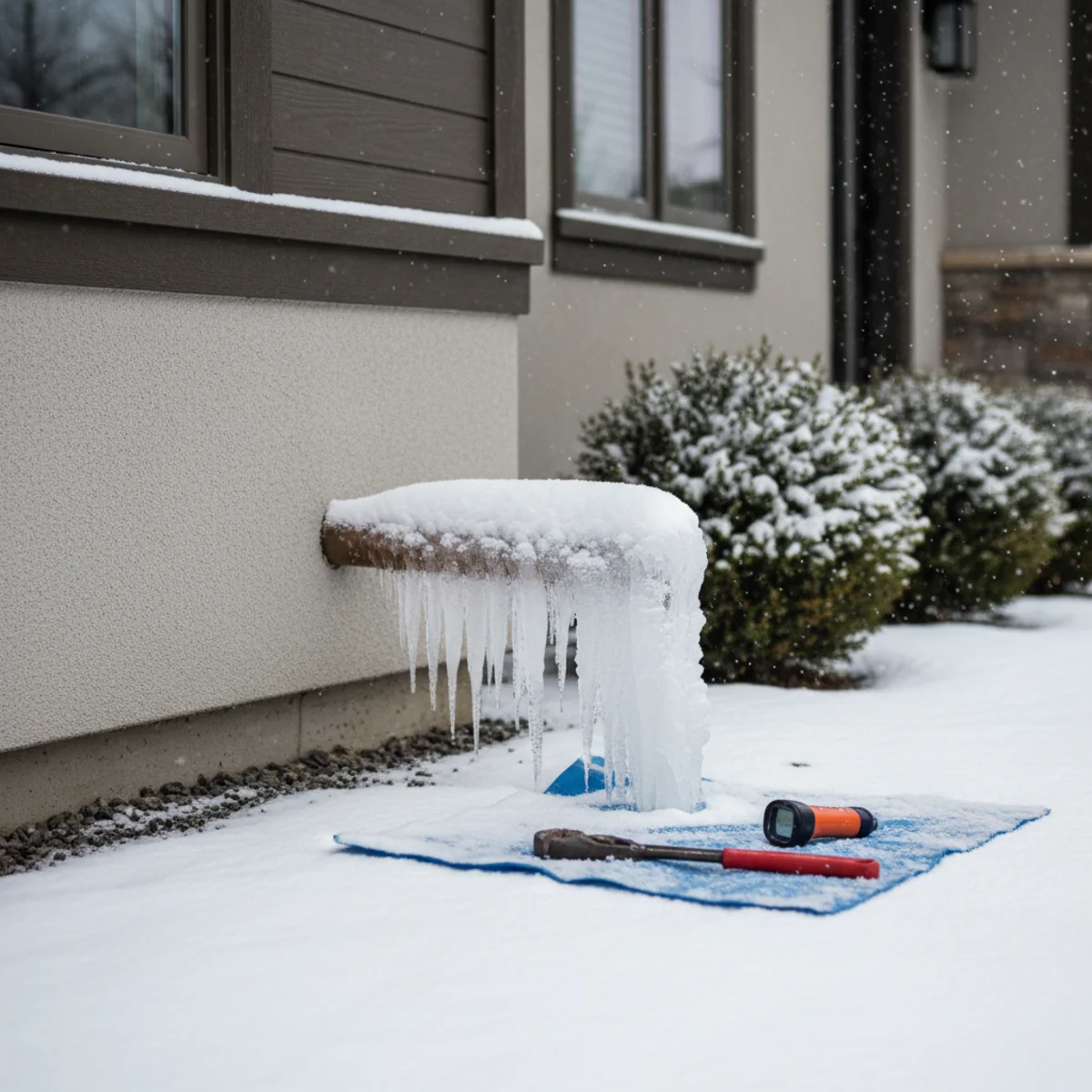
The catch is winter. A shallow, above-ground line is fully exposed to Front Range freeze-thaw cycles. Water sitting in the pipe freezes, and the next time the pump runs, it has nowhere to go but back into the basement. A frozen discharge line is one of the most common cold-weather sump failures we see; our frozen discharge line repair page covers the fix.
Above-ground works well in the warm months and for homes where you can pull or re-slope the extension before winter. Just don't let the outlet point back toward the foundation, keep it clear of snow piles the plow leaves behind, and check it after the first hard freeze.
Buried Discharge Lines: Cleaner and More Durable
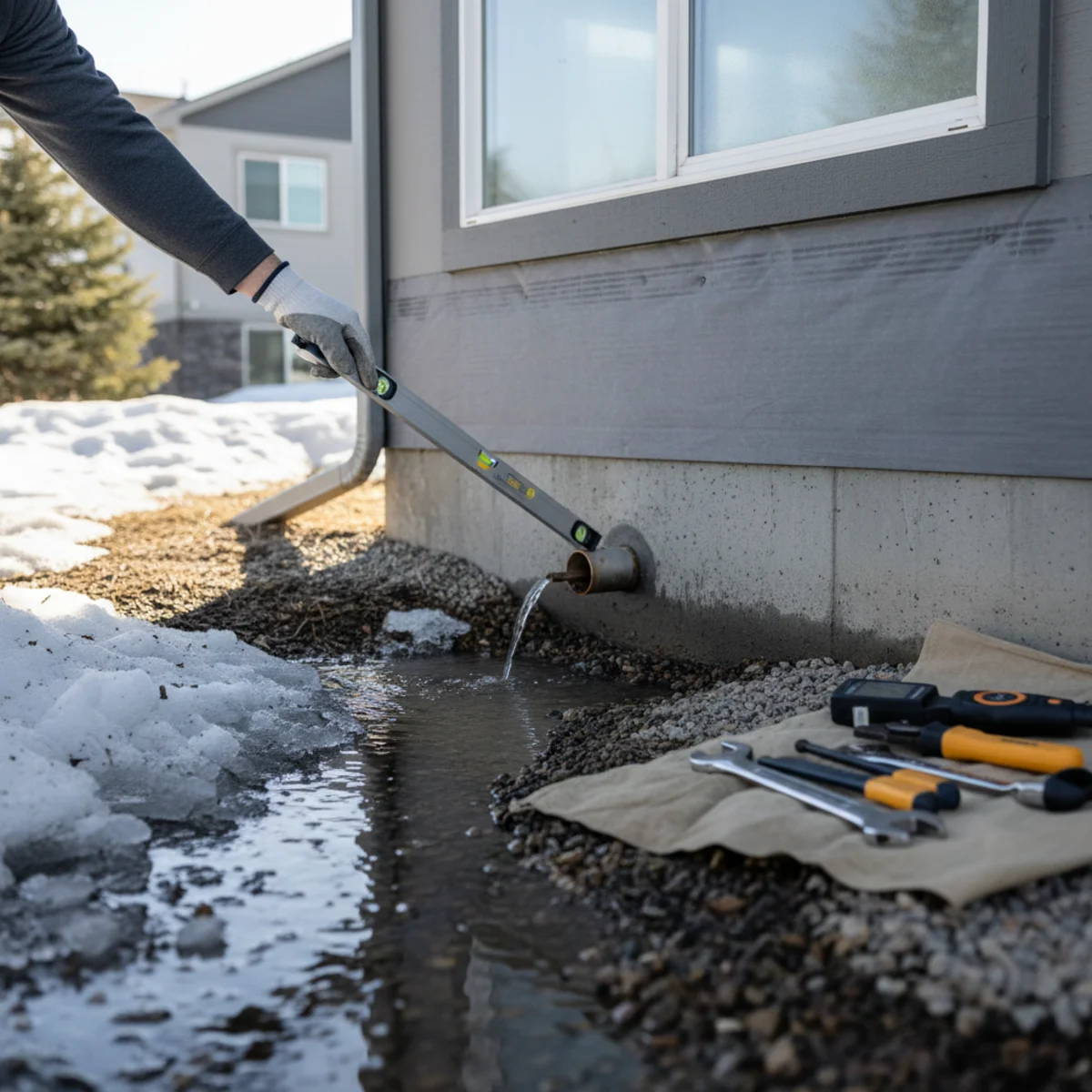
A buried discharge line runs underground from the foundation to a daylight outlet farther out on the property, where the pipe emerges and releases water at a lower grade. Done right, it's tidy, out of the way of mowing and foot traffic, and far better protected from freezing than a surface line.
The key word is depth. To resist freezing, the buried run should sit below the frost line and slope continuously toward the outlet so water drains out completely instead of pooling and freezing in a low spot. The daylight end should stay clear and pitched downward so it never holds standing water.
Buried lines cost more to install and are harder to clear if they clog, so material choice and consistent slope matter a great deal. But for a permanent setup that survives Littleton winters without an annual freeze drama, a properly buried and pitched line is hard to beat.
Comparing Your Discharge Options
Every property is different, but the trade-offs come down to cost, durability, freeze resistance, and how easy the line is to maintain. Use this rundown to weigh what fits your lot, your budget, and your winters before you commit to a route.
Whatever you choose, a few rules apply to all of them, which we've folded into the list below so nothing gets overlooked.
One more thing to weigh: how the line interacts with the rest of your yard. A buried run that crosses a walkway or driveway is a bigger project than one that runs through open lawn, and the outlet needs a spot where released water won't pool against a neighbor's foundation or wash out a flowerbed. Plan the whole path, not just the part near the house.
- Above-ground extension: cheapest and easiest to clear, but freezes in winter and must point well away from the house.
- Buried daylight line: durable and freeze-resistant when below the frost line and properly sloped, but costs more and is harder to unclog.
- Always pitch the line so it drains fully; standing water is what freezes and clogs.
- Discharge well away from the foundation so the water can't run back and refill the pit.
- Never tie the discharge into a sanitary sewer; treat any code question as homeowner education and confirm local rules first.
- Keep a check valve inline to stop backflow and short cycling.
- Add a freeze-relief or air-gap fitting if winter freezing has been a recurring problem.
Keeping the Line From Freezing
Freezing deserves its own attention here, because in our climate it's the number one reason a discharge line fails. When the outlet or pipe ices over, the pump keeps running against a blockage, and water backs up into the basement; the pump may also burn out trying to push against the plug.
Slope is your best defense. A line that drains completely after each cycle has no standing water to freeze. Burying the run below the frost line protects the long section, and keeping the outlet clear of snow and leaves protects the end where ice usually starts. Some setups add a relief fitting near the foundation so that if the outlet does freeze, water has an alternate escape instead of backing up into your basement.
If you've fought a frozen line before, it's worth redesigning the route rather than repeating the same battle each winter. We can lay out a discharge line built for Front Range cold, with the right depth, slope, and fittings; call (207) 419-2600 to talk it through before the next freeze.
Frequently Asked Questions
Keep Reading
 Littleton Homeowner Guides
What to Do If Your Sump Pump Discharge Line Freezes
A frozen discharge line traps water in the pit and can burn out your pump. Here's how to spot it, thaw it safely, and stop it from happening again.
 Sump Pump Basics
Sump Pump Check Valves Explained
A check valve is a small part that keeps pumped water from flowing back into the pit. Here is how it works and how to spot one that is failing.
 Littleton Homeowner Guides
Why Colorado Snowmelt Can Overload Basement Drainage
Front Range snowmelt sends a slow, steady flood of water into the ground around your foundation. Here is why it overloads basement drainage in Littleton and how to prepare.
Protect Your Basement Before the Next Storm
Get professional sump pump help from a local Littleton specialist. Clear, upfront estimates and careful, clean workmanship.
Available by appointment. Emergency sump pump help available.