
How Much Water Pressure Does a Water-Powered Sump Pump Backup Need?
Quick answer
Most water-powered sump pump backups need steady municipal water pressure to work well. Models list their own minimum, but performance falls off quickly at low pressure, and most do their best work at roughly 40 to 60 psi or more. Test your pressure with a simple gauge before buying one, and check the model's published performance chart.
A water-powered backup sounds like the perfect answer to a power outage: no battery to wear out, and it keeps running as long as the water does. The catch is that it runs on your home's water pressure. If that pressure is low, the backup moves less water, sometimes not enough to keep up during a storm.
This guide explains how these backups use pressure, how to test the pressure at your house in a few minutes, and what to do if the number comes back lower than you hoped.
- Local Littleton Service
- Professional Installation
- Clear, Upfront Estimates
- Battery Backup Options
- Careful, Clean Workmanship
- Emergency Help Available
How a Water-Powered Backup Uses Pressure
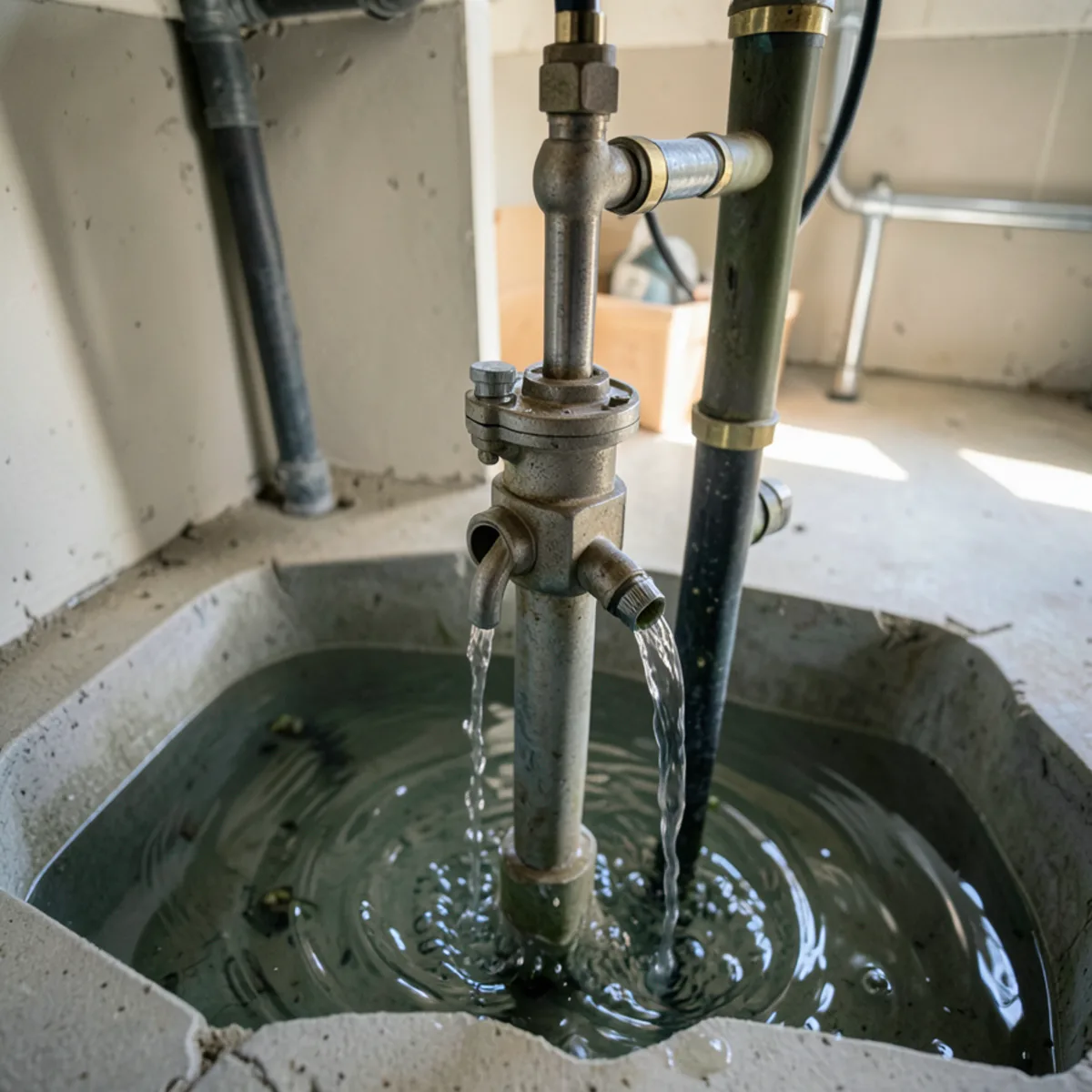
A water-powered backup has no motor. City water flows through a narrow nozzle inside the unit, and that fast-moving stream creates suction. The suction pulls water up from the sump pit, and both streams leave together through the discharge line.
Because the suction comes from the supply water, the amount the backup can remove depends directly on the pressure and flow coming into it. Strong pressure means strong suction. Weak pressure means the backup may run but lift only a small amount of pit water.
It also means the backup uses water while it runs. Many units use roughly one gallon of supply water for every one to two gallons they remove, depending on pressure and lift. That's a reasonable trade during an outage, but it's not something to run every day.
How Much Pressure Is Enough?
Each model publishes a minimum supply pressure and a performance chart, and you should go by those numbers for the unit you choose. Some list minimums as low as about 20 psi, but at that level they move very little water. In practice, most perform well when the house sees roughly 40 to 60 psi or more at the point where the backup connects.
Lift matters too. The chart shows how many gallons per hour the backup moves at different heights. A basement that needs water lifted eight or nine feet to reach the outlet will see less flow than a shallow one at the same pressure.
Pipe size is the last piece. Most units connect to a 3/4-inch line. Feeding one from a long run of smaller pipe can starve it of flow even when the static pressure looks fine.
Static Pressure vs Pressure While Water Flows
A gauge on a closed faucet shows static pressure: the pressure when nothing is moving. A water-powered backup cares about pressure while water is flowing through it, which is always lower. Long, narrow supply pipes, old galvanized lines with mineral buildup, and a partly closed shutoff valve all widen that gap.
A simple way to see the difference is to watch the gauge while someone opens a nearby faucet fully. If the needle drops a lot, the backup will see the lower number when it runs. That's the figure to compare against the model's performance chart.
How to Test Your Water Pressure
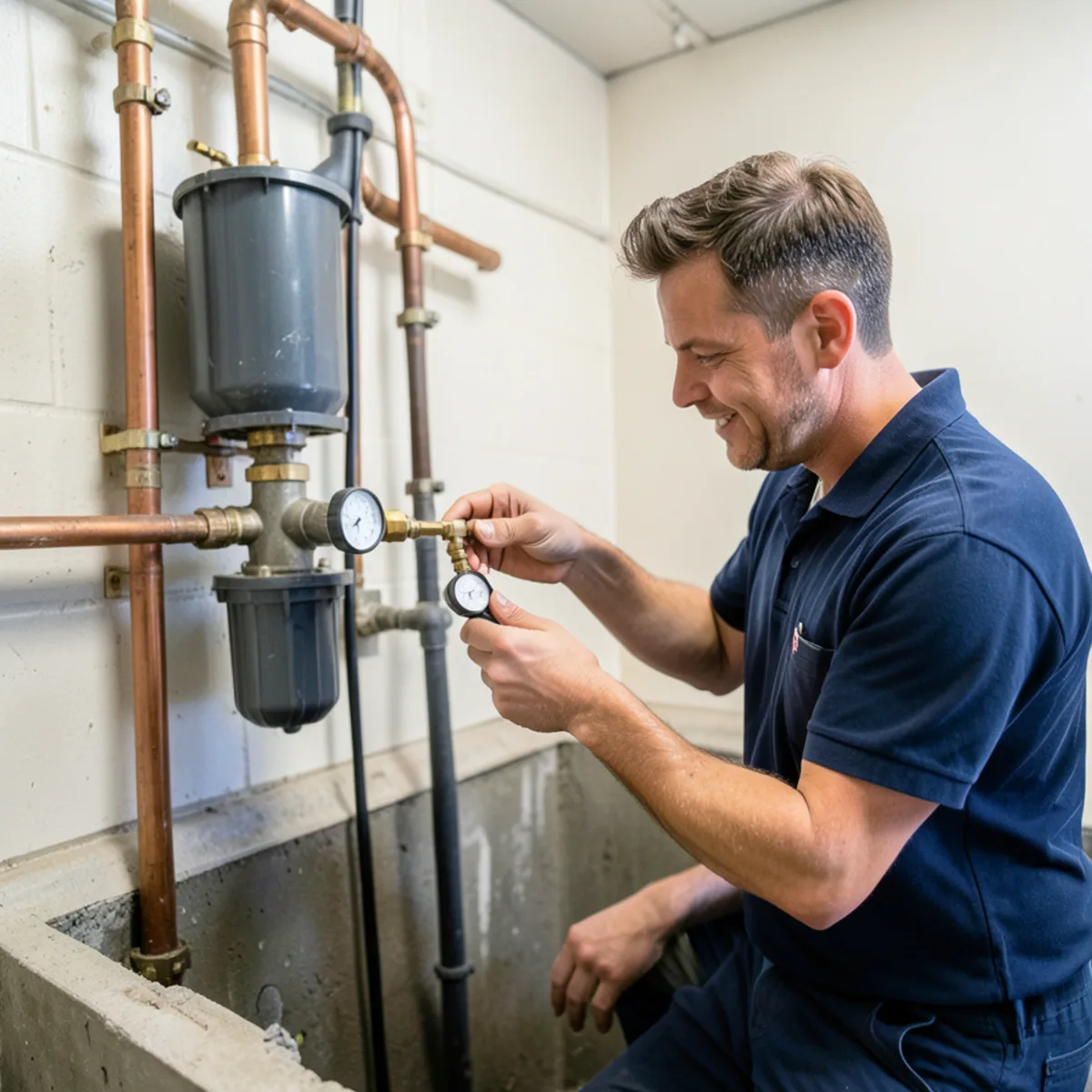
You can check your pressure with an inexpensive gauge that threads onto a hose bib or laundry faucet:
- Pick a faucet in the basement or close to where the backup would connect
- Make sure no other water is running in the house: no showers, sprinklers, or appliances
- Thread the gauge on hand-tight and open the faucet fully
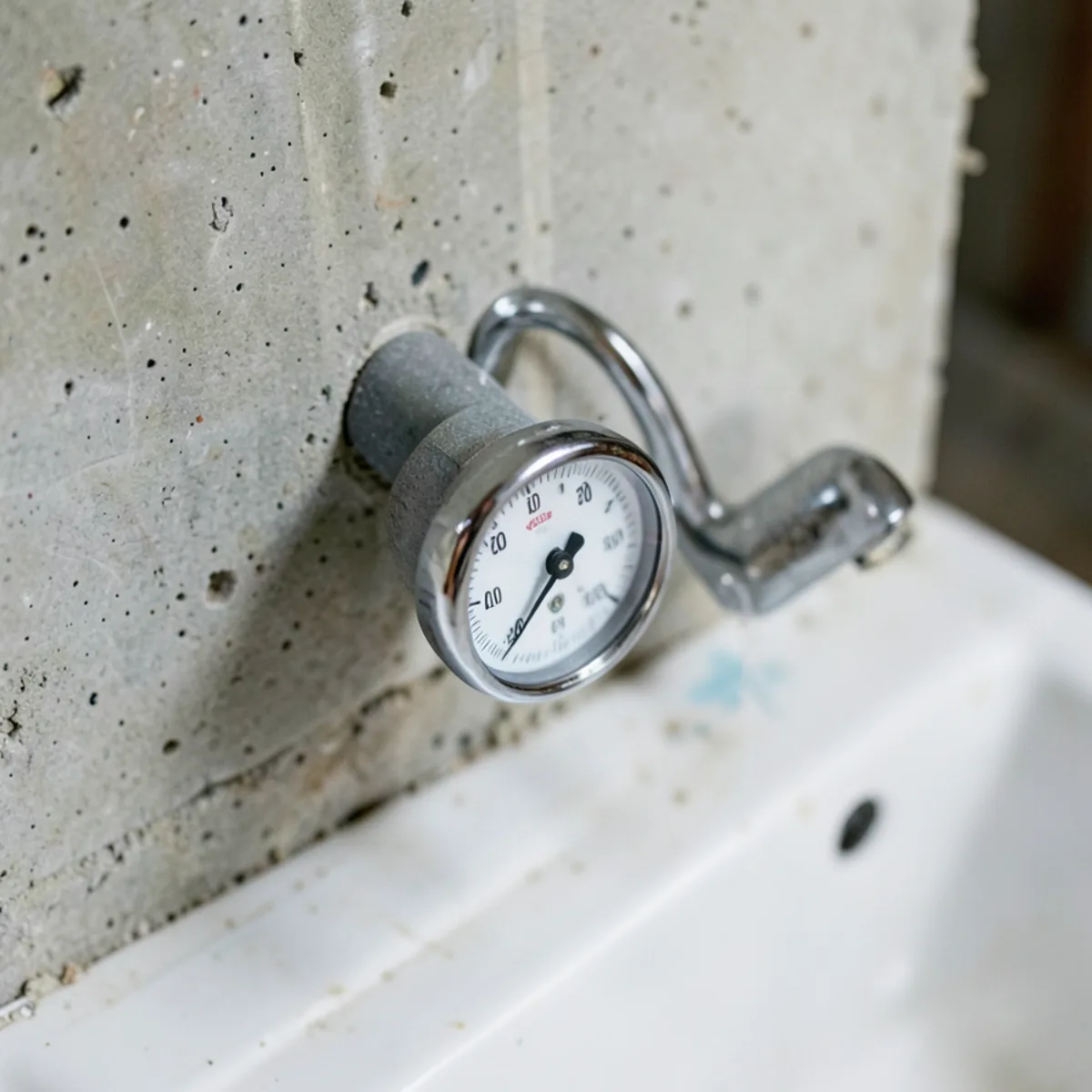
- Read the static pressure, then note it at different times of day
- Repeat once while someone runs a shower upstairs to see how much it drops
What Low Pressure Means in a Storm
Water pressure isn't fixed. It can drop during the evening when the whole neighborhood is running water, during a heat wave when irrigation peaks, or during a large outage if the water provider's own pumps are affected. Homes at the top of a hill or far from a main can sit at the low end every day.
That's why we look at the low reading, not the best one. If your pressure dips into the 30s in the evening, a water-powered backup may still help, but it may not keep up with heavy spring inflow. In that case a battery backup, or both systems together, gives more reliable protection.
Private Wells and Pressure Tanks
Homes on private wells usually can't rely on a water-powered backup. When the power goes out, the well pump stops too, and the pressure tank only holds a small reserve. The backup would run briefly and then stop right when it's needed. For well homes, a battery backup is the practical choice.
Installation Details That Affect Performance
A backflow preventer is required to protect your drinking water, and it should be the type your water provider accepts. It adds a little resistance, which is one more reason to start with healthy pressure.
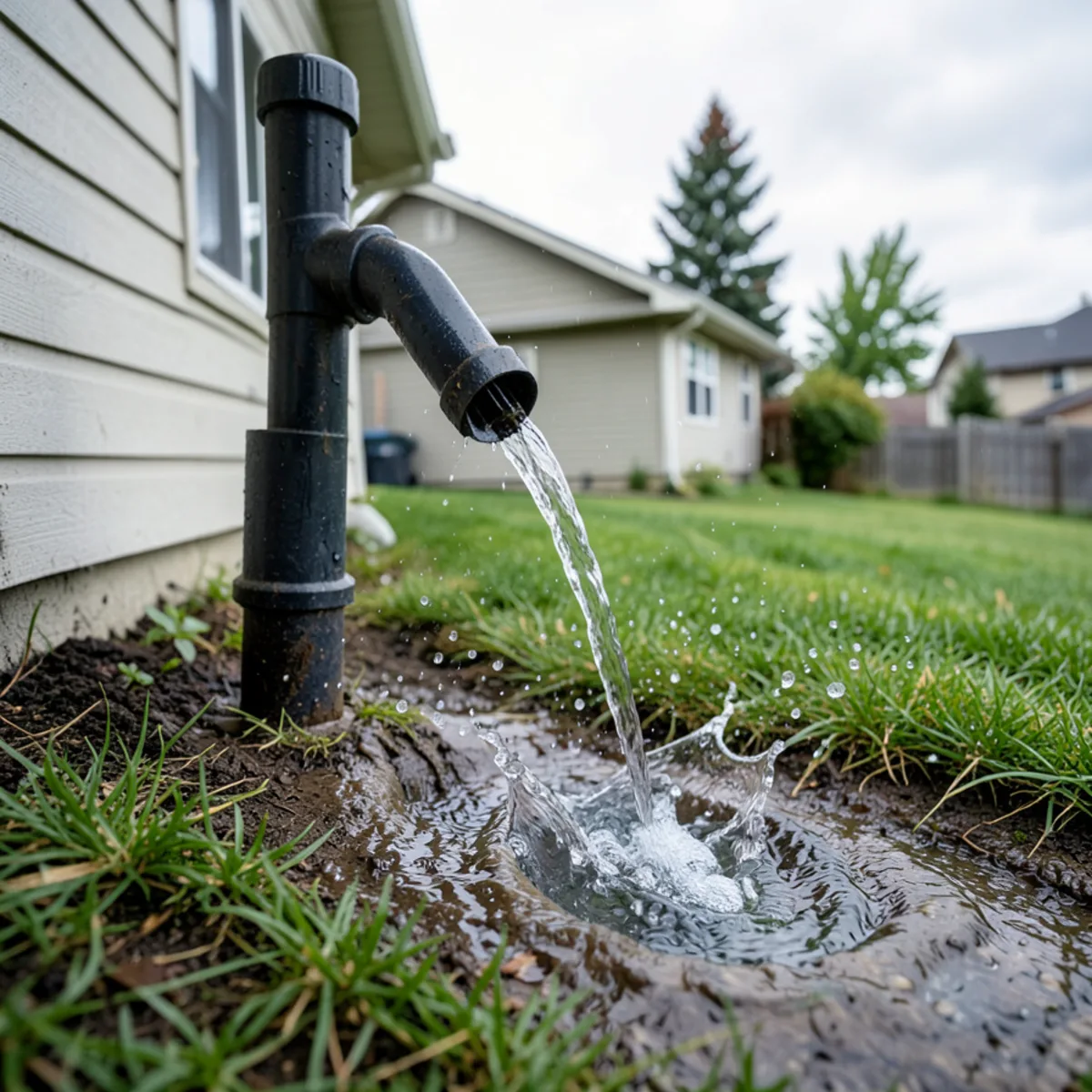
The backup needs its own float, set above the main pump's, and its own check valve so the two pumps don't push water back through each other. The supply line should come off a main branch rather than a long, narrow run, and the discharge should be sized so the combined flow can leave freely.
Finally, the supply line should have its own shutoff valve near the unit, so it can be serviced without turning off water to the whole house, and that valve should be left fully open.
Water-Powered, Battery, or Both?
If your pressure is strong and steady and you're on city water, a water-powered backup is a good fit, especially for homes that see long outages. If your pressure is marginal, a battery backup protects more consistently. For a finished basement with a lot at stake, many homeowners install both: the battery handles the first hours, and the water-powered unit covers a long outage.
Whatever you choose, test it twice a year. Close the main pump's power, raise the pit with water, and watch the backup start and clear it. For a water-powered unit, that test also confirms the supply valve is open and the backflow device isn't restricting flow.
From the field
Why We Test Pressure Before Quoting One
We put a gauge on the line before recommending a water-powered backup, every time. A few homes surprise us with low readings, usually on high ground or at the end of a long service line, and those homeowners would have been disappointed by the backup's performance.
We also check the evening reading when we can. A house that shows good pressure at noon may drop noticeably at dinnertime, and storms don't keep business hours.
Measure First, Then Choose
A water-powered backup can be an excellent outage solution, but only with the pressure to drive it. Test your supply with a gauge, look at the lowest reading, and compare it with the model's performance chart at your basement's lift. If the numbers are marginal, choose a battery backup or pair the two.
Questions about your own system? Call (207) 419-2600 and talk it through with a local sump specialist.
Local help nearby
How Much Water Pressure Does a Water-Powered Sump Pump Backup Need: Common Questions
Possibly, but check the model's performance chart at your basement's lift height. At that pressure many units move noticeably less water, so it may not keep up with heavy inflow. A battery backup, or both systems, may be safer.
Only while it's running, which should be rare. Most units use roughly one gallon of supply water for every one to two gallons they remove. During an outage, that's usually a small cost compared with a flooded basement.
No. It needs pressurized supply water to create suction. Water outages are much less common than power outages, but if your area has them, a battery backup covers that gap.
Many water providers require an approved backflow preventer, and some require periodic testing. Rules vary, so check with your provider or ask us when we look at your system.
Keep reading
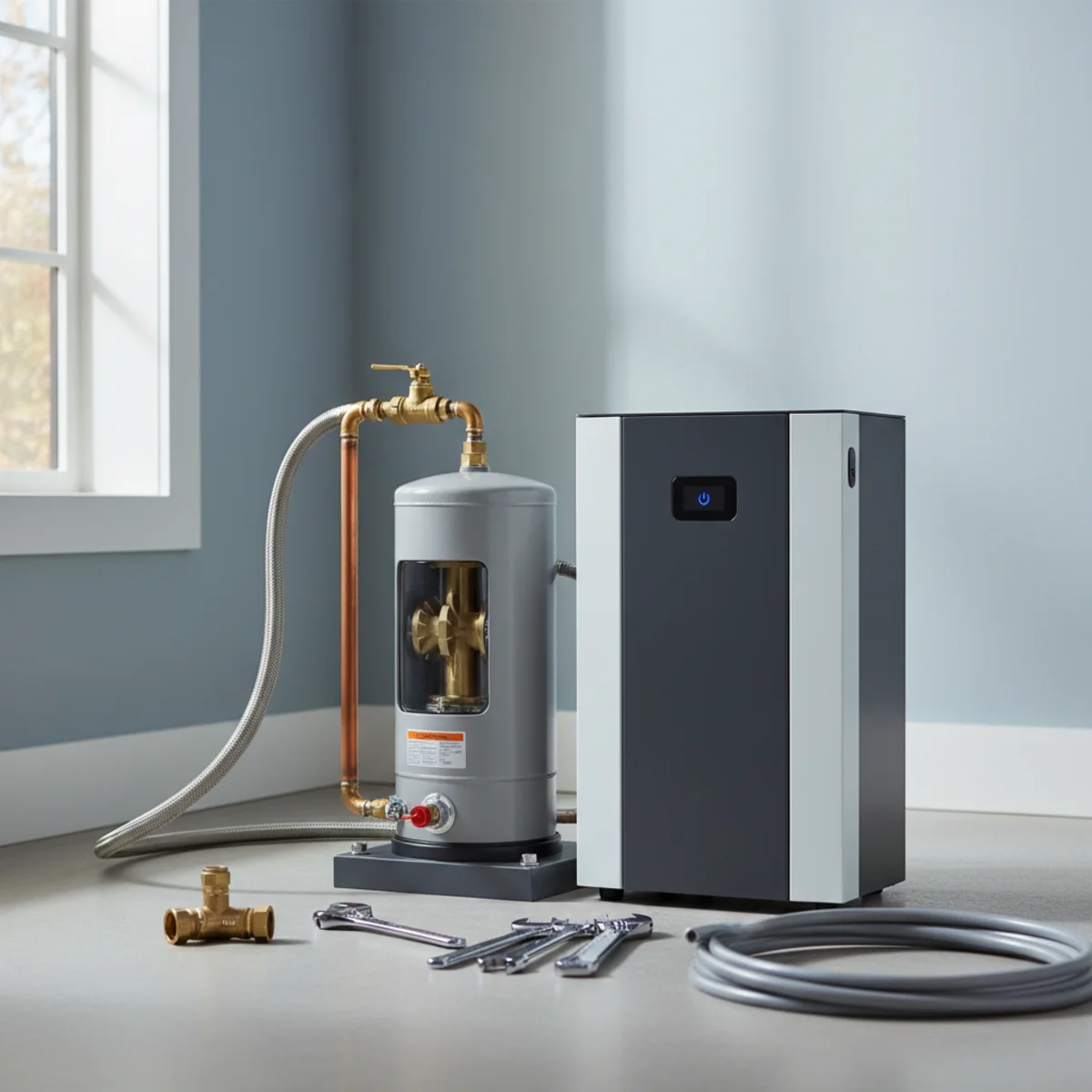 Backup Pump Systems
Water-Powered vs Battery Backup Sump Pump
A primary pump only works when the power is on. Here is how water-powered and battery backup sump pumps compare for Littleton basements during storm outages.
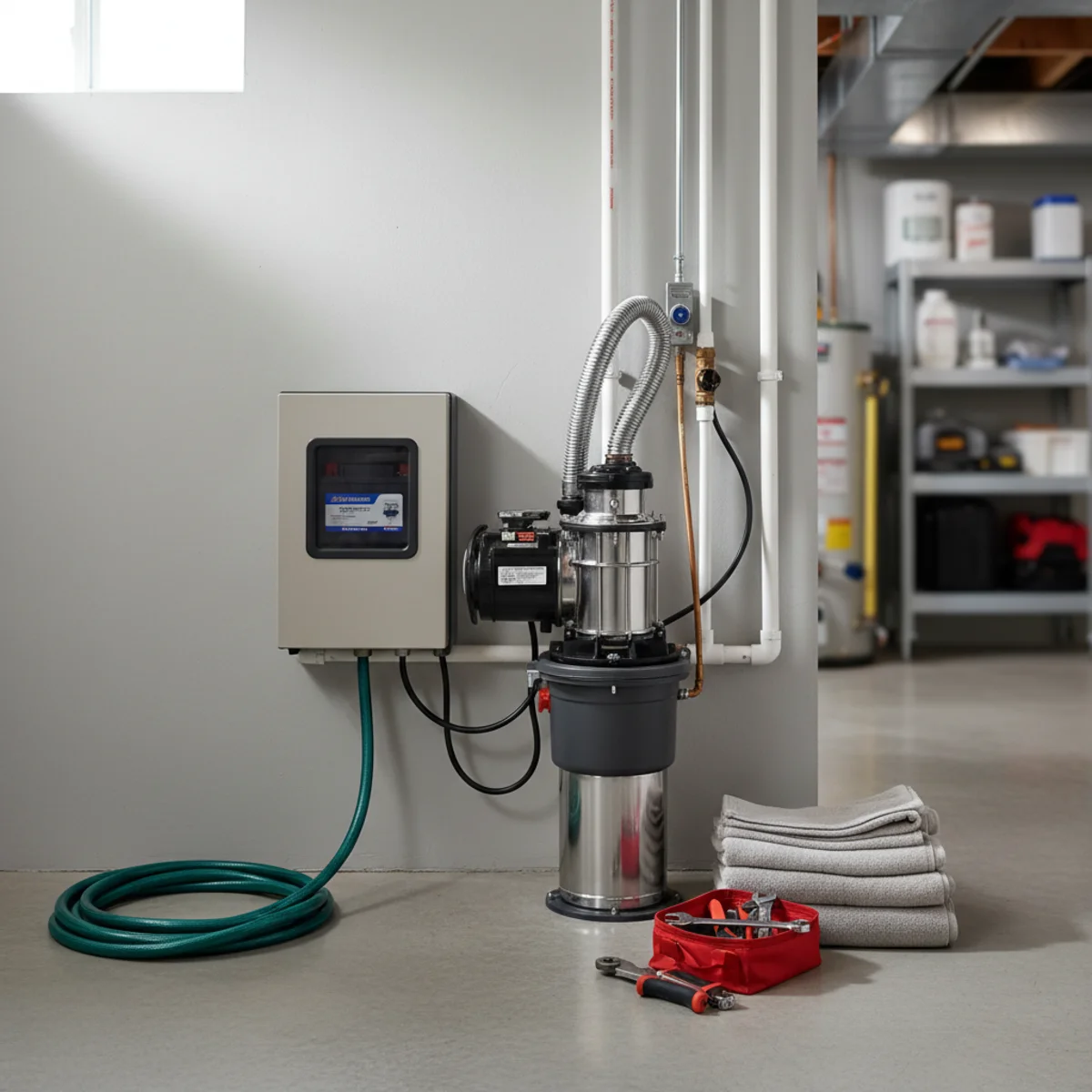 Backup Pump Systems
Is a Battery Backup Sump Pump Worth It?
Storms knock out power right when your sump pump matters most. Here is when a battery backup sump pump is worth it for a Littleton basement, and when it is essential.
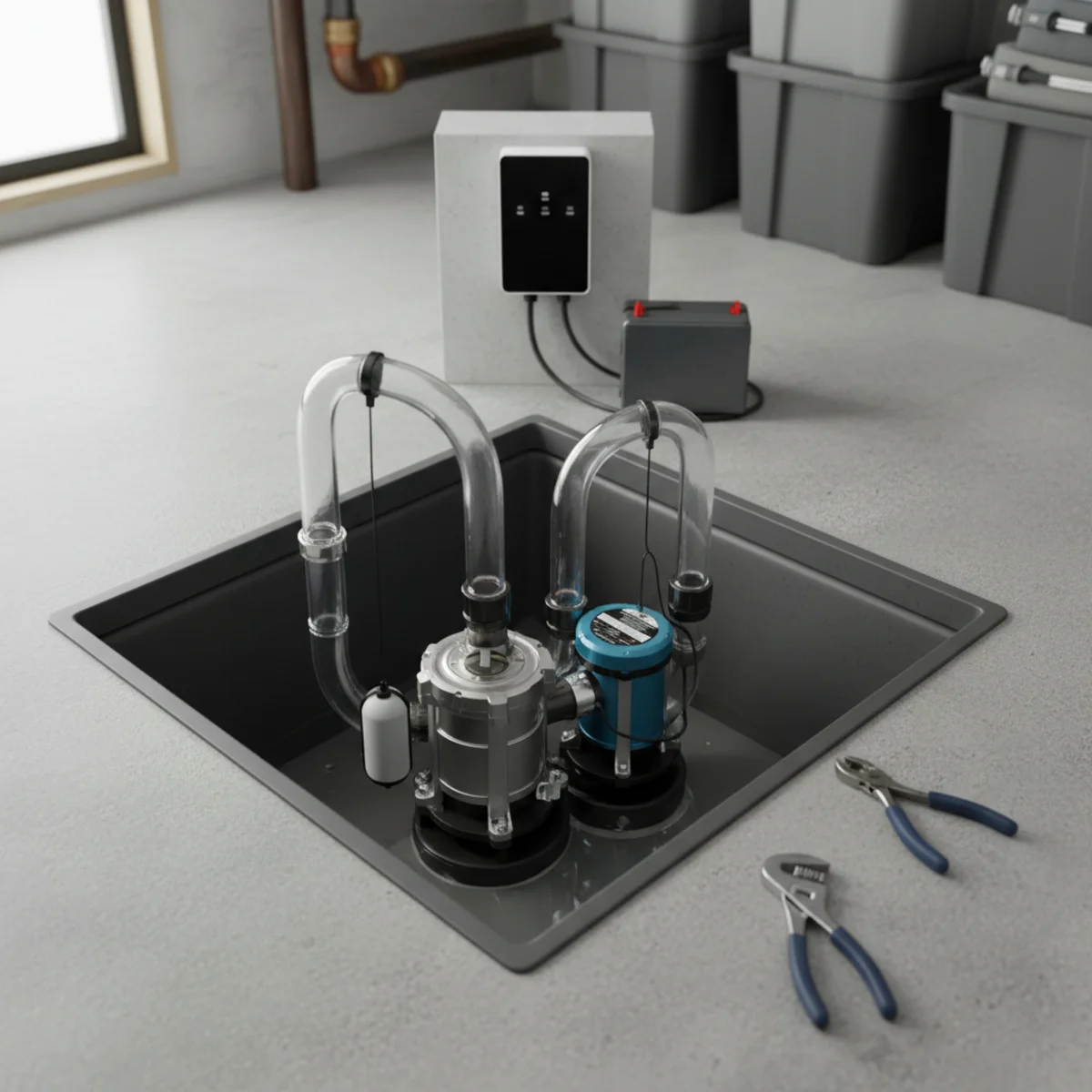 Backup Pump Systems
Complete Guide to Sump Pumps with Battery Backup
A primary sump pump is useless when the power goes out, and storms cause both. Here's a complete guide to sump pumps with battery backup for Front Range homes.
Get Local Help: Backup Pump Systems
Get professional sump pump help from a local Littleton specialist. Clear, upfront estimates and careful, clean workmanship.
Available by appointment. Emergency sump pump help available.