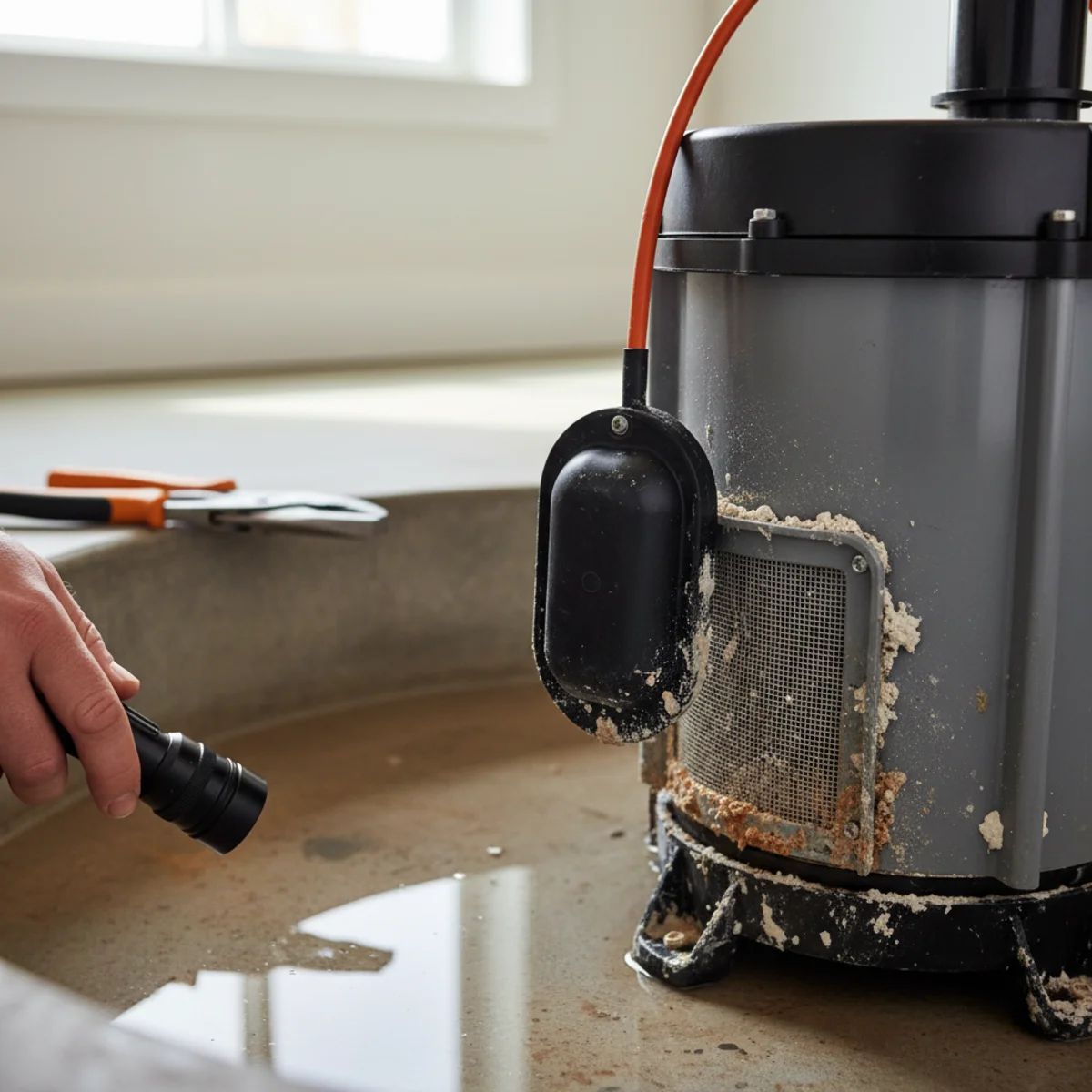
Common Sump Pump Float Switch Problems
A sump pump that runs nonstop is burning out its motor. A sump pump that never turns on lets the pit overflow. Both can come from the same small part: the float switch.
The float switch is the trigger. It rides the water level in the pit and tells the pump when to start and stop. When it fails or gets stuck, the pump either runs forever or sits dead while water climbs. Neither is something to ignore, because in clay-heavy Littleton soil the water does not wait.
The good news is that float switch problems show clear signs. If you know what to listen and look for, you can catch one before it turns into a flooded basement. Here is what to watch for.
- Local Littleton Service
- Professional Installation
- Clear, Upfront Estimates
- Battery Backup Options
- Careful, Clean Workmanship
- Emergency Help Available
What the Float Switch Does
Water collects in the sump basin and the float rides on top of it. As the water rises, the float rises with it. At a set level, the switch closes the circuit and the pump kicks on. When the water drops back down, the float falls and the pump shuts off.
Simple in theory. In practice, the float has to move freely every single time, for years, in a damp pit that collects silt and debris. Anything that blocks its travel, sticks it in one position, or wears out the switch contacts breaks the cycle.
There are a few common types. A tethered float swings on a cord. A vertical float slides up and down a rod. An electronic switch senses the water with no moving float at all. Each can fail in its own way, but the symptoms below show up across all of them.
Which type you have also shapes the kind of trouble you tend to see. Tethered floats need room to swing and are the ones most likely to snag or wedge in a tight basin. Vertical floats take less space but can hang up on the rod if grit works into them. Electronic switches have no moving float to jam, but their sensors still age and the wiring can corrode in a damp pit. No design is immune.
The Float Switch Problems We See Most
When a homeowner calls about a pump acting strange, the float switch is one of the first things we check. These are the usual culprits.
- Stuck float: Silt, gravel, or debris in the pit jams the float so it cannot rise or fall. The pump either never starts or never stops.
- Float wedged against the pit wall: A pump that has shifted, or a basin too small for the float's swing, traps a tethered float against the side.
- Tangled or kinked tether cord: The cord wraps on the pump or discharge pipe and the float can no longer reach its trigger height.
- Worn switch contacts: After years of cycling, the electrical contacts inside the switch wear out and stop reliably closing the circuit.
- Waterlogged float: A cracked float fills with water, loses buoyancy, and no longer rises enough to trip the switch.
- Float set at the wrong height: A switch positioned too high lets water climb dangerously before the pump starts; too low makes the pump short-cycle constantly.
Warning Signs in Your Basement
A pump that runs constantly even when the pit looks low is a classic stuck-on float. So is a pump that short-cycles, snapping on and off every few seconds. Both wear out the motor fast and run up your power bill.
On the other side, a pit that fills past its normal line without the pump ever starting points to a float stuck low, a waterlogged float, or dead switch contacts. If you only notice it because of standing water, the switch may have failed days earlier.
Listen for the pump humming without pumping, and watch for the water level never dropping after a run. Those are the early tells. A high-water alarm in the pit gives you the loudest warning of all, which is why we recommend one on every system.
There is also a slower, sneakier failure: a switch that mostly works but skips occasionally. The pump runs fine for weeks, then misses one cycle during the worst possible storm. Intermittent triggering is easy to dismiss because the system seems fine most of the time. If your pump ever hesitates or you find the pit higher than it should be even once, treat that as the switch asking for attention.
How to Test It Yourself
You can check a float switch in a few minutes. Pour a bucket of water into the pit and watch. The float should rise smoothly, trip the pump on, and the pump should drain the pit and shut off cleanly. If it sticks, hesitates, or never triggers, the switch is suspect.
While you are there, look for debris around the float and confirm the cord is not tangled on the pump body or discharge line. Make sure the float has clear room to swing without hitting the basin wall. A quick basin cleaning often fixes a sticking float on its own.
Do this at the start of storm season and again before the snowmelt picks up. A two-minute test in spring beats discovering a dead switch when the water is already on the floor. If the test fails or you are not sure what you are seeing, that is the time to call.
Repair the Switch or Replace the Pump?
A float switch is often repairable or replaceable on its own without swapping the whole pump. If the pump motor is healthy and the basin is sound, a new switch can put the system right at a fraction of the cost of a full replacement.
But age matters. If the pump is already near the end of its service life and the switch has failed, replacing the switch on a worn-out pump can be throwing good money after bad. We will tell you honestly which way the math points for your unit.
Either way, do not run a basement on a flaky float switch through storm season. It is the cheapest part to fix and the most expensive one to ignore. Emergency sump pump help available — call (207) 419-2600.
Frequently Asked Questions
Keep Reading
 Maintenance & Troubleshooting
Why Does My Sump Pump Run Constantly?
A sump pump that never shuts off is wearing itself out and warning you of a bigger problem. Here are the real causes and how to fix them.
 Maintenance & Troubleshooting
Sump Pump Not Working and Basement Flooded? What to Do Next
Pump dead and water rising? Start with the emergency steps below, then work through the diagnosis. Emergency sump pump help is available.
 Maintenance & Troubleshooting
How to Test Your Sump Pump Before a Storm
The time to find out your pump is dead is not during the storm. Here's a five-minute test you can run yourself before the rain hits.
Protect Your Basement Before the Next Storm
Get professional sump pump help from a local Littleton specialist. Clear, upfront estimates and careful, clean workmanship.
Available by appointment. Emergency sump pump help available.