
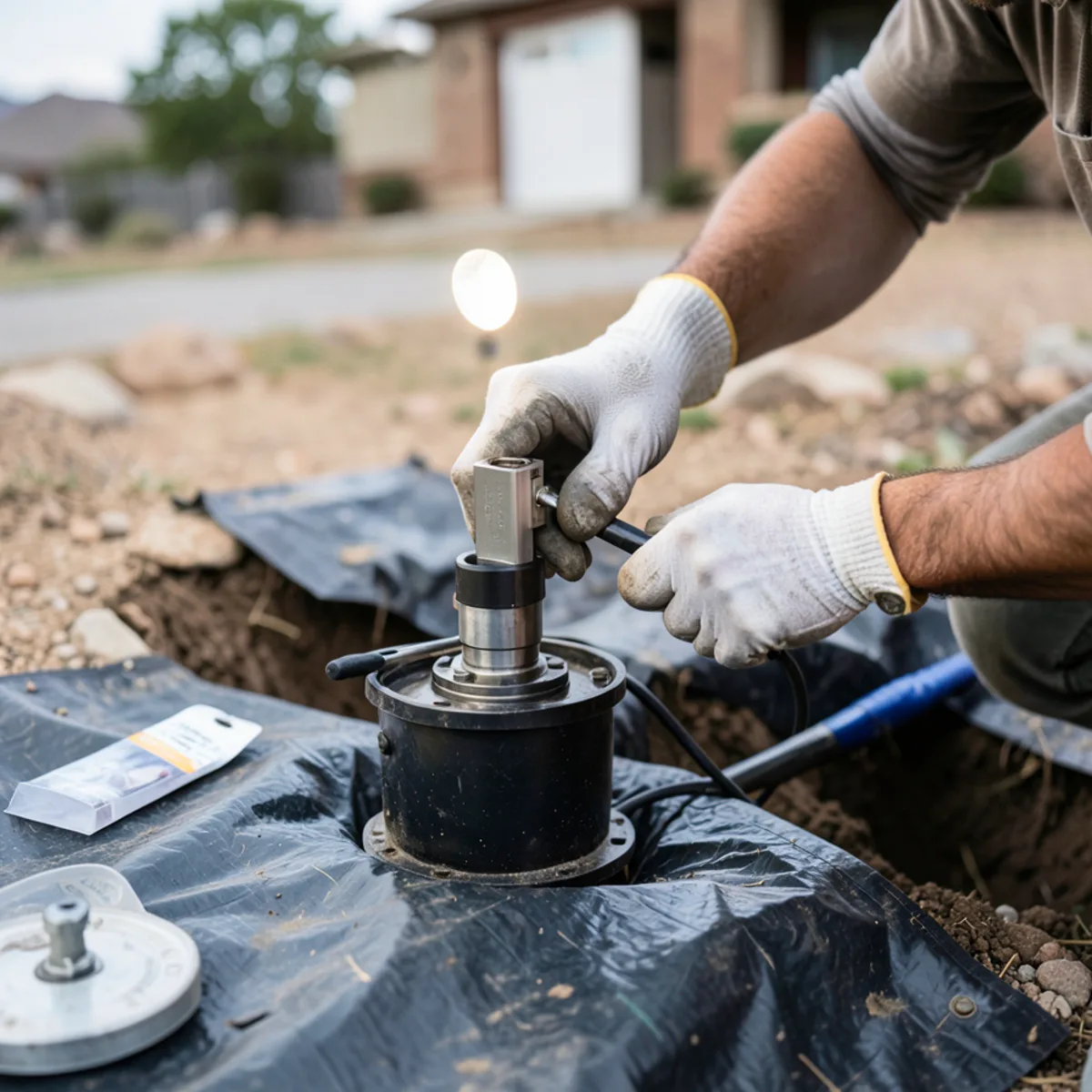
Sump Pump Service
Sump Pump Float Switch Repair
The most common reason a pump runs nonstop — or won't run at all.
The float switch is the most common point of failure on a sump pump. When it sticks, the pump either runs constantly (burning out the motor) or never turns on at all (letting the pit overflow). Littleton Sump Pump Pros repairs and replaces float switches across the Littleton area.
It's a small part with an outsized job — telling the pump when to run.
- Local Littleton Service
- Professional Installation
- Clear, Upfront Estimates
- Battery Backup Options
- Careful, Clean Workmanship
- Emergency Help Available
Signs of a float switch problem
Float trouble shows up as a pump that does the wrong thing at the wrong water level. Because the motor and the float fail in different ways, telling them apart saves money: a pump that runs fine when the float is lifted by hand has a float problem, not a motor problem.
- Pump runs constantly even when the pit is low
- Pump never turns on while water rises
- Pump short-cycles on and off rapidly
- The float is visibly tangled, jammed against the pit wall, or waterlogged
- Debris in the pit is interfering with float movement
How a float switch tells the pump when to run
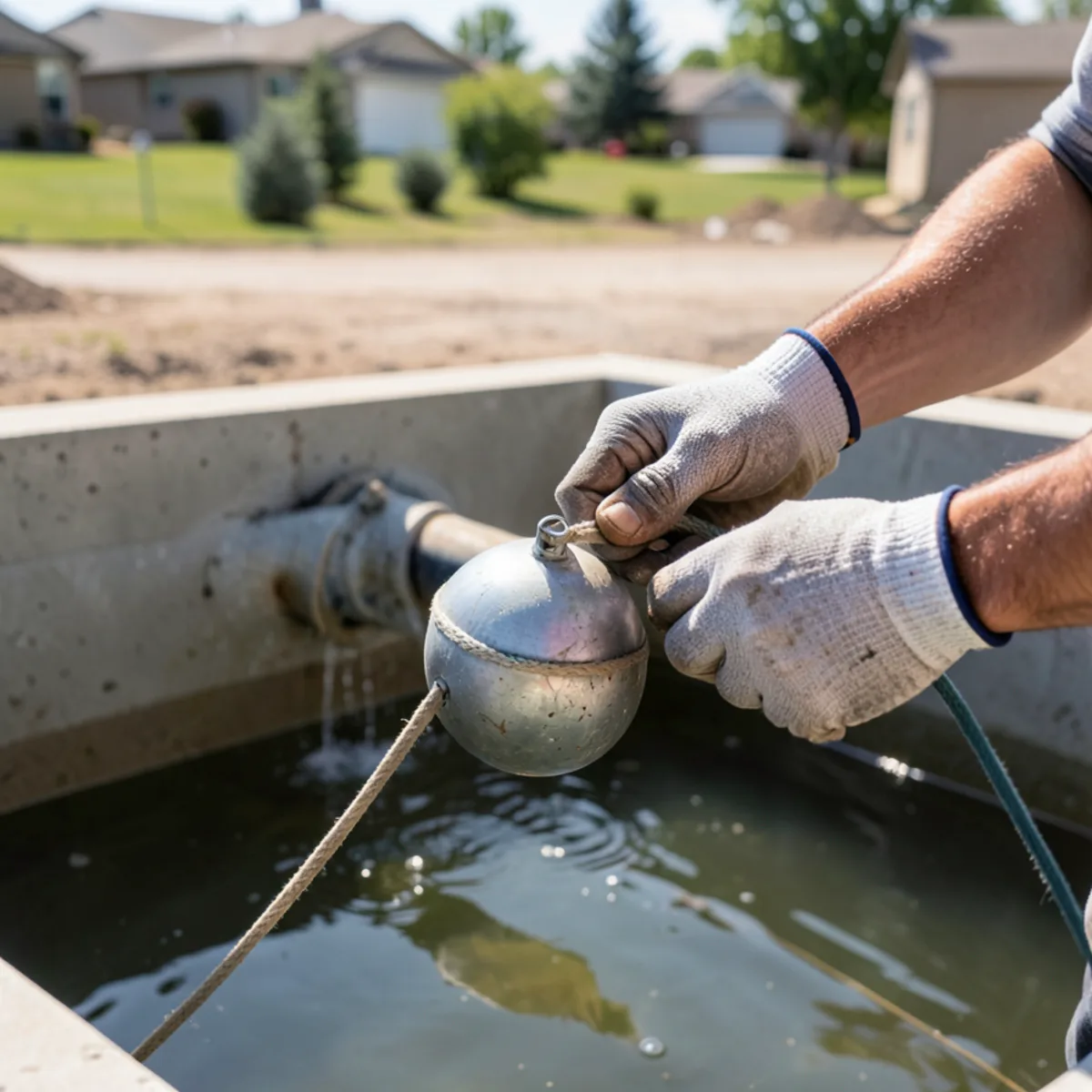
Every float switch has a cut-in level, where it starts the pump, and a cut-out level, where it stops it. The distance between them is the pumping range. A tethered float hangs on a short cord and swings up as the water rises, giving a long pumping range but needing a wide pit to swing freely. A vertical float slides up and down a rod, so it fits narrow pits but has a shorter range. Electronic switches use a sensor with no moving float at all.
Get the range wrong and the pump suffers. Too short, and it starts and stops every few seconds. Too long in a small pit, and the float may catch on the wall before it ever reaches cut-out.
Why float switches fail in Littleton pits
The most common cause we find is physical: the pump has walked across the basin from its own vibration, and the float now rubs the wall or snags on the discharge pipe. Clay silt and iron sludge come next, coating the float until it's heavy or gumming the vertical rod so the float sticks partway up.
Then there's wear. Small builder pits fill fast and empty fast, so the switch cycles far more often than it would in a larger basin, and the mechanical contact inside eventually stops closing. Floats can also take on water through a cracked shell and stop rising at all.
How to check your float switch
You can learn a lot in five minutes without touching anything electrical. Keep hands out of the pit while the pump is plugged in.
- Pour water slowly into the pit and watch the float rise
- Note where the pump starts, and whether the float catches on anything on the way up
- Watch the pump empty the pit and listen for it to stop cleanly
- If the float rises but the pump stays silent, the switch or power is likely at fault
- If the pump never stops even with the pit low, look for a float stuck in the up position
What a float switch repair costs depends on
Freeing a snagged float and re-setting the pump in the basin is the quickest fix. Replacing a piggyback float switch adds the part, and switching to a different style — say, from tethered to vertical in a narrow pit — may need a little re-plumbing so the new float has room. When the switch is built into an aging pump, we compare the repair against a full replacement and show you both prices. Cleaning a heavily silted pit at the same visit adds time but prevents a repeat.
Electrical notes
A piggyback float plugs into the same outlet as the pump, which should be GFCI-protected under current electrical codes for basements. Extension cords and multi-plug adapters at the pit are a fire and shock risk and a common reason switches seem to fail. If the outlet itself needs to move or be added, that electrical work may require a permit from your city or county.
Float switch types we service
We work with tethered, vertical, and electronic float switches. Sometimes the fix is freeing a jammed float and cleaning the pit; sometimes the switch itself is worn and needs replacement. We'll match the right switch to your pump and pit size.
A pit that's too narrow for a tethered float is a frequent culprit — switching to a vertical float often solves chronic sticking.
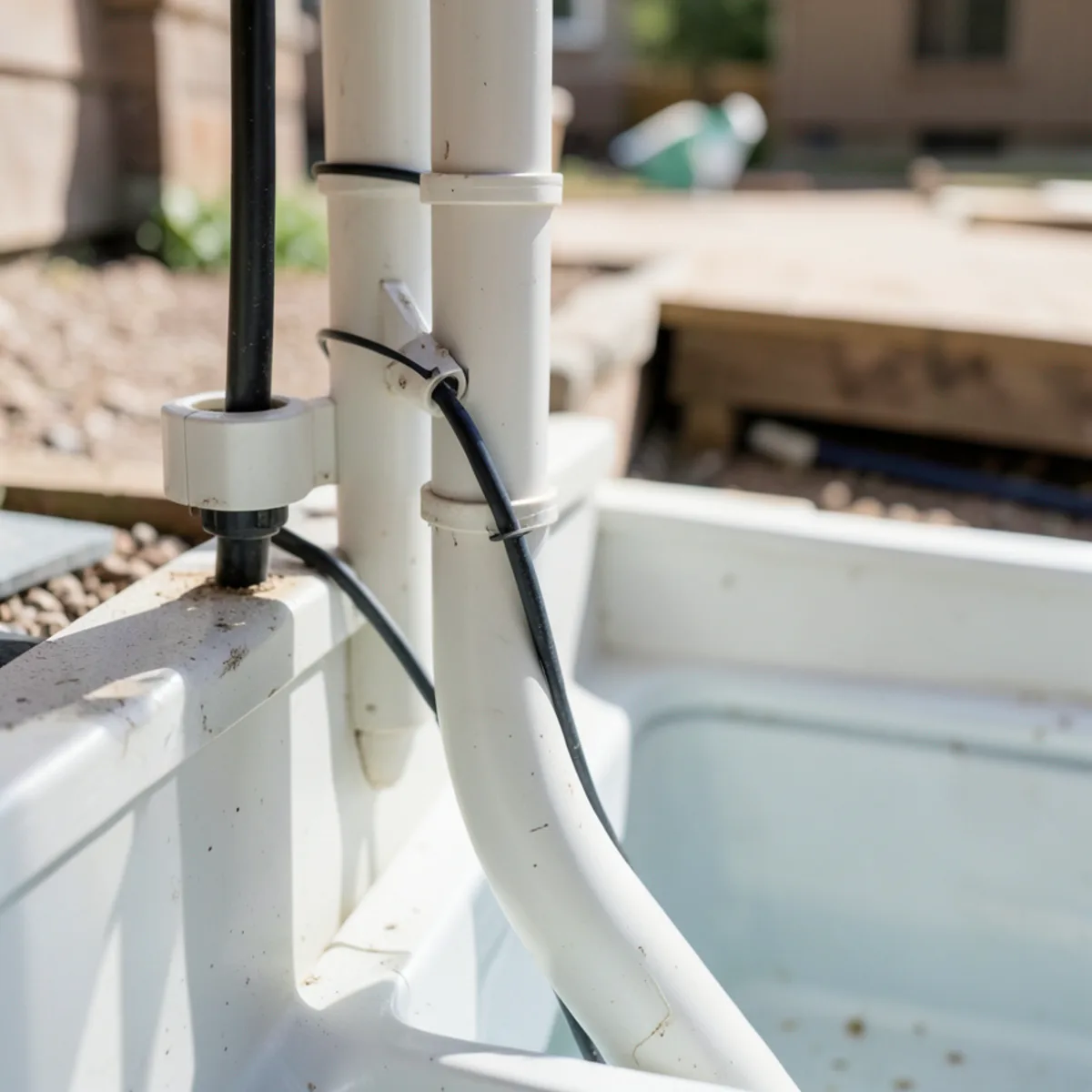
How the switch connects matters too. Many pumps use a piggyback plug: the float plugs into the outlet and the pump plugs into the back of it, so the switch can be replaced on its own. Others have the switch built into the pump. When a built-in switch fails on an older pump, replacing the pump is often the better value.
Alarm floats and backup floats
A second float can do a different job. In a combination system, the backup pump has its own float set a few inches above the primary's, so it only runs when the primary can't keep up or has lost power. A separate high-water alarm float, set higher still, sounds a warning before water reaches the rim. When we repair a primary float, we check that these upper floats are still clear and set at the right heights.
How Our Float Switch Repair Process Works
- 1
Watch it cycle
Fill the pit and see exactly where the float starts and stops the pump.
- 2
Isolate the fault
Lift the float by hand and test the pump directly to separate switch from motor.
- 3
Clean and clear
Remove silt and sludge from the pit, float, and rod.
- 4
Re-set the pump
Center the pump so the float can travel freely without touching the wall or pipe.
- 5
Repair or replace the switch
Free, adjust, or install the right float type for the pit.
- 6
Test the range
Several full cycles to confirm clean starts, full emptying, and clean stops.
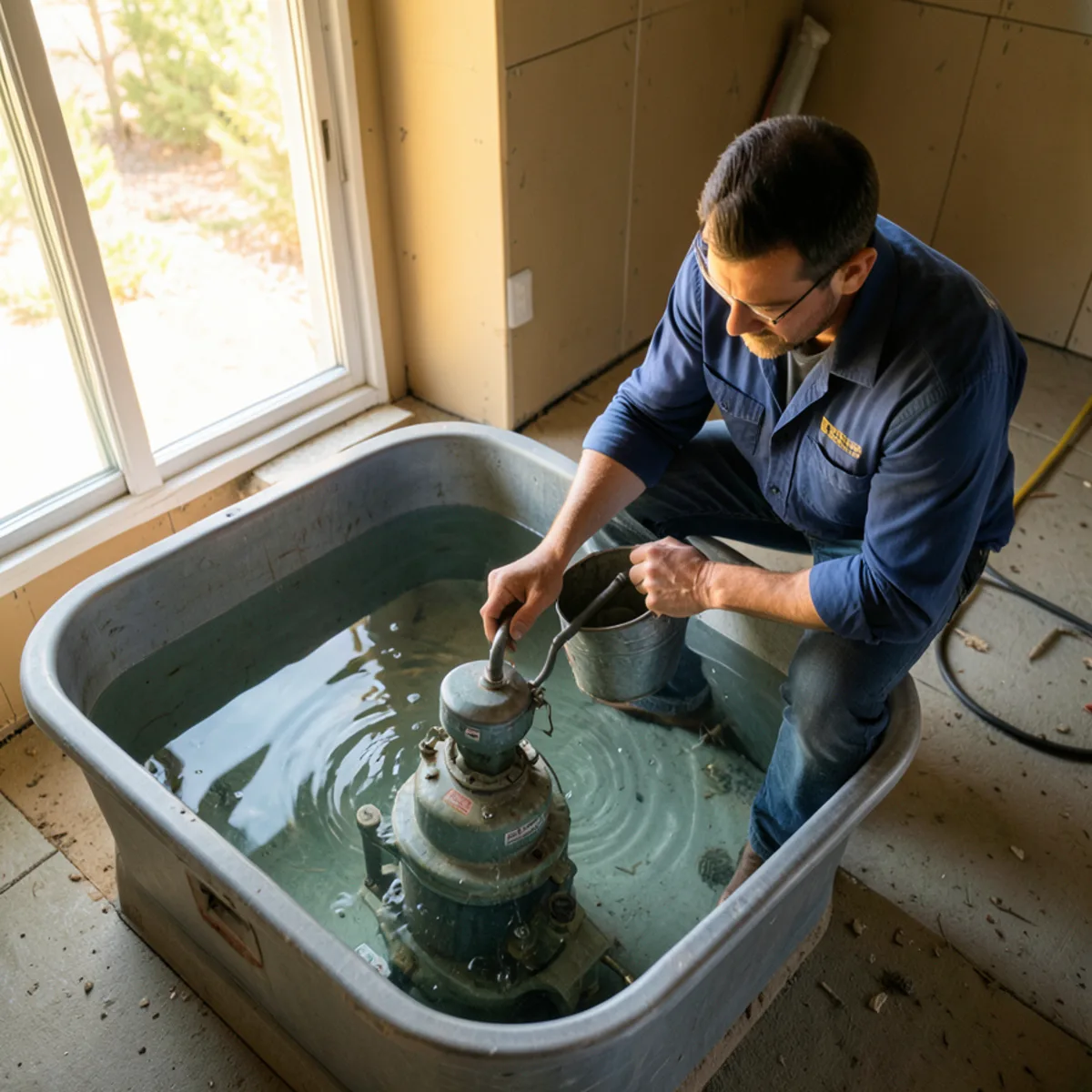
Float Switch Repair: what the work looks like

Why Homeowners Choose Us for Float Switch Repair
Float problems are simple once they're diagnosed correctly, and expensive when they're not — plenty of good pumps get replaced because nobody lifted the float by hand. We isolate the switch from the motor before recommending anything.
We're a Littleton sump specialist at 8 W Dry Creek Cir, working by appointment, with emergency sump pump help available when a stuck float leaves a pit rising.
- Stops constant running that burns out the motor
- Restores reliable on/off operation
- Right float type for your pit size
- Pit cleaning to prevent repeat sticking
- Quick, focused fix
Services That Pair With Float Switch Repair
Guides on Sump Pump Float Switch Repair
Helpful Guides & Costs
Where We Provide Float Switch Repair
See every community on the service areas page.
Float Switch Repair FAQs
A stuck float switch is the most common cause — it tells the pump to keep running even when the pit is empty. Other causes include a failed check valve or an undersized pump. We confirm which before fixing it.
Yes. A pump that runs nonstop overheats and wears out far faster. If yours won't shut off, turn it off and get the float checked promptly.
If the float is just jammed or the pit needs cleaning, a repair does it. If the switch is worn or the wrong type for your pit, replacing it with the correct float is the lasting fix.
It depends mostly on how often it cycles. In a pit that fills only in spring, a switch can last as long as the pump. In a small, busy pit it may wear out in a few years. Testing it every season tells you before it fails.
Within limits, yes. On a tethered float, the tether length sets the pumping range, and the manufacturer lists the allowed range. Shortening it too much makes the pump short-cycle; lengthening it in a narrow pit can let the float catch on the wall.
Usually because the float rubs the basin wall or discharge pipe, or because silt and iron sludge gum up the float or its rod. Re-centering the pump, cleaning the pit, or switching float style for a narrow basin normally solves it.
Pump running nonstop or not at all?
Most of those calls trace back to the float switch. We'll clean, adjust, or replace it, and keep the cord and pit clear so it doesn't stick again.
- Float cleaned or replaced
- Cord and float path cleared
- Full cycle tested before we leave