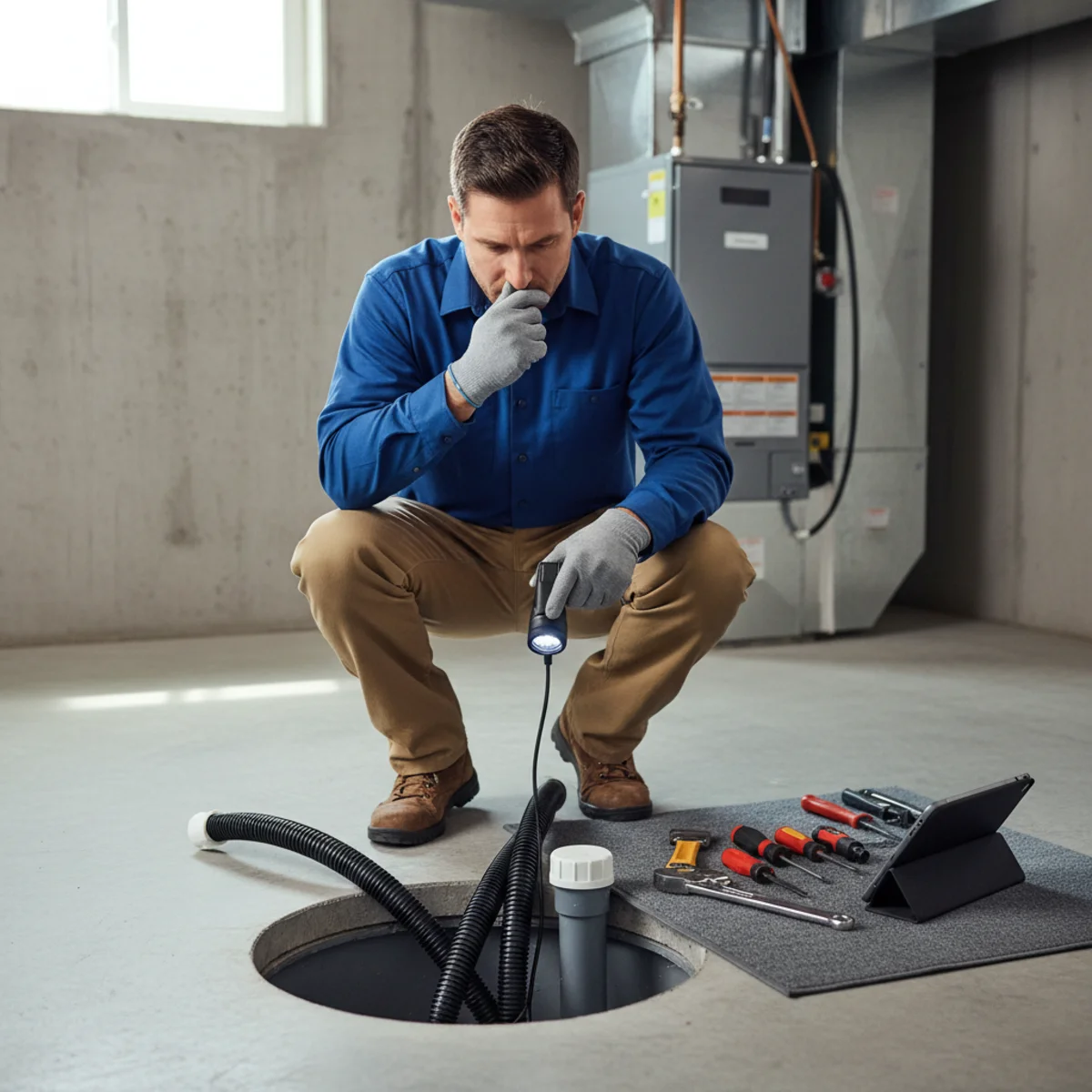
Why Does My Sump Pump Smell Bad?
A sump pit shouldn't announce itself. If you can smell yours from across the basement, something's off down there. The smell isn't just unpleasant — it's a clue about what's happening in the pit.
Most sump smells are harmless to fix and easy to trace once you know what each one means. A musty smell points one direction. A rotten-egg smell points another. A sewage smell is its own thing entirely and worth taking seriously.
Here's how to read the smell coming out of your sump pump and what to do about each one.
- Local Littleton Service
- Professional Installation
- Clear, Upfront Estimates
- Battery Backup Options
- Careful, Clean Workmanship
- Emergency Help Available
Musty or Earthy Smell: Stagnant Water and Bacteria
This is the most common one. During a dry stretch, the water sitting in the bottom of the sump basin doesn't get pumped out and refreshed. It just sits. Bacteria and mold grow in that still, dark water, and the result is a musty, earthy, swampy smell.
It's worse in summer when the basement is warm and the pump rarely runs. Less rain means less cycling, which means the same water sits longer. The pit basically turns into a stagnant puddle.
Iron and minerals in Front Range water make it worse. They feed a slimy bacterial buildup — often a reddish or orange sludge — that coats the basin and the pump and gives off its own odor. Once that gunk takes hold, the smell comes back fast unless you actually scrub it out rather than just bailing the water.
The fix is to clean the pit. Pump or bail out the standing water, scrub the basin, clear any sludge and debris off the bottom, and rinse it out. A clean basin with fresh water doesn't smell. We cover the full process in our pit-cleaning guide, and it's a routine part of maintenance.
Rotten-Egg Smell: It Could Be a Dry Trap
A sharp rotten-egg or sulfur smell is different. Sometimes it's bacteria in stagnant water producing sulfur gases. But often it's a dried-out plumbing trap near the sump system letting sewer gas drift up.
Many basements have a floor drain or a trap tied into the same area as the sump. The trap holds a small amount of water that seals out sewer gas. If that water evaporates during a dry season, the seal breaks and sewer gas comes up through the drain — and you blame the sump pit because that's where you smell it.
This is most common in seldom-used basements and in dry Colorado winters when the air pulls moisture out of everything. A trap on a floor drain that hasn't seen water in months is a prime suspect, and so is a basement shower or laundry drain that rarely gets used.
The simple test: pour a bucket of water down any nearby floor drain to refill the trap. If the smell fades over the next day, a dry trap was the culprit. If it doesn't, the smell is coming from the pit itself or from something further down the line. And if you find yourself refilling the same trap every few weeks, that's worth a closer look — a trap that dries out unusually fast can point to a venting problem in the plumbing, where the system siphons water out of the trap instead of it simply evaporating.
Sewage Smell: Don't Ignore This One
A true sewage smell is a different problem from a musty pit. A sump basin should only be collecting groundwater, not wastewater. If it smells like sewage, something has crossed over.
In some homes a sump system and a sewage ejector pit are close together, or a line has been plumbed in a way it shouldn't be, and wastewater is reaching the sump. That's not a candle-and-fan fix — it's a plumbing issue that needs eyes on it. Sewer gas in a living space is a health concern, and a sewage crossover can foul the pump and the pit.
A nearby sewage ejector pit with a failing seal or lid can also be the real source. The ejector handles wastewater from a basement bathroom or laundry, and if its lid isn't sealed tight, those odors drift over and seem to come from the sump. In that case the fix is at the ejector, not the sump basin.
If your pit smells like sewage rather than mustiness, have it looked at. There may be a sewage ejector or drain issue feeding the problem, and that's worth diagnosing properly rather than masking.
How to Clear the Smell and Keep It Gone
For the common musty or stagnant smell, here's the routine that handles it and keeps it from coming back. Run through this a couple times a year, and more often heading into a dry summer.
A word on cleaners: skip the bleach. Pouring bleach or harsh chemicals into the pit can damage the pump's seals and components over time, and it doesn't fix the underlying cause. Plain scrubbing and a clean-water rinse handle the job without shortening the life of your pump.
Most smells stay gone once the pit is clean, the traps are sealed, and the basin is covered. If a clean pit and refilled traps don't fix it, the source is likely a sewage crossover or a deeper drain problem worth a professional look.
- Bail or pump out the standing water and scrub the sump basin walls and floor
- Clear sludge, gravel, and debris from the bottom of the pit and off the pump intake
- Rinse with clean water and let the pump cycle it out to flush the discharge line
- Pour a bucket of water down nearby floor drains to reseal any dried-out traps
- Install or reseat a sealed basin lid to keep odors, humidity, and gases down in the pit
- Check that the pump actually runs — a dead pump leaves water sitting and stagnating
A Sealed Lid Solves More Than Smell
An open sump pit is a hole into the soil under your house. It vents whatever is down there — humidity, odors, and in many Front Range homes, radon — straight into your basement air.
A sealed basin lid caps that off. It keeps pit smells and moisture out of your living space, cuts pump noise, and in homes with a radon system the basin can often be tied in so the pit isn't an uncovered source of soil gas. For a finished basement especially, a sealed lid is worth doing.
Keeping a little water in the pit helps as well. A pump that draws the basin bone-dry can let the seal around the discharge or any tied-in drain dry out, and that opens a path for soil gas and odor. A small amount of standing water at the bottom of a clean, sealed pit is normal and actually keeps things sealed.
So if your pit smells, cleaning it is step one. Sealing it is what keeps the basement air clean afterward. If the smell keeps coming back no matter what you do, give us a call at (207) 419-2600 and we'll find the source.
Frequently Asked Questions
Keep Reading
 Maintenance & Troubleshooting
Sump Pump Maintenance Checklist for Colorado Homeowners
A sump pump only works if you keep it working. This season-by-season checklist keeps your basement protected through Colorado's wild weather swings.
 Littleton Homeowner Guides
Common Basement Water Problems in Littleton Homes
From expansive clay to spring snowmelt, Littleton basements face specific water threats. Here are the common problems and how to get ahead of them.
 Costs & Replacement
Signs Your Sump Pump Needs Replacement
A sump pump rarely dies on a sunny day — it fails during the storm it was supposed to handle. Here are the warning signs that mean replace it now, before the next one.
Protect Your Basement Before the Next Storm
Get professional sump pump help from a local Littleton specialist. Clear, upfront estimates and careful, clean workmanship.
Available by appointment. Emergency sump pump help available.