
Sump Pump vs Sewage Ejector Pump: What's the Difference?
Quick answer
A sump pump removes clear groundwater from an open pit and sends it outside, away from the foundation. A sewage ejector pump lifts waste and gray water from basement toilets, showers, and laundry up into the sewer line through a sealed, vented basin. They handle different water, follow different code rules, and can't be swapped for each other.
Many Littleton basements have two pits. One keeps groundwater out. The other handles the basement bathroom. From across the room the two can look alike, and homeowners often are not sure which is which.
The difference matters. They are built for different water, they are maintained differently, and swapping one for the other causes real problems.
- Local Littleton Service
- Professional Installation
- Clear, Upfront Estimates
- Battery Backup Options
- Careful, Clean Workmanship
- Emergency Help Available
What Each Pump Does
A sump pump removes groundwater. Water seeps through the soil, collects in an open or loosely covered pit at the low point of the basement, and the pump sends it outside, away from the foundation.
A sewage ejector pump moves wastewater. Any toilet, shower, laundry, or sink below the main sewer line drains into a sealed basin, and the ejector pumps that waste up to the sewer. It exists because gravity cannot do the job.
You may also hear about grinder and effluent pumps. A grinder pump chops solids into a slurry so it can be pushed through a small pipe over a long distance, which is more common in pressure-sewer setups than in a typical basement. An effluent pump handles gray water with few solids, such as from a laundry sink. Most basement bathrooms in the Littleton area use a standard solids-handling ejector.
Side by Side
- Water handled: sump = clear groundwater; ejector = sewage and gray water
- Basin: sump = open or simple lid; ejector = sealed, gas-tight lid
- Vent: sump = none; ejector = vent pipe through the roof
- Discharge: sump = outside, away from the house; ejector = into the sewer line
- Solids: sump = small debris only; ejector = built to pass solids
- Where it is: sump = low point of the basement; ejector = near the basement bathroom or laundry
How to Tell Which One You Have
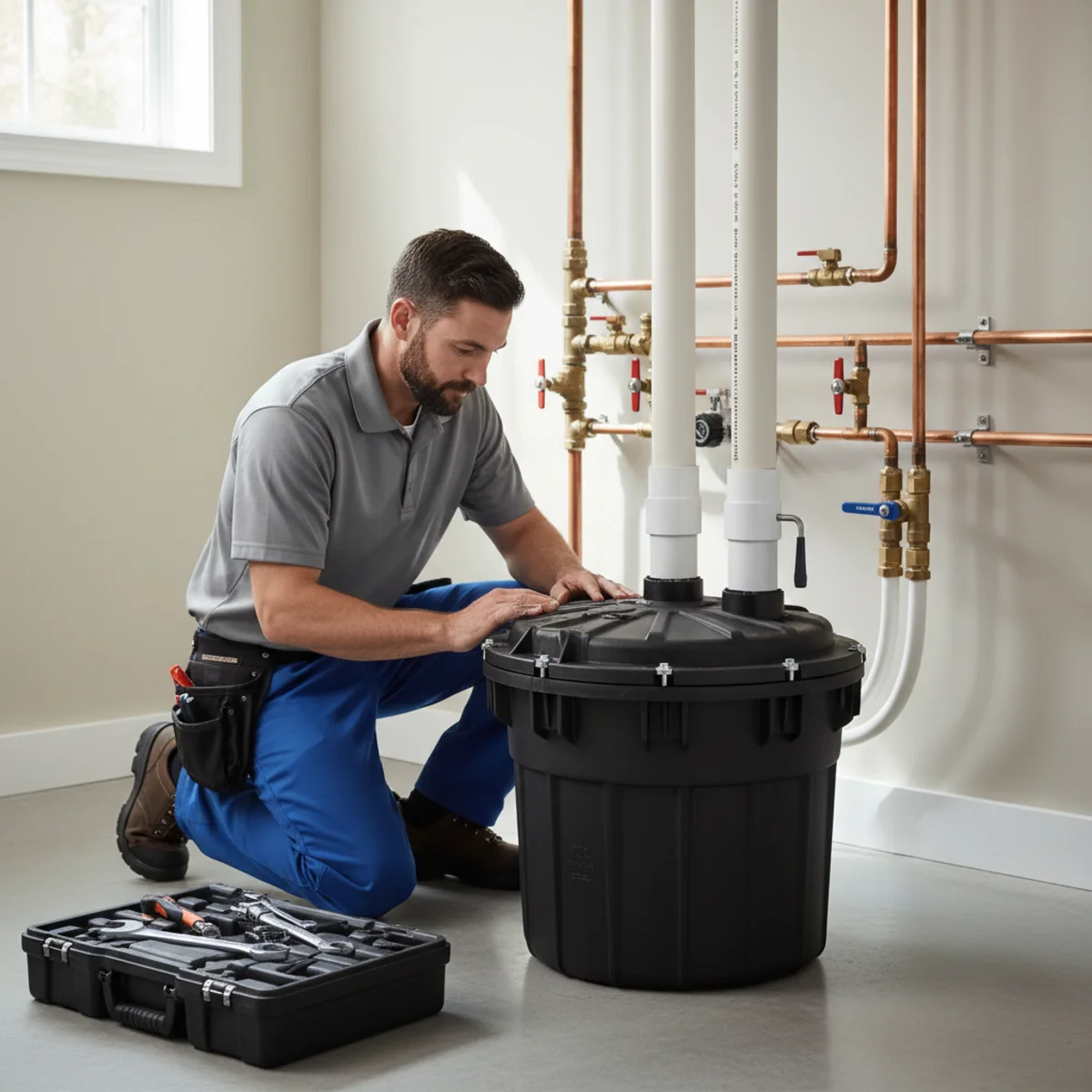
Look at the lid and the pipes. A sealed, bolted lid with a vent pipe running up and a discharge that ties into the house drain is an ejector. An open pit, or one with a simple cover, with a discharge pipe that runs out through the wall is a sump.
Location helps too. An ejector sits near the fixtures it serves. A sump sits wherever the basement is lowest, often in a corner or under the stairs.
How Each One Tells You It's Failing
Because they do different jobs, they fail differently. A failing sump pump shows up as water where it shouldn't be: a pit that's full, damp floor around the basin, or water at the wall-floor seam after a storm. A failing ejector shows up as plumbing trouble: downstairs drains that run slow or gurgle, a sewer smell near the basin, or a high-level alarm sounding.
The urgency is different too. A sump problem threatens the basement with groundwater. An ejector problem threatens it with sewage, which is a health hazard and a much harder cleanup, so an ejector alarm calls for stopping water use downstairs immediately.
- Sump pump: full pit, wet floor near the basin, seepage after storms, pump running nonstop
- Ejector: slow downstairs drains, gurgling, sewer odor, or the high-level alarm
- Both: a pump that hums without moving water, or a tripped breaker
Why You Can't Swap Them
A sump pump in a sewage basin will clog on solids and can release sewer gas through an unsealed lid. An ejector used as a sump pump works, but it is more expensive than necessary and sending clean groundwater into the sewer is prohibited in many municipalities.
Draining a sump pump into a floor drain or laundry sink has the same problem. In most Colorado jurisdictions groundwater belongs outside, not in the sanitary sewer.
Maintenance Is Different Too
A sump pump needs a clean pit, a free float, and a clear discharge, checked once a year before spring runoff.
An ejector needs its seals and vent kept tight, an alarm that works, and periodic cleaning of grease and solids from the basin. Only flushable waste should go down a basement toilet that feeds an ejector, and wipes are a common cause of failure.
Keep a note of which basin is which. In basements with both, a simple tag on each lid saves time during an emergency and keeps anyone servicing them from opening the sealed ejector by mistake.
How Their Costs Compare
An ejector system usually costs more to install than a sump system because of what surrounds it: a sealed basin, a vent that has to reach the existing stack or the roof, a solids-handling pump, a tie-in to the building drain, and typically a plumbing permit and inspection. A sump installation in an existing pit can be a short job by comparison.
Ongoing costs differ as well. A sump pump needs an annual test and occasional cleaning. An ejector needs its basin pumped out and cleaned every few years, its alarm tested, and careful habits about what goes down the downstairs drains.
From the field
The Mix-Ups We Find in Basements
The most common problem we see isn't a failed pump but a system set up for the wrong job. We find sump pumps installed in sewage basins after a remodel, groundwater discharges tied into a laundry standpipe, and ejector basins with lids that were never sealed. Each one usually started as a shortcut.
If you've bought a house with two pits and no paperwork, it's worth having someone confirm which is which, what each one discharges into, and whether the ejector basin is properly sealed and vented. It's a short visit that heads off much bigger problems.


Which One Do You Need?
If water is coming up from the ground into your basement, you need a sump pump. If you have, or want, a toilet, shower, laundry, or sink below the main sewer line, you need a sewage ejector. Many Littleton basements need both, kept completely separate, each installed and maintained for its own job.
Questions about your own system? Call (207) 419-2600 and talk it through with a local sump specialist.
Related services
Sump Pump vs Sewage Ejector Pump: What's the Difference: Common Questions
It would pump water, but it costs more than a sump pump and is designed to discharge into the sewer, where groundwater usually is not allowed. A dedicated sump pump discharging outside is the right setup.
If the bathroom is below the main sewer line, yes. Most basement bathrooms are, so the ejector lifts waste up to the sewer.
Many homes do well with an inspection and basin cleaning every one to three years, sooner if the basin is heavily used or the alarm has gone off.
One is usually a sump pit for groundwater and the other a sealed ejector basin for a basement bathroom or laundry. Each handles different water.
Ask where the water comes from. Groundwater entering the basement needs a sump pump. Wastewater from fixtures below the sewer line, such as a basement bathroom or laundry, needs a sewage ejector. Many homes have both.
Keep reading
 Maintenance & Troubleshooting
Why Does My Sump Pump Smell Bad?
A smelly sump pit is usually telling you something — stagnant water, bacteria, dried-out plumbing, or a sewage crossover. Here's how to read the smell and clear it.
 Sump Pump Basics
Submersible vs Pedestal Sump Pump: Which Is Better?
Submersible and pedestal sump pumps both keep basements dry, but they differ in cost, noise, and lifespan. Here is how to pick the right one for a Littleton home.
 Sump Pump Basics
Sump Pump Discharge Line Options for Homeowners
Your sump pump is only as good as where it sends the water. Compare discharge line options and learn how to route the pipe so water leaves for good.
Get Local Help: Sump Pump Basics
Get professional sump pump help from a local Littleton specialist. Clear, upfront estimates and careful, clean workmanship.
Available by appointment. Emergency sump pump help available.